Get Full Government Meeting Transcripts, Videos, & Alerts Forever!
Get email alerts on the Parks Weeds topic
No spam. Unsubscribe anytime.
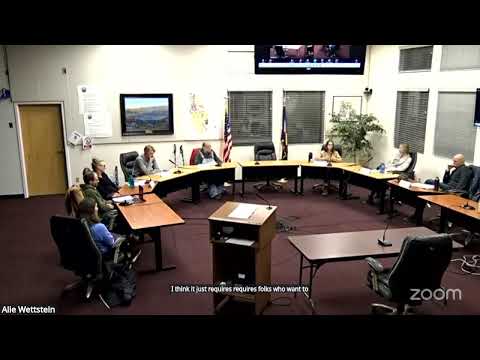
Carbondale eBoard recommends trustees approve updated Integrated Weed Management Plan
Summary
After an annual review, the Carbondale Environmental Board unanimously recommended the town trustees approve a draft Integrated Weed Management Plan that emphasizes nonchemical methods, targeted manual removal, increased temporary labor and pilot soil amendments.
The Carbondale Environmental Board on a voice vote recommended that the Town of Carbondale Board of Trustees approve a draft Integrated Weed Management Plan that emphasizes nonchemical tools and park-specific strategies.
The recommendation follows an annual review and discussion led by Eric (Parks and Recreation director), who described the document as "in draft form right now" and said the plan breaks management down on a per-park basis to match treatment to each site’s uses and irrigation systems.
Board members said the plan matters because it shifts Carbondale toward approaches the parks department called long-term and maintenance-oriented rather than one-time eradication. Eric said staff have prioritized manual extraction, temporary labor and select biological tools where appropriate, and plan to test a soil amendment called Nutrafix on three small plots this season.
Key facts and methods discussed
- Manual extraction and temporary labor: The parks department has increased seasonal temporary staff and uses them to remove rosettes and seed heads before weeds set seed. Eric said that program has helped "hold our noxious weeds at bay" on some properties.
- Riverfront Park experiment: The Riverfront Park native-planting and irrigation project disturbed soils and initially saw heavy weed growth. Staff emphasized ongoing maintenance and monitoring to determine whether planted natives will ultimately outcompete invasive species.
- Biological controls and nonchemical tactics: Staff described work to propagate a rust fungus targeting Canada thistle and noted use of steam treatment and nonresidual broadleaf "burn down" herbicides in limited garden or non-play areas. Eric told the board that a mix of techniques, applied in sequence, has produced useful short-term results.
- Goats: The department studied goat grazing but reported limitations. Eric said goats can be effective in pockets, but timing, site management and post-grazing restoration make the approach costly and labor intensive.
- Pilot fertilizer/soil amendment tests: The parks director said staff purchased a small amount of Nutrafix to run four 40-by-40-foot test plots across a turf park, an open-space site and the nature park to evaluate effects on soil health and plant competition.
Board action and next steps
Board member Sarah Jane moved to recommend approval; a second was recorded but not named in the transcript. The board voted in favor by voice and will forward its recommendation to the Board of Trustees for final action. Eric said the trustees will review the plan and that the parks and recreation commission and staff have already provided input.
Why it matters
The plan guides how the town will prioritize labor, volunteers and limited pesticide use across 28 parks and multiple open-space sites, and it links to ongoing resilience and soil-health work. The approach seeks to improve long-term soil health so native plants can establish and reduce the frequency and intensity of future weed-control treatments.
Board members and staff said they will monitor outcomes and return data from pilot plots and Riverfront Park plantings to trustees and the eBoard for further refinement.