Get Full Government Meeting Transcripts, Videos, & Alerts Forever!
Get email alerts on the Housing Transit Sb79 topic
No spam. Unsubscribe anytime.
Council authorizes mayor to send letter opposing SB 79, citing local control concerns
Summary
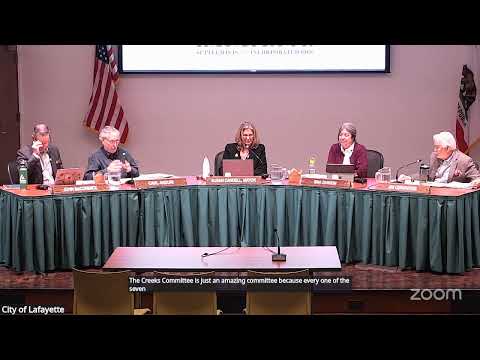
The Lafayette City Council on April 14 authorized the mayor to send a letter opposing Senate Bill 79, which would allow transit agencies to set development standards on properties they own or control and prescribe height and density standards near transit stops.
The Lafayette City Council on April 14 directed the mayor to send a letter opposing Senate Bill 79, authored by State Senator Scott Wiener, which would give transit agencies authority to set development standards on properties they own or hold in permanent easement and would establish state‑level height, density and floor‑area‑ratio rules for housing near transit stops.
City consultants from Townsend Public Affairs summarized the bill and its potential effects. Casey Elliott told the council that for Lafayette the BART station would qualify as a Tier‑1 transit stop under SB 79 and that, under the bill’s draft standards, residential development within a quarter‑mile of such a station could be built up to 75 feet in height with a maximum density of 120 dwelling units per acre and a floor‑area ratio up to 3.5; standards step down at greater distances from the station.
Elliott and other speakers noted the bill’s scope extends beyond BART parking lots to other transit properties that a transit agency might own or place under permanent easement, which could allow development decisions to be set by the transit agency rather than the local jurisdiction. The consultant told the council that the League of California Cities (Cal Cities) has taken an opposed position and that several Contra Costa County cities were preparing opposition letters.
Public commenters, including the Lafayette Homeowners Council president and long‑time residents, asked the council to oppose the bill. One speaker argued the measure further erodes local planning authority and may not deliver affordable housing because the bill does not require developers to build affordable units.
Councilmember Cervantes asked how SB 79 relates to AB 2923 (a previous BART‑focused bill) and whether local consultation provisions exist; the consultant said SB 79 does not sunset and is broader in scope than AB 2923 and that while the bill references local planning and zoning compliance language it does not mandate local approval or stronger local consultation.
After public comment Councilmember (name not specified in the record) moved and a colleague seconded a motion to authorize the mayor to send an opposition letter to the Senate housing and local government committees; the council voted in favor and the mayor was authorized to send the letter. Staff and local advocates said they would prepare a draft letter consistent with concerns raised at the meeting.
The council motion is to oppose SB 79 on the grounds that it would expand transit agencies’ control over planning and could override local land‑use processes; the mayor will forward the opposition letter to the Senate housing and local government committees as requested.