Get Full Government Meeting Transcripts, Videos, & Alerts Forever!
Get email alerts on the Municipal Finance topic
No spam. Unsubscribe anytime.
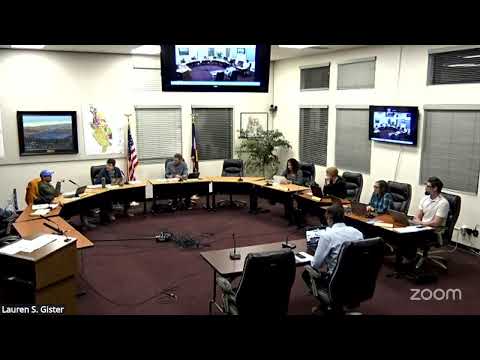
Carbondale work session reviews options for financing major capital projects; sales tax increases, COPs, bonds and TIFs discussed
Summary
Town finance staff and municipal advisors presented multiple financing options for Carbondale's larger capital priorities and showed illustrative scenarios for projects ranging from traffic improvements on Highway 133 to a town-center housing project.
Town finance staff and municipal advisors presented multiple financing options for Carbondale's larger capital priorities at a work session on April 15, flagging trade-offs between voter‑approved tax measures, borrowing that uses town assets as collateral and using existing fund balance or dedicated revenue to pay debt service.
Finance director Greg (last name not specified in the record) opened the session and said staff wanted trustees to answer three basic questions before committing to any path: how much money is needed, when the funds are required, and how the town will pay debt service. Maddie Brdanovic of Hilltop Securities joined by video and explained commonly used tools: general obligation (GO) bonds (property-tax backed, require voter approval), revenue bonds (backed by sales or other revenues), limited-tax bonds, excise-tax revenue bonds (lodging, marijuana, short-term rentals, food & beverage), and certificates of participation (COPs), which do not require voter approval but use leased assets as collateral.
Key figures and assumptions presented (all drawn from the town's presentation and Hilltop): - Town 2025 assessed value: about $248,000,000; current mill levy ~2.094 mills. Each additional mill at current assessed value generates roughly $250,000/year. - Current town sales tax rate: 3.5%, producing roughly $9.5 million in annual collections; each 1% of sales tax is estimated to generate about $2.7 million/year for the town at 2024–25 activity levels. - Estimated 1% revenues for potential excise taxes: lodging ~ $103,000/year; marijuana ~ $30,000/year; short-term rental ~ $29,000/year; food & beverage ~ $280,000/year (estimated from 2024 collections). - Debt-capacity analysis: advisors described a stress test suggesting the town could issue roughly $20 million in principal (assumed 20-year term, 5% interest) without an immediate credit downgrade; that level would equate to about $1.6 million/year in debt service under the assumptions used in the presentation.
Project scenarios: staff applied the financing tools to illustrative project totals to show impacts. - A full Highway 133 package (underpass, three potential roundabouts, three pedestrian crossings) was presented as a high-end scenario at about $26.5 million and would, under the example, require either a significant sales tax increase or property-tax mill increases if financed immediately. The presentation calculated illustrative outcomes (e.g., a $2.125 million annual debt-service example would imply a steep mill-levy increase in a GO bond scenario and a 79-cent sales-tax increase in a revenue-bond scenario for the town). Trustees noted the $26.5 million number was illustrative and that the town could phase projects (for example, one or two roundabouts rather than the whole package). - A town-center affordable-housing example ($5 million) produced smaller impacts: a $5M bond might create about $400,000/year in debt service under the assumptions and could be a candidate for COPs if the project itself could be used as collateral or produce revenues to mitigate payments. - Smaller items such as Chalkos Park ($2M) and a $1M downtown-improvements package were shown as more modest financing needs; those could be funded with smaller sales-tax increases, excise taxes or use of existing fund balance.
Tools and trade-offs: presenters emphasized these key trade-offs: - GO bonds and limited-tax bonds require voter approval but can set mill levies tied to project needs. Given Carbondale's relatively low existing mill levy (~2.094), property-tax increases generate limited revenue per mill (about $250,000 each), making property-tax-based financing less attractive for very large projects. - Sales-tax revenue bonds can raise substantial annual revenue per percentage point (roughly $2.7 million per 1% under recent collections), but sales-tax increases are regressive and politically sensitive. - COPs do not require a ballot measure and use town assets as security; they can be attractive for revenue-generating projects (e.g., housing that produces fees or rent) but place town buildings and other assets as collateral. - Special districts and tools—urban renewal/TIFs, downtown development authorities, general improvement districts and business improvement districts—can concentrate new revenue streams in defined areas but require careful design and intergovernmental coordination.
Public comment and stakeholders: business owner Kerry Shanks (Marble Distilling Company) urged caution about relying solely on lodging excise taxes and urged broad, cooperative approaches that bring commercial property owners into marketing and revenue strategies rather than relying only on a small set of lodging operators. Trustees and staff discussed the political realities and timing for asking voters to approve debt authorization or tax increases, noting competition for ballot space and the need to build public support through a clear package.
Next steps and requests of staff: trustees asked staff to bring the town's capital-improvement plan (CIP) into the discussion and to clarify which capital needs are enterprise-funded (water/wastewater/trash) and which demands would draw on general‑fund or new tax revenue. Trustees also asked for a clearer baseline: what could the town afford to borrow using existing revenues (no tax increase), and what would additional tax increases deliver in annual revenue. Several trustees suggested periodic follow-up work sessions to refine priorities; staff agreed to return with CIP materials and more granular scenarios and noted that timeline considerations would be important if trustees wanted voter questions placed on future ballots.