Get Full Government Meeting Transcripts, Videos, & Alerts Forever!
Get email alerts on the Capital Budget 2026 topic
No spam. Unsubscribe anytime.
County capital planners warn of large gap for 2026 budget; IJCC cited as major driver
Summary
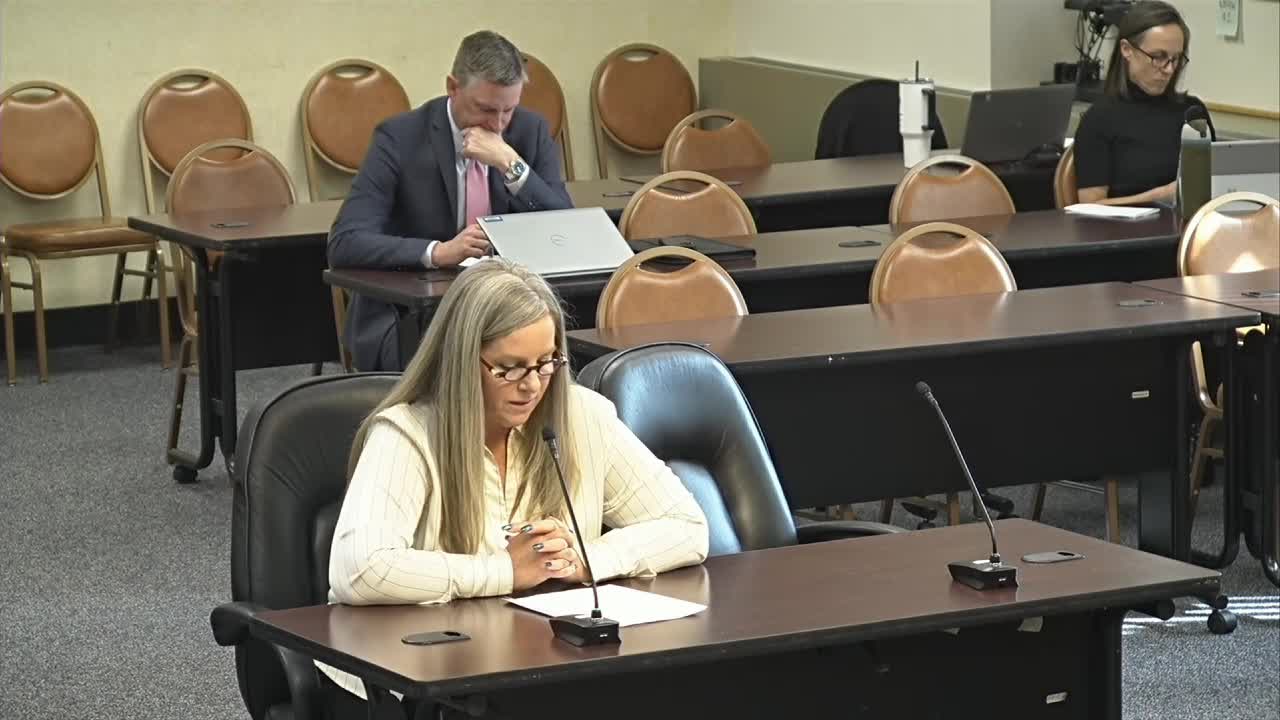
County capital staff briefed the Finance Committee on the 2026 capital budget timeline, design-first approach and an estimated multi-year funding shortfall driven largely by the Investing in Justice/Courthouse project (IJCC).
Milwaukee County capital planners told the Finance Committee the county is likely to face a major funding gap for capital projects in 2026 and over the next five years unless external financing or reprioritization occurs.
Vince Masterson, capital budget coordinator in the Office of Strategy, Budget, and Performance, explained the "design-first" approach that phases design funding in the first year and schedules construction appropriations later so final scope and cost estimates are developed before construction budgeting. Masterson said the county uses an internal policy capping annual bonding increases at 3% over the prior year's adopted bond amount; with a 2025 base of $55,200,000, the 2026 bonding cap is $56,800,000.
Masterson presented preliminary estimates that 2026 bond-eligible requests will likely total between about $101,000,000 and $190,000,000, producing a projected bonding gap in 2026 between roughly $43,000,000 and $52,000,000. He said the county's cash (nonbond) financing goal is about 20% of net county capital funding (about $14,200,000 for 2026), but demand for cash-financed projects also exceeds that goal by an estimated $27,000,000 to $36,000,000.
The briefing identified several large projects: the Investing in Justice / Courthouse (IJCC) project with a $23.7 million county-phase cost in 2026 and an anticipated $150 million construction sequence in 2027–2029; a Bayview revetment project estimated at $17.3 million; and digitization of vital records estimated at $16.1 million. Masterson summarized a five‑year outlook that shows roughly $1.1 billion in projected capital needs versus about $377 million in available county funding, implying a multi‑year county shortfall of approximately $743 million; excluding the IJCC reduces the five‑year shortfall to about $269 million.
Committee questions focused on how cost escalation, tariffs and market volatility are factored into estimates; Masterson said departments will update cost estimates in the design period (May 1–30 cycle) and build contingencies for tariff and market risks to produce a rough planning baseline for out‑year construction. Supervisors asked about specific projects not listed in the five‑year plan (for example, the Domes and McGovern Senior Center); staff said items added after the plan's development or projects with unique external financing approaches may not appear in the current five‑year table and could be considered separately.
Masterson recommended using the design‑first approach and capital scoring criteria to rank projects and counselled policymakers to prioritize projects that address life‑safety, completed designs, mandated obligations, and leverage noncounty revenue sources. The committee asked staff to continue updates as departments submit refined cost estimates and to include the Capital Improvement Committee (CIC) in the process.
Ending: The informational briefing set expectations for a constrained 2026 capital budget and stressed the need for prioritization, updated cost estimating, external funding and use of the design‑first approach to reduce cost uncertainty before construction appropriations are requested.