Get Full Government Meeting Transcripts, Videos, & Alerts Forever!
Get email alerts on the State Budget topic
No spam. Unsubscribe anytime.
Finance, Ways and Means advances $59.7 billion FY26 appropriations bill
Summary
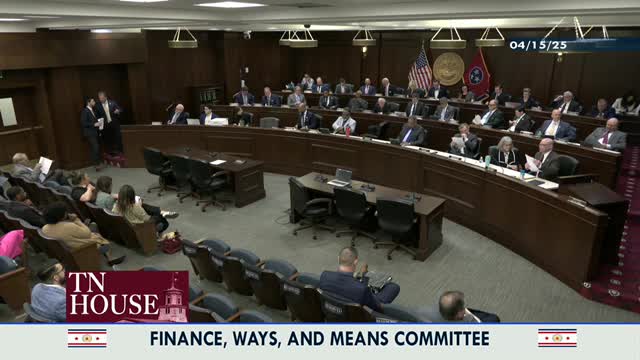
The Finance, Ways and Means Committee on April 2025 approved House Bill 14-09, the FY26 Appropriations Act, moving the $59.7 billion budget to calendar and rules after debate over revenue growth, disaster relief and legislative priorities.
Chairman Hicks presented the Appropriations Act, House Bill 14-09, to the Finance, Ways and Means Committee on April 2025 and the committee approved the bill as amended, sending it to calendar and rules by voice vote with a recorded tally of 27 ayes and 0 nays.
The bill sets total appropriations for fiscal year 2025–26 at $59,700,000,000. Chairman Hicks said the budget is funded roughly 50% from state appropriations (about $29.7 billion), 35% from federal funds (about $20.8 billion) and 15% from other sources (about $9.2 billion). “This is the Appropriations Act House Bill 14 o 9,” Hicks said while walking through the major elements.
Why it matters: The bill programs recurring and nonrecurring revenues and allocates multi-hundred‑million dollar packages for disaster relief, education, health, transportation and economic development that will shape state operations and local projects for the coming fiscal year.
Major fiscal assumptions and revenue notes
Hicks told members the budget assumes modest general fund growth in FY26—about 2%—equal to roughly $376.7 million in recurring state revenue. He said recent practice has used recurring dollars for one‑time projects, producing year‑end reversions that provide additional nonrecurring funds for the next year’s budget. The FY26 plan also relies on roughly $700 million in nonrecurring investment earnings and about $346 million in shared savings from TennCare-related programs (transcript: “10 care shared savings,” quoted as stated).
Disaster relief and recovery
The bill allocates $597 million for disaster relief, including $240 million for TEMA disaster relief grants, $110 million to a Hurricane Helene interest payment fund, $125 million for a governor’s response and recovery fund and $100 million from shared savings for an emergency assistance loan fund for local governments. Chairman Hicks detailed a $20 million allocation for reconstruction at Hampton High School in Carter County and $2.3 million in grants to property owners damaged or destroyed by Hurricane Helene.
Education and higher education
The bill directs more than $640 million in new state funding for K–12, including $198 million for one‑time teacher bonuses, $148 million tied to TISA growth, $17 million for incentives to high‑performing local education agencies and $20 million for a charter facilities fund. Higher education receives about $264 million for outcomes funding, employee pay/insurance adjustments and capital improvements.
Health, safety and workforce
The package includes more than $1.5 billion in new spending for health and social services (state, federal and shared‑savings dollars), including $98 million from shared savings for hospital buybacks, $28 million for nursing home provider stability, an increase in direct support professional wages and $24 million for a dental pilot program. Law‑and‑safety investments total roughly $378 million with new positions at TBI and the highway patrol and grants for public‑safety initiatives.
Transportation and economic development
TDOT-related funding exceeds $1 billion, including a $1 billion general fund subsidy for TDOT projects and operations and grants for commercial and general aviation. Economic development spending via ECD totals about $213 million for projects including infrastructure jobs training and a rural development fund.
Legislative versus administration priorities
Committee members questioned how the legislative amendment shifted funding from the governor’s proposal to member requests. Leader Camper and others sought clarification on reductions and carry‑forwards; Hicks and other committee leaders explained roughly $178 million was reallocated from the governor’s proposal to legislative initiatives (about $16.9 million recurring and $162.0 million nonrecurring in the schedule). Hicks pointed members to the schedule that shows recurring dollars freed up and cited $422,819,460 in recurring dollars available before spending $412,424,950 on nonrecurring items.
Local impacts and member concerns
Several members pressed for detail about local and district impacts. Representative Parkinson and others asked about line‑item cuts and reductions (for example adjustments to allocations for the Rock and Soul Museum and organizations serving Memphis). Chairman Hicks and leaders described the process as a multi‑month, membership‑driven negotiation that reprioritized certain supplemental items among legislative priorities.
Committee action
After discussion, the committee voted to move House Bill 14‑09, as amended, to calendar and rules. The clerk recorded 27 ayes, 0 nays.
What's next
The bill will proceed to calendar and rules and remain subject to floor amendment and further legislative action before final enactment.