Get Full Government Meeting Transcripts, Videos, & Alerts Forever!
Get email alerts on the Masks And Public Assembly topic
No spam. Unsubscribe anytime.
Committee OKs bill limiting mask protections during assemblies unless medical proof provided
Summary
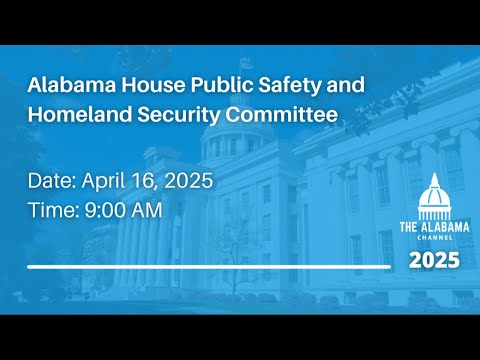
The Public Safety and Homeland Security Committee voted to give House Bill 559 a favorable report after amending it to clarify who can require removal of surgical-style masks and to allow medical or emergency-declared exceptions.
The Public Safety and Homeland Security Committee on Monday gave House Bill 559 a favorable report after adding amendments that narrow when people may wear surgical-style masks during public assemblies and who may request their removal.
Representative Kehl, sponsor of HB 559, told the committee the bill would carve out an exception to existing parade and outdoor-event mask rules, allowing law enforcement or property owners to ask people to remove surgical-style masks unless the wearer has a medical reason. "This bill would provide for, exemptions and praise for somebody who's wearing a surgical mask and that sort of that sort of thing as long as it's for, medical purposes," Kehl said.
The measure drew questions about how officers would verify medical reasons. Representative Bolton asked whether officers would be entitled to see documentation from a doctor when they request removal. "...if a law enforcement officer request, he he's gonna expect to see a, a statement from a doctor saying that that's necessary," Bolton said.
Representative Betzel offered two amendments the committee adopted. One adds the term "health care provider" and explicitly allows wearing a surgical-style mask "to comply with a state of emergency declared by the state or the federal government to prevent the spread of infections." The second amendment clarifies that requests to remove a mask may come from "a law enforcement officer, the owner of the property, or the owner’s designee."
Committee members debated the bill's reach. Representative Wadsworth said the statute's reference to "assembly" could sweep in small groups and expressed concern about individual rights. "I just feel like that with people's rights, they do have something," Wadsworth said. Representative Morris pressed for a clearer definition of "loitering," and Kehl responded that the measure relies on the existing loitering statute: "the first, 8 points there, line 41 1 through 8, describe what loitering is."
A witness identified in the transcript as a municipal official (recorded as "Porter" in the hearing) told the committee the change would give campus officers a tool for identification during protests. "...we're having situation where on campuses, we're having some folks come into protest. They may or not be students. They are telling our police officers, no, I will not take off my mask when we ask them for identification," the witness said, adding the intent "is to give our law enforcement officers a little tool to say... I've got to see your face. I've got to be able to identify you before we move forward."
After debate and adoption of the amendments, Representative Stringer moved for a favorable report; the motion was seconded and the committee recorded the bill as having a favorable report to the next step.
The bill, as amended, applies statewide and references the state's existing loitering statute for definitions and enforcement. Committee members said they would consider additional clarifying language if needed before floor consideration.
Votes at a glance: House Bill 559 — Favorable report (motion moved by Representative Stringer; seconded, names as recorded in the transcript). Detailed vote tallies were not specified in the committee record provided.
What remains unclear from the hearing record is how officers would document or verify medical exemptions in practice and how disputes over the loitering definition will be resolved in day-to-day enforcement.