Get Full Government Meeting Transcripts, Videos, & Alerts Forever!
Get email alerts on the Language Access topic
No spam. Unsubscribe anytime.
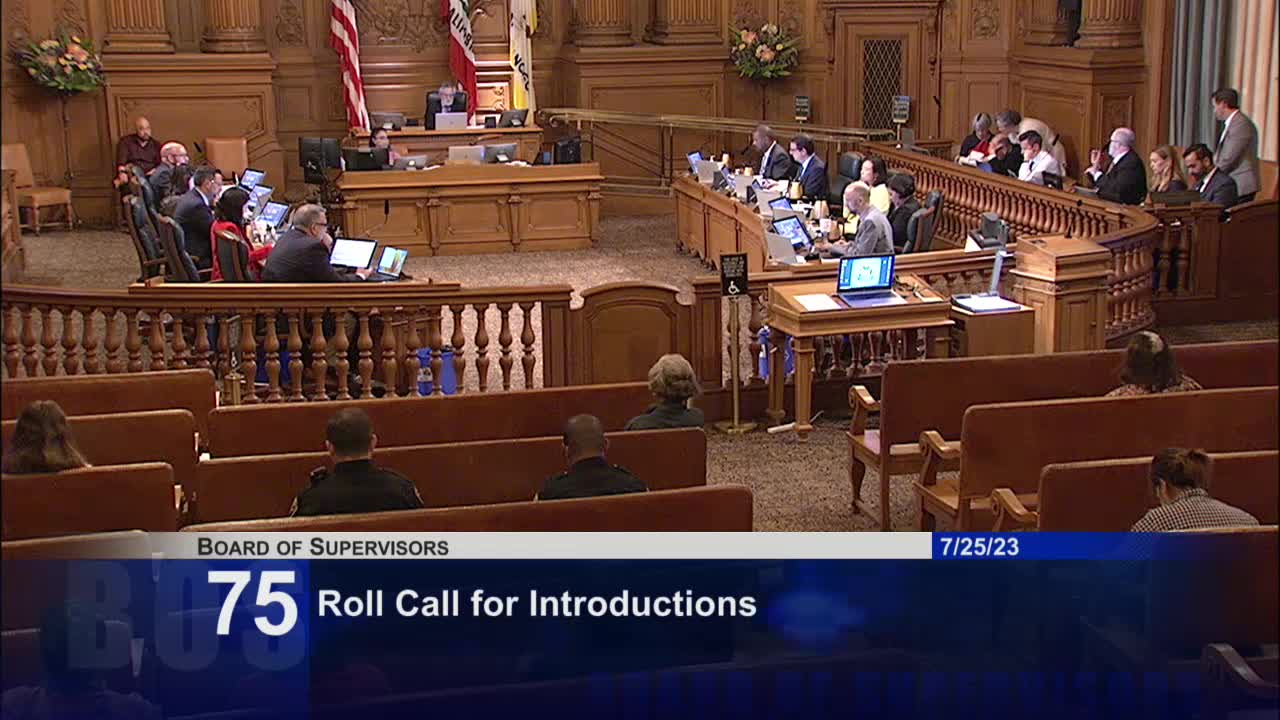
Supervisors introduce expansion of San Francisco's Language Access Ordinance; immigrant groups press for adoption
Summary
Supervisor Walton introduced amendments to strengthen San Francisco's Language Access Ordinance on July 25, expanding requirements for digital services, emergency response language access and quarterly reporting; dozens of community groups testified in support.
Supervisor Walton introduced an ordinance on July 25 to amend the city's Language Access Ordinance (LAO). The proposed changes would broaden the scope of the LAO to improve interpretation and translation services across departments, strengthen guidance for disaster and health-related emergencies, specify required languages for city action (Chinese/Cantonese, Spanish and Filipino) and add requirements for digital services, social media and first-responder language strategies. The proposal also calls for better public reporting on departmental compliance and emphasizes departmental budgeting for language access needs.
Why it matters: San Francisco has a multilingual population and the proposed amendments would require more robust citywide systems to ensure that limited-English-proficient residents can access public services in emergencies and everyday matters. The ordinance drew broad public comment from immigrant advocacy organizations, social-service providers and community groups.
What was said and who testified - Supervisor Walton described the package as an effort to strengthen citywide language access, noting key changes such as codifying health- and emergency-related translation protocols, expanding access for digital and social media services, and memorializing the city's three required languages. - Dozens of community organizations and service providers spoke in favor during general public comment and during the language-access portion of the meeting: Chinese for Affirmative Action, Filipino Community Center, African Advocacy Network, Arab Resource and Organizing Center, Poder, Excelsior Works and others emphasized real-world examples where lack of interpretation created delays or danger for residents seeking medical or housing services. - Commenters described specific harms: long waits on language lines, inability to access timely intake at withdrawal management or housing offices, and emergency-room situations where interpretation was delayed.
Next steps - The ordinance was introduced and will return for committee hearings and detailed drafting. Community groups urged the board to adopt the proposals and to provide resources for implementation.
Speakers quoted (from the meeting transcript) - "I am grateful for your commitment to language access... but there is still so much work to be done," Nick Gee of Chinese for Affirmative Action told the board. - "Language access is a life-or-death issue," Dima Hendewe of the Arab Resource and Organizing Center said, describing an urgent medical event where callers waited more than an hour for a language line.
Ending Supervisor Walton's amendments drew widespread public support from immigrant-service organizations at the July 25 meeting; the measure will move through committee and further drafting before the board votes.