Get Full Government Meeting Transcripts, Videos, & Alerts Forever!
Get email alerts on the Public Finance topic
No spam. Unsubscribe anytime.
Board approves formation of Power Station special-tax district; election, bond steps to follow
Summary
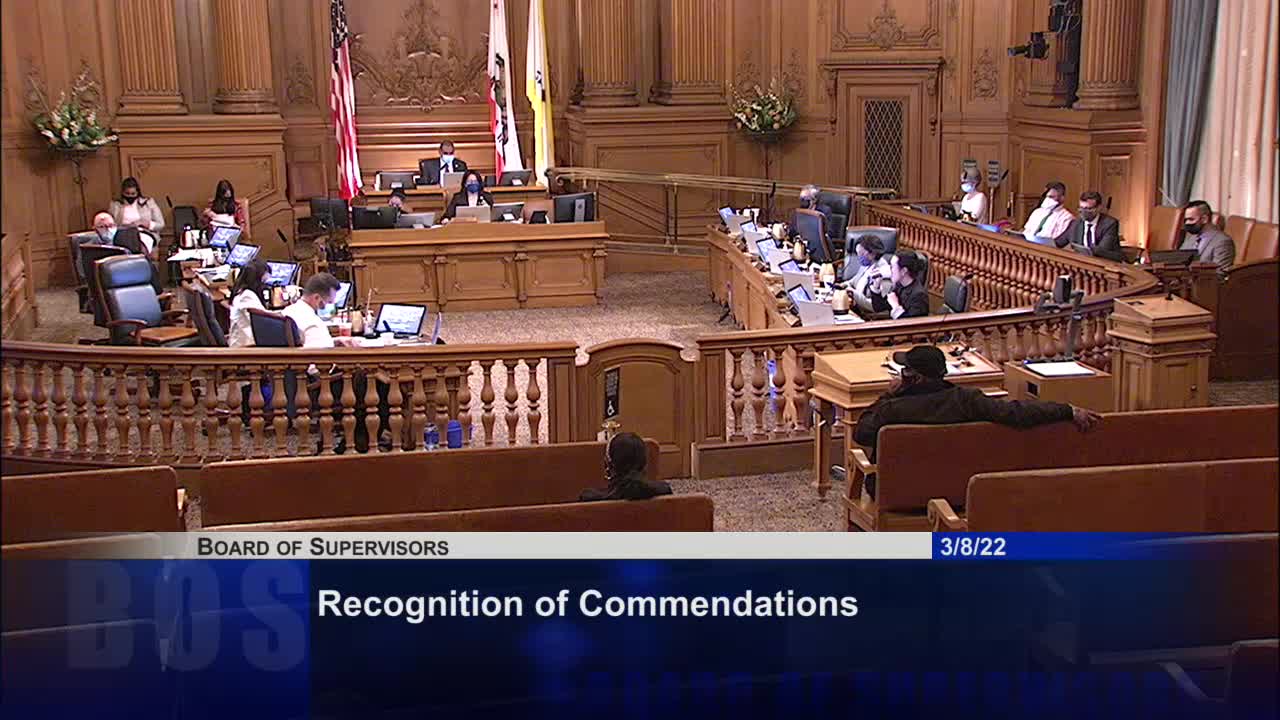
The San Francisco Board of Supervisors held a public hearing March 8 and voted to form Special Tax District No. 2022‑1 — the Power Station Improvement Area — a financing mechanism tied to the mixed‑use redevelopment of the former Potrero Power Station and adjacent Port lands.
The San Francisco Board of Supervisors held a public hearing March 8 and voted to form Special Tax District No. 2022-1 — the Power Station Improvement Area — a financing mechanism tied to the mixed‑use redevelopment of the former Potrero Power Station and adjacent Port lands.
The board adopted three resolutions: to form the district, to determine the necessity to incur bonded indebtedness, and to call a special election for the proposed taxes. The board also amended the formation resolution to include an updated rate-and-method document. Two related items — a resolution declaring the special‑election results and an ordinance that would levy the taxes — were continued to the March 22 meeting so the single‑elector special election can occur and results be certified.
John Lau, deputy director, Office of Economic and Workforce Development, said the district would support public benefits negotiated in the project’s development agreement, including shoreline public access and below‑market‑rate housing. Marissa Pereratelli of the Comptroller’s Office said the district contemplates two possible taxes: a facilities tax, which the developer may bond against during the development period, and a contingent services tax that would be used only if the project’s private maintenance obligations default and the Port needed protection.
Pereratelli described the anticipated revenue scale: approximately $5.3 million a year in Fiscal‑Year‑2022 dollars during active development (escalating at 2% per year), falling to about $3.3 million annually after the project’s conversion date when development activity ends. She said facility tax proceeds can be used for eligible costs such as shoreline and sea‑level‑rise improvements and that the developer may bond against the facilities tax for an initial period up to 42 years or until project costs are reimbursed.
A caller who identified himself as director of environmental justice advocacy urged transparency and asked whether long‑standing contamination — including coal‑tar deposits and previous ammonia spills on the Pier 70/Power Station site — has been addressed. John Lau and staff responded that remediation has been under way for years with the regional water board as lead agency, PG&E as the primary responsible party, and the city Department of Public Health participating in review; they said much of the site already has “no further action” letters and that a risk‑management plan will remain in place and run with the land.
Votes and procedural actions: the board adopted the resolutions to form the special tax district, to determine necessity to incur bonded indebtedness, and to call the special election (roll calls recorded as unanimous). The board amended the formation resolution to add the rate‑and‑method document to the official file and continued the resolution to declare election results and the ordinance to levy the taxes to the March 22 meeting.
What happens next: the developer is the single elector for the special election; the election will occur before the board reconvenes on March 22 to receive results and consider adopting the ordinance to levy the taxes and any related bond measures. Staff told supervisors that the facilities tax is planned to help finance public access, shoreline improvements and other long‑term needs such as sea‑level‑rise adaptations, with the contingent services tax providing a backstop for Port maintenance if private obligations are not met.
Public comment at the hearing focused on contamination/remediation transparency. Board members and staff emphasized that state and regional remediation processes and a city risk‑management plan are in place and will continue to be monitored as development proceeds.