Get Full Government Meeting Transcripts, Videos, & Alerts Forever!
Get email alerts on the Housing topic
No spam. Unsubscribe anytime.
Board rejects Mission moratorium after daylong hearing; 7-4 vote fails to pause luxury development
Summary
After more than seven hours of testimony from hundreds of residents, the San Francisco Board of Supervisors on June 2 failed to enact an urgency ordinance that would have placed a temporary moratorium on most market-rate housing and PDR conversions in the Mission District. The ordinance needed nine votes to pass and lost, 7–4.
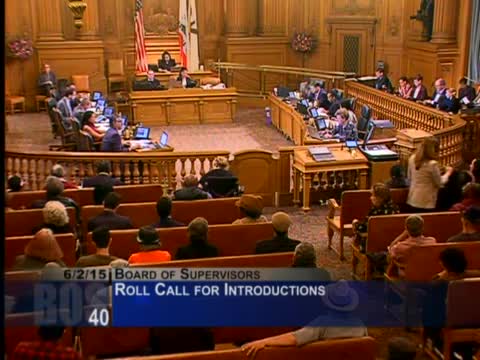
SAN FRANCISCO — The San Francisco Board of Supervisors on June 2 voted down an urgency ordinance that would have placed an interim moratorium on most demolitions, conversions and new construction of market-rate housing in part of the Mission District, after a daylong public hearing that drew hundreds of residents and business owners.
The ordinance, sponsored by Supervisor David Campos, would have temporarily paused permits for projects that create or eliminate five or more housing units within the area covered by the Mission Area Plan, excepting projects that are 100 percent affordable. Campos said his office brought the proposal at the community’s request to “pause luxury development so that we can develop a plan to preserve the remaining land for affordable housing.”
Supporters said the moratorium was intended as a short, legally allowed pause — the hearing focused on a 45-day urgency provision — to give the city time to acquire and preserve a limited number of large parcels that could produce deeply affordable housing. Campos told the board the Mission needs “to build at least 2,400 units of affordable housing in this neighborhood by 2020” and that only about 13 sites remain that are large enough to support projects big enough to leverage federal funds.
Opponents said a moratorium would not create housing and would reduce the city’s existing tools to fund affordable units. Supervisor Scott Wiener, who opposed the ordinance, told colleagues, “This moratorium is not going to stop a single eviction. It is not going to build a single unit of affordable housing,” and warned the pause could be extended beyond the short window supporters sought.
Supervisor Eric Mar, a backer of the moratorium, described the stakes in the neighborhood: “I call this, ethnic cleansing,” he said during debate, arguing the Mission’s longtime Latino and working-class communities were being displaced by new market-rate and luxury projects.
Board members asked city staff about likely budgetary and program impacts if the moratorium were adopted. Planning and housing staff told supervisors the pipeline in the moratorium area included roughly 33 projects that would yield about 1,574 net new units; the city’s minimum inclusionary requirement would mean a baseline of on-site or in‑lieu affordable units or fees from those projects, staff said. Planning staff estimated that holding the pipeline would reduce certain impact-fee and inclusionary revenues that currently help fund parks, transit improvements and affordable housing — staff gave an illustrative figure of roughly $7.2 million in one local fee stream and an estimate of about $125 million in inclusionary-fee value across the pipeline, though officials said precise impacts depended on the moratorium length and which projects were affected.
After the hearing and a roll call vote, the ordinance failed to reach the nine votes required for immediate adoption under the city’s urgency rules. The tally was 7 ayes (Supervisors Kim, Mar, Yi, Avalos, Breed, Campos and Cohen) and 4 nos (Supervisors Tang, Weiner, Christensen and Farrell). Because the ordinance required an immediate supermajority, the measure did not take effect.
What the vote means next — and what several supervisors said they might pursue — was left unclear at adjournment. Supporters said they would continue to press options ranging from targeted parcel acquisitions to ballot measures; opponents urged strategies that increase overall housing production and preserve revenue sources that subsidize affordable units.
The proposal dominated the board’s afternoon and evening. Residents, nonprofit leaders, artists and business owners filled the chamber and an overflow room and gave testimony that ranged from personal eviction stories to arguments about jobs and urban planning. Dozens of speakers asked the board to pause market-rate permits while the city develops a plan to buy sites, increase on-site affordability requirements, and strengthen anti-displacement tools. Others urged the board to reject a pause and instead accelerate funding and regulatory changes that would speed construction of affordable and mixed-income housing without halting the pipeline.
The vote was the board’s most high-profile decision of the day. Several consent calendar items and ordinances were enacted earlier in the meeting by unanimous votes, including appropriations and bond-related measures; those actions were not the subject of the extended public debate that focused the meeting on the Mission moratorium.