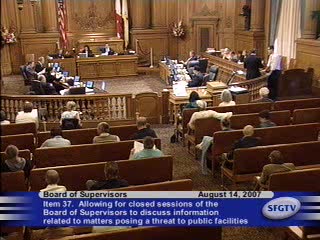
Board splits on 55 Laguna landmarking, approves partial designation and sends project back for revisions
Loading...
Summary
After hours of testimony and competing preservation and development proposals, the Board of Supervisors declined to landmark the entire UC Extension/55 Laguna site but approved a narrowed local designation and sent related approvals back for further action and refinement.
The San Francisco Board of Supervisors on Aug. 14 considered whether to designate the former UC Berkeley Extension campus at 55 Laguna Street as a city landmark, ultimately voting to adopt a narrowed local designation while preserving the path for a major housing-and-community-benefit project on most of the site.
A large, sometimes emotional public hearing featured neighborhood residents, preservation professionals and the development team behind a proposed 440-unit rental project. Supporters of designation said the two-block campus — Richardson Hall, Woods Hall, Woods Hall Annex, Middle Hall and associated walls and murals — reflects the city’s educational and WPA-era history. The developer, AF Evans with nonprofit partner OpenHouse, said its plan preserves most historic fabric while adding housing, a public garden and a community center and that landmarking the entire site would jeopardize the project and risk leaving the property vacant.
The Landmarks Preservation Advisory Board had recommended designation, and the Planning Commission had voted 4–3 to disapprove that recommendation, prompting the board appeal. Supervisors and witnesses debated several technical points: whether the site’s historic integrity survives piecemeal demolition and past loss of buildings, whether landmark status would prevent compatible new construction and how landmark status would interact with the Mills Act and potential federal Register nominations. The University of California — which still operates a dental clinic on a portion of the parcel and retains ownership — told the board it currently has no plans to close the dental school, complicating any notion of a single unified redevelopment parcel.
After extensive public comment and multiple amendments, the board voted to table the item that would have landmarked the entire property and instead approved findings and an ordinance that designates specific contributing elements. Under the board’s action, portions of the campus identified as architecturally and historically significant will receive local landmark protections while other components that the developer said were necessary to remove to make the housing plan feasible were not included in the designation. The board’s action also directed that related motions (appeal and findings) be prepared so the development and review process can proceed under the clarified scope of local landmarking.
Why it matters: The two-block site lies in a key eastern San Francisco neighborhood where a large vacant publicly owned parcel has been the subject of competing visions: preservation advocates want to maintain a near-complete historic campus; housing advocates and the project team have emphasized urgent housing, senior units and community facilities. The board’s compromise narrows the landmark footprint while leaving room for project-level review and further negotiation on design and adaptive reuse.
Details of the board action and next steps: The board accepted a motion to table the full-site landmark appeal (item 39), and approved motions (items 40 and 41) and an amended ordinance (item 42) that limit the landmarking to specified contributing elements while excluding certain buildings the developer said were needed for viable housing and public-benefit construction. The board instructed staff and counsel to prepare the required ordinance language and findings and continued other procedural steps to the committee-of-the-whole date and to the September 11 calendar where an amended ordinance will return for second reading.
Voices from the hearing: Bridget Maley, president of the Landmarks Preservation Advisory Board, urged full or broad landmarking, saying new construction and preservation can be compatible. Architect Alan Martinez presented alternative site concepts showing how historic buildings could be retained while meeting housing goals. Ruthie Bennett for AF Evans and Steve Vettel, counsel for the developer, said the proposed project preserves approximately 83 percent of existing building square footage, would create rental and affordable housing — including units targeted to LGBT seniors — and would provide a community center and public open space. Elizabeth Gunther, general counsel for the University of California, said the dental clinic on the corner is an active, viable facility with no current plan to relocate.
What was not decided: The board’s narrowed designation resolves which structures receive immediate local protections, but it did not finalize the development approvals, zoning changes or CEQA findings that the project will need. The university’s long-term plans for the dental school parcel were described as uncertain; UC representatives said relocation would require a separate process and resources.
The board’s ordinance will return for a required second reading on Sept. 11; the project team and preservation advocates will continue negotiations about design details, adaptive reuse strategies and the interplay of local landmark status with financial tools like the Mills Act.