Get Full Government Meeting Transcripts, Videos, & Alerts Forever!
Get email alerts on the Zoning Variance topic
No spam. Unsubscribe anytime.
Allentown Zoning Hearing Board denies Ponce Holding’s 701 N. Eighth Street proposal amid parking and safety concerns
Summary
The board denied without prejudice a request by Ponce Holding Company to convert a former church at 701 North Eighth Street into six apartments, citing unresolved parking, circulation and design concerns and insufficient evidence to establish minimum relief necessary.
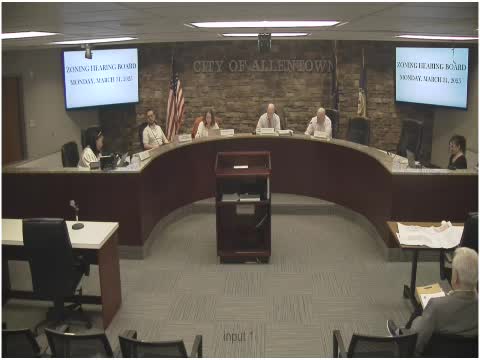
The Allentown Zoning Hearing Board on March 31 denied without prejudice a Ponce Holding Company application to convert a former church at 701 North Eighth Street into six apartments, citing unresolved parking, circulation and safety concerns and insufficient proof of minimum relief required under the zoning code.
Owner Manny McCall, represented at the hearing, presented plans that would create six units (one two‑bedroom and the remainder one‑bedroom), add three off‑street spaces by removing a rear door and reconfiguring the rear area, and make facade improvements including new windows and exterior paint. McCall told the board he intends to relocate trash storage to the rear, add basement storage units, and follow direction from the city’s Shade Tree Commission on street trees and plantings.
City planning director Jennifer Gomez reviewed the Planning Commission’s comments and told the board adaptive‑reuse standards require exterior changes be compatible with the building and neighborhood and recommended conditions on window and door spacing, exterior lighting, coordination with the Shade Tree Commission on street trees, and documentation for the sewage planning module required by state code.
Neighbors and residents testified repeatedly that the neighborhood already has very limited on‑street parking and that the handful of off‑street and alley parking spaces near the property are typically occupied. Brian Engler, who lives across the street, said he had observed traffic and crash incidents in the alleys and asked the board to consider the safety of backing maneuvers. Several neighbors described chronic parking shortages and cited prior occasions when nearby renovation work had disrupted available curbside spaces.
The zoning office noted code language that generally requires sites to allow vehicle turnaround on‑site rather than backing into traffic; staff said the proposed three rear spaces would require a determination about whether alley operations and proposed vehicle movements complied with section 66073 and other standards.
Board members said they were receptive to adaptive reuse but raised repeated concerns about the sufficiency of the evidence on parking availability, the practicality of the proposed rear parking and turning movements, and potential safety risks posed by backing and cantilevered structural elements near a travel way. Because the application did not provide the board with clear evidence of the minimum relief necessary (for example, verified off‑site parking commitments or engineering documentation showing turning and structural feasibility), a member moved to deny the application without prejudice. The motion passed on a voice vote.
The denial without prejudice leaves the applicant free to return to the board with additional engineering, parking‑authority or design information addressing the board’s concerns.