Get Full Government Meeting Transcripts, Videos, & Alerts Forever!
Get email alerts on the Housing Construction topic
No spam. Unsubscribe anytime.
Presenters outline modular homes as a faster, cost-competitive option for housing and storm recovery
Summary
Presenters at the April 15 meeting told Woodfin council members modular homes can cut construction time and structure cost, are built to state/local codes (unlike HUD mobile homes), and are a viable option for fast, resilient housing after storm damage.
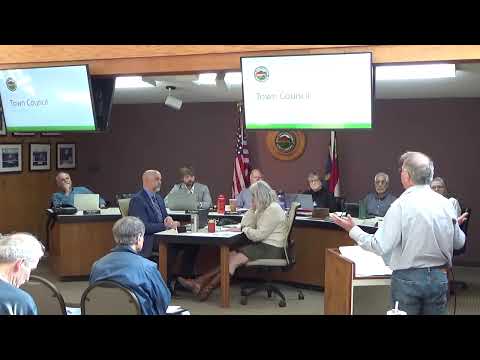
The council heard a presentation about modular homes and resilient building practices from Mary Love (Greenbuild Alliance) and Carla Parvin (modular-home builder/sales representative).
Parvin outlined how modular homes differ from mobile homes and tiny houses: modular and traditional stick-built homes are constructed to state and local building codes and are eligible for the same financing and insurance products. She described factory construction (two large modules delivered and set on a foundation), the on-site marriage-wall inspection that occurs before finish work, and the timeline: 8 to 12 weeks in the factory and generally another 3 to 12 weeks for site finish work, with a typical end-to-end delivery within six months or less depending on site-prep and permitting.
Parvin said modular homes can be 15-25% less expensive on the structure cost than comparable stick-built houses and stressed reduced weather exposure and waste in factory production. She described site considerations (foundation, crane access, road width and narrow bridges), inspection steps (footings/foundations locally inspected; framing/electrical/plumbing inspections at the factory plus a marriage-wall inspection after set), and common foundation and finish options including basements and decks.
The presentation included examples of modular single-family homes, duplexes and a Piedmont model adapted to basements and with roof pitches that enable upper-floor living. Parvin said her company had four units currently ready to deliver and represented a manufacturer in Boynton, Virginia. She also said, in response to council and audience questions, her firm had capacity to deliver up to about 30 units before September if the town or a partner committed to procurement.
Council members asked whether modular housing is treated as stick-built under local codes; staff said yes, modulars are treated the same as traditional stick-built homes under current Woodfin ordinances. Questions from the audience and council also covered site suitability, inspection timing, and financing and insurance comparability.
Speakers encouraged the town to consider modular construction as one tool for accelerating housing production after the storm and to engage with organizations such as the Greenbuild Alliance and local modular manufacturers when seeking attainable or rapidly replaceable housing.