Get Full Government Meeting Transcripts, Videos, & Alerts Forever!
Get email alerts on the Municipal Budget topic
No spam. Unsubscribe anytime.
Mount Shasta officials outline options to close a multi-hundred-thousand-dollar budget gap
Summary
City finance staff told the council the general fund faces a continuing structural deficit, driven by falling sales tax, rising PERS liabilities and overtime; staff proposed options including hiring freezes, reallocations, and fee updates to reduce a projected $440,000 shortfall for Fiscal Year 2025–26.
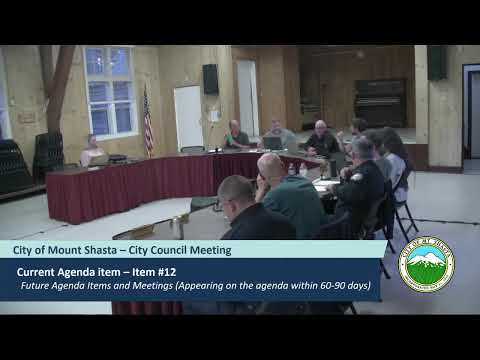
Mount Shasta finance staff told the City Council on April 8 that the city faces a continuing structural shortfall and offered a menu of options to reduce an adjusted projected deficit for fiscal 2025–26.
Melissa, the city finance staff member who led the review, said the city ran deficits in 2022–23 and 2023–24 and that sales tax revenue has continued to decline. She told the council the general fund’s audited reserve has fallen from about $2.7 million several years ago to roughly $1.5 million, and under current projections could fall to about $845,000 at the end of the coming fiscal year if no changes are made.
Why it matters: The city’s reserve is a primary buffer for cash-flow and unexpected costs; continued erosion would reduce the city’s flexibility to meet obligations and respond to emergencies.
Melissa described several drivers of the gap: an ongoing drop in sales tax receipts tied to changes in how online purchases are sourced; an increase in the city’s PERS (Public Employee Retirement System) unfunded liability that could raise the city’s bill by roughly $190,000 to $443,000 depending on final numbers; and persistently high overtime in public safety and dispatch. She said the city has four current vacancies (two in police, one in fire and one in public works) and that the council has imposed a temporary hiring freeze pending direction.
Council discussion centered on choices for closing the gap. Councilor Jeffrey and other council members said they favored pursuing a balanced budget and recommended management-level decisions on where to cut. Options discussed included delaying or not filling vacancies, cutting overtime, reallocating enterprise fund charges for central services (IT, facilities) back to enterprise funds, and accelerating a review of fees and cost recovery for city services.
Melissa recommended several operational steps staff could pursue: charging allowable administrative costs to grants (to reduce general-fund burden), allocating more IT and facilities costs to enterprise funds, reviewing contracts for potential savings, and pursuing fee adjustments through the master fee schedule to move toward full-cost recovery for permitting and services. She also suggested converting transient occupancy tax (TOT) reporting from quarterly to monthly (the city’s ordinance allows collection at the tax administrator’s discretion) to improve revenue visibility.
Public comment: Residents and local stakeholders urged the council to avoid cuts that would slow permitting (a representative asked the council not to reduce DevCom inspection days) and asked that budget materials be provided in more accessible formats (Excel) to aid review.
No formal budget changes were adopted at the meeting. The council directed staff to continue analysis and to bring options to the April 23 audit committee meeting and back to council. Council members repeatedly framed the next steps as selecting prioritized reductions rather than a single across-the-board percentage, though several council members referenced that a roughly 10–12 percent reduction in operating costs would materially address the projected shortfall.
Next steps: Staff will present detailed options to the audit/finance committee on April 23, refine PERS cost estimates, continue review of grants for allowable administrative charges, and return to council with prioritized budget adjustments and fee-schedule proposals.