Get Full Government Meeting Transcripts, Videos, & Alerts Forever!
Get email alerts on the Transit topic
No spam. Unsubscribe anytime.
Charlottesville officials signal support for more bus drivers but defer binding funding decision until broader budget process
Summary
Councilors and transit staff discussed aims to increase driver headcount to improve frequency across routes, the impact of county cost-sharing and federal funding uncertainty on zero-emission vehicle plans. Officials said more planning and intergovernmental discussions will be held this summer and fall.
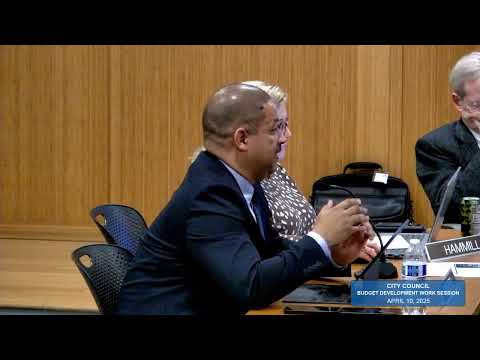
City officials and councilors discussed transit staffing and service goals at a Charlottesville work session, outlining a target to add drivers to reduce headways and noting the fiscal implications of doing so mid-cycle.
Staff and council members reported a target to increase transit driver staffing from the currently allocated 66 positions toward as many as 82 in future budgets; advocates requested accelerating hires this fiscal year. Staff said filling additional driver positions now could require the city to carry full-year costs if county contributions are not yet committed.
A city staff member explained the challenge: if the city adds positions outside of the normal budget cycle, "we would carry that for the full year, and we would edit their request that we would make for FY27 to account for that decision," and cautioned that the city would need to pay recurring costs before the county contribution could be applied.
Councilors and staff agreed that improving frequency and service reliability across the network should guide hiring goals and emphasized equity in service improvements. Staff referenced Federal Transit Administration expectations that agencies distribute service improvements broadly rather than concentrating improvements only on routes that serve higher-income riders. "They're looking for us to do that in as fair and balanced a way as we possibly can," a city staff member said, summarizing federal guidance discussed in the meeting.
Officials also said the city's zero-emission transit plan relies heavily on federal infrastructure funding that now faces uncertainty. "The 0 emissions plan was fundamentally based on the fact that federal government money would take an enormous amount of that cost off the city," a staff speaker said; staff added that recent reductions to funding in the Inflation Reduction Act and Bipartisan Infrastructure Law make parts of that plan difficult to implement on the original timeline.
Staff outlined next steps: hold joint discussions with Albemarle County and other partners this summer and fall to make transit objectives part of next year's budget planning, analyze service outcomes (including maintenance, customer service and supervisory needs that rise with more frequent service) and return to council with targeted options for one-time bridging funds or recurring funding scenarios. The citycounty-owned transit entity (CARTA) and potential future local revenue options, such as an enabling sales tax at the state level, were mentioned as longer-term funding strategies.
Ending: City staff said they will bring detailed data and cost estimates to upcoming sessions so councilors can consider whether to fund a partial bridge now with one-time money or wait and incorporate the full recurring costs into the FY27 budget cycle. Officials emphasized that any one-time spending for recurring positions carries fiscal risk and would influence conservative guidance to budget staff for the next year.