Get Full Government Meeting Transcripts, Videos, & Alerts Forever!
Get email alerts on the Statute Of Limitations topic
No spam. Unsubscribe anytime.
Utah Supreme Court weighs who bears burden in 35-year-old abuse case and whether remand is needed
Summary
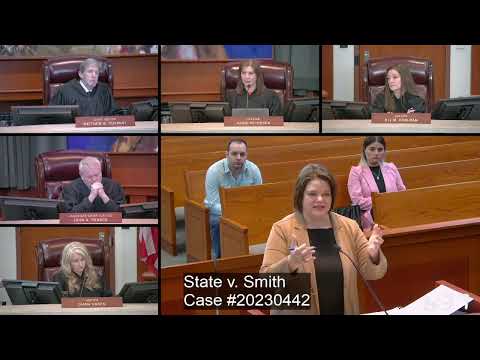
At oral argument in State v. Smith, the Utah Supreme Court heard competing views over whether a district court should have dismissed 35-year-old child‑abuse charges or remanded for more evidence, and whether the prosecution or defense bears the burden under the statute that governs late-filed cases.
The Utah Supreme Court heard argument Tuesday in State v. Smith over whether a district court erred by sending to a jury a statute-of-limitations question in a 35‑year‑old child‑abuse prosecution and who must prove timeliness under the statute that governs late-filed cases.
Defense counsel Tiara Taliaferro told the justices that the trial judge “could not find by a preponderance of the evidence” that the prosecution was not barred and therefore should have dismissed the charges rather than send the question to the jury. Taliaferro said the evidentiary record before the district court and this court already contains the same material and that remand would only allow the state another chance to add evidence: “We had some inference of a report. We are lucky in the sense that that woman said I was pulled out in seventh grade,” she said, arguing the record still did not show by a preponderance that a report to law enforcement had not been made.
The state, represented by Michael Palumbo, agreed that the district court should not have sent the statute‑of‑limitations question to the jury but urged a remand so the district court could apply the proper statutory standard. Palumbo told the justices that “76.1306 provides the procedure that the Court should have followed,” and argued the district court’s belief that it could defer the question to the jury reflected a misunderstanding of precedent (Pierce) and procedure.
Both sides debated what the statute requires once the defendant “raises” a limitations issue and whether that statutory text places the preponderance‑of‑the‑evidence inquiry on the court and, if so, which party must carry the initial burden. Counsel also disputed whether the district court improperly refused to hear testimony from the alleged victim (referred to in the record as CR) after multiple pretrial hearings; the state had proffered limited testimony by CR that counsel said would bear on whether the earlier disclosure was in fact a report to law enforcement.
Several justices focused on whether the district court’s comments—at times saying she was inclined to send the question to the jury and at other times saying she did not know whether the statute had run—should be read as a factual finding that the state had not met the preponderance standard or as a determination that factual disputes remained that only a jury could resolve. Taliaferro argued the district court’s statement that it “could not” determine whether the statute had run amounted to the district court finding the state had not met its burden. The state countered that the district court’s misapprehension about the governing law likely informed its decision not to hear CR’s testimony and that a remand with instruction would allow the district court to resolve whether to reopen evidence.
Counsel and the justices also discussed the practical evidentiary difficulties in a decades‑old case: the alleged victim’s statement in the probable‑cause affidavit that she “remembers being pulled out of class when she was in seventh grade and being asked about the abuse,” and that she “never told anyone else after that because she felt ashamed,” was the central disputed fact supporting an inference a report occurred in the late 1980s. Defense counsel said police‑record practices and school resource‑officer procedures at the time meant records could be sparse, and that the state had multiple chances over five hearings to locate or present records and witnesses.
No decision was announced at argument. The court concluded by saying it would “take it under advisement.”
Votes at a glance: none—this was an oral argument; the court took the case under advisement.
Background and context: The underlying allegation dates to the late 1980s; counsel and the justices discussed statutory changes extending and ultimately eliminating the limitations period through 2008 if no report to law enforcement was made earlier. The district court judge in the trial court proceedings is identified in the record as Judge Treece. The probable‑cause statement and a detective identified as Detective Franco are sources for what CR is said to have told investigators decades earlier.
What’s next: The Utah Supreme Court will issue an opinion resolving whether the district court applied the correct standard, who bears the factual burden when a limitations issue is raised under the cited statute, and whether remand or dismissal is appropriate in this record.