Get Full Government Meeting Transcripts, Videos, & Alerts Forever!
Get email alerts on the Agriculture Budget And Policy topic
No spam. Unsubscribe anytime.
Senate committee advances agriculture omnibus with cuts to urban ag, new avian influenza and farm-safety funding
Summary
The Senate Commerce Committee on April 10 advanced Senate File 2458, an agriculture omnibus bill that shifts and trims several programs to meet a negative budget target while increasing funding for ag emergency response, farm-safety and meat inspection.
Senate File 2458, the agriculture omnibus bill, was advanced by the Senate Commerce Committee on April 10 after debate and several amendments. The bill meets a committee-imposed negative budget target while reallocating money within the Minnesota Department of Agriculture (MDA) budget to prioritize emergency response, farm safety and meat inspection.
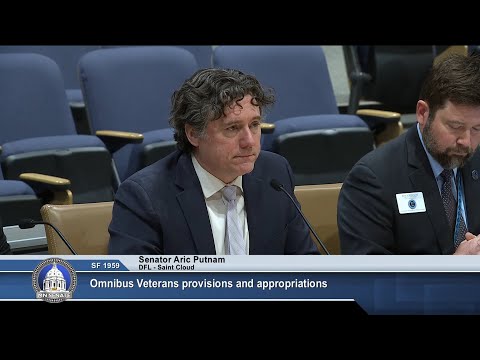
At a committee hearing, Senator Andrew Putnam, sponsor of the bill, told members the panel had worked under a negative budget target and had “created a balanced, appropriate, and, responsive, agricultural budget.” He said the bill reduces some programs and redirects resources, noting that “30% of this budget goes directly to, ag emergency responses” including grants for poultry producers to support avian influenza prevention measures. Putnam also noted cuts to the urban agriculture account and adjustments to biofuels programs.
The committee heard a line-by-line fiscal walkthrough from Senate fiscal staff. Eric Olofsson, Senate fiscal analyst, described change items in a three-page spreadsheet labeled “Agriculture, Broadband and Rural Development 2025 — Chair’s Recommendations as referred to Finance, SF 02/1958, First Engrossment.” Olofsson said the bill meets the targets: a net savings target of $313,000 to the general fund for fiscal 2026–27 and new general-fund spending of about $2.9 million in 2028–29. He identified specific changes including a $3,000,000 reduction to the governor’s green-fertilizer proposal, reductions to the urban agriculture account (from $2,000,000 per year reduced substantially), a $1.5 million reallocation from a dairy program to the agriculture emergency account, and operating adjustments for protection services and meat inspection.
MDA Commissioner Tom Peterson briefed the committee and thanked authors and staff for aligning MDA priorities to the bill. Peterson said Minnesota’s agricultural economy is under strain — “median farm income was $22,000” in 2024 — and said the bill includes “operating adjustments, which is critical to helping our agency do the things that we need to do to serve Minnesotans,” and that the bill would help with avian influenza work and other agency priorities.
The bill also funds farm-to-school and a new local food purchasing program, expands some grant eligibilities and preserves operating adjustments for the Board of Animal Health. Olofsson said the bill transfers $1,500,000 into the agriculture emergency account and provides operating adjustments for protection services and for meat inspection — the latter drawing an additional $702,000 in fiscal 2026–27 and $900,000 in fiscal 2028–29 in the analyst’s spreadsheet.
A contentious discussion centered on updates to grain licensing fees and cottage-food licensing changes. The bill removes some cottage-food exemptions and revises a grain licensing fee schedule that the fiscal analyst estimated would produce roughly $900,000 in new revenue for the ag fund in both 2026–27 and 2028–29. Several senators, including Senator Howe, Senator Dames and Senator Graham, said they had received constituent letters and concerned testimony that fee increases — particularly for larger grain handlers and cooperatives — could affect small, locally owned elevators and farmer dividends. Senator Graham offered an amendment (A40) to phase in the fee increases; that amendment failed on a voice vote after discussion about competitive risk for elevators near state lines.
Committee members adopted a set of technical and programmatic amendments before voting the bill out of committee. Technical amendments A37 and A42 were described by staff as cleanup and forecasting clarifications and were adopted. Amendment A39 adjusted cooperative development grant language and was adopted. Senator Graham’s amendment (A41) broadened the group of clinicians who may provide medical documentation (adding physician assistants and nurse practitioners) for pesticide disclosure requests; committee members approved that amendment unanimously. An amendment from Senator Dames to prevent Second Harvest Heartland from using state funds for administrative expenses was offered and then withdrawn after the authors agreed to further discussions.
Senators praised the inclusion of farm-safety funding and other targeted supports during floor debate in committee. Senator Tom Peterson thanked legislators and staff for preserving many of the governor’s priorities and for shifting funds to address immediate needs including avian influenza and farm safety.
After debate and amendment votes, Senator Nick Frentz moved that Senate File 2458 as amended be recommended to pass; the motion prevailed on a voice vote.
Votes at a glance: the committee adopted technical amendments A37, A39 and A42 and the program amendment A41. The fee-phase-in amendment A40 failed on a voice vote. The omnibus bill, as amended, was recommended to pass by the committee on a voice vote.