Get Full Government Meeting Transcripts, Videos, & Alerts Forever!
Get email alerts on the Comprehensive Plan topic
No spam. Unsubscribe anytime.
Caroline County planning commission outlines updated comprehensive plan outreach and focuses on housing, septic and water
Summary
The Caroline County Planning and Zoning Commission reviewed comprehensive plan outreach and housing priorities and scheduled a public open house April 30 while planning a targeted follow-up survey to update 2022 results.
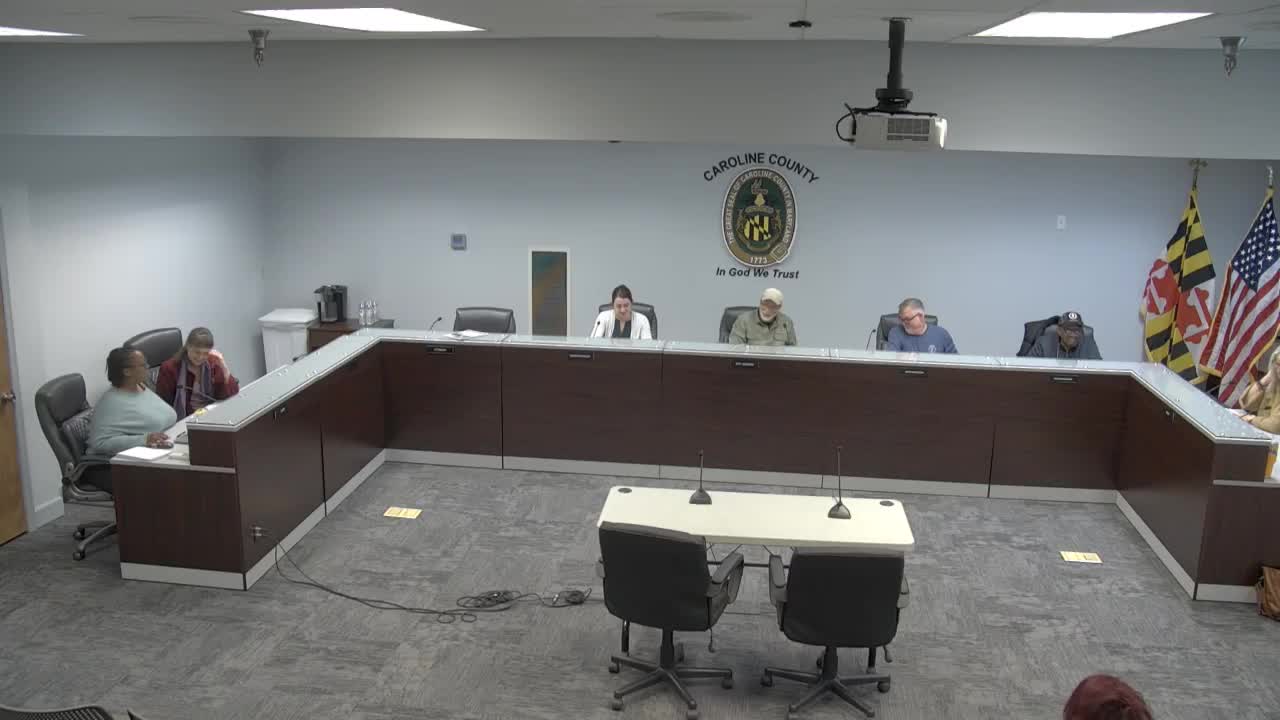
The Caroline County Planning and Zoning Commission reviewed progress on the county'wide comprehensive plan update at its April 9 meeting, and laid out outreach steps including a public open-house event April 30 and a potential targeted resident survey this summer to update a 2022 questionnaire.
Commissioners and staff said the update will shape future zoning code changes. Planning staff presented a large packet of the 2022 survey results and a summary of responses; staff recommended a narrower follow-up survey focusing on housing types, accessory dwelling units (ADUs) and multifamily options as recent state housing legislation and changes in demographics have altered local conditions.
The commissioners emphasized that housing decisions are tied to infrastructure. Planning staff and several commissioners said septic regulations and the lack of public water and sewer are a major constraint on adding housing density in rural areas. The commission discussed the difficulty of building smaller, more affordable lots when septic setbacks and soil conditions force large lot sizes, and noted that public water and sewer, where feasible, reduce minimum lot sizes and can enable denser housing options.
Commissioners discussed the role of towns and of the county in directing denser development toward town centers and rural villages. The commission identified Bethlehem and Harmony as rural villages where modest multifamily opportunities such as duplexes and fourplexes might be appropriate, but said code changes would likely be required. Staff said the county's current zoning sometimes prevents form-based or multiunit options and that the housing element of the comprehensive plan will assess where the code may be inadvertently blocking housing options.
Planning staff said state septic rules and minimum SRA (soil recovery area) requirements often limit the possibility of adding ADUs on existing lots and recommended that the commission consider engaging Maryland Department of the Environment (MDE) and the state health department to seek regulatory changes or clarifications that could enable more shared or alternative septic solutions.
To gather broader input, staff described an outreach plan that includes: - An April 30 public open-house in the same meeting room, 6 p.m., with information stations for plan elements; staff said the event will be publicized countywide and livestreamed where possible. The commission flagged quorum/advertising requirements and confirmed the outreach meeting can be posted as a special public meeting to allow broader commissioner participation. - A revised resident survey focused on housing, ADUs and solar/renewables impacts, with a draft to be returned to the commission for review before release. - Business outreach using an existing county business contact database to ask employers about hiring constraints and whether lack of local housing is a primary factor. - Printed materials including a flyer and business card, plus Spanish and Haitian Creole translations targeted to communities where English is not predominant.
Staff also said they will prepare clearer maps showing the county areas included in the county comprehensive plan (areas outside incorporated town limits) and a short FAQ to distribute at events and on the plan website. Commissioners asked staff to prioritize a clear map and town contact information for outreach materials so residents can easily determine whether the county plan applies to their property.
The commission agreed to return a draft of the updated survey and outreach plan to the commission for approval before wider distribution. Staff said they would tabulate volunteer interest from the prior survey (about 40 said yes, 54 maybe) and follow up with those respondents.
The commission noted that the housing discussion will require extended meetings and additional detail on affordability calculations, including median income and housing cost-burden targets, and that the housing element will examine where the county's regulations and infrastructure choices are constraining housing opportunities.