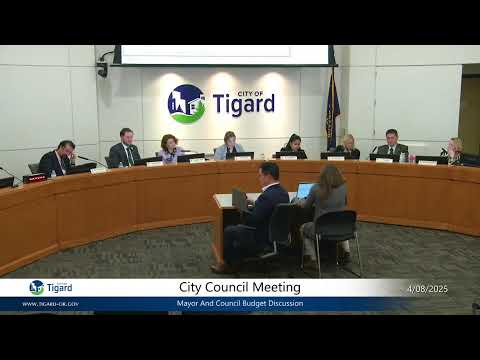
Tigard residents urge council to advance renter protections, ask for workshop on proposed policy
Loading...
Summary
Several members of St. Anthony Parish's housing justice team told the Tigard City Council about mold, delayed repairs and harassment in rental housing and asked the council to reactivate local preliminary rental-improvement policy (PRI) work and hold a workshop with affected tenants.
Several Tigard residents and members of Saint Anthony Catholic Church’s housing justice team told the Tigard City Council on multiple public-comment turns that unsafe rental conditions, delayed repairs and landlord harassment are worsening and asked the council to restart local work on tenant protections.
The requests were presented by Cynthia Hernandez Rojas, Jim Awe, Cecilia Bolton (in Spanish with translation), Cindy White, Dee Hutchins and April Lacombe. ‘‘We want Tigard to be an exemplary place to live,’’ Cindy White said, asking the council to “reconsider and activate the preliminary policy approach already begun almost three years ago for living conditions.”
The petitioners described a pattern of delayed maintenance and what speakers characterized as landlord negligence. Cecilia Bolton said mold and other damage took more than two months to be addressed at her building, and that three families were forced to move with less than two hours’ notice. Dawn Hutchins and other speakers raised concerns about unequal treatment and possible discrimination against renters.
Speakers asked the council for two specific steps: (1) reactivate the city’s preliminary policy approach for rental living conditions (referred to in testimony as “PRI”), and (2) hold a council workshop that would allow tenant advocates and parish volunteers to provide input and help move the work forward. Cindy White also said the group wished to be included in implementation discussions and offered to provide volunteer support.
The speakers noted a related reference to “House Bill 3,769” (as cited in testimony) and relayed that Representative Mark Gamba had told them that bill was unlikely to advance this year; speakers said that, in their view, state legislation would not substitute for local action on living conditions. The group also said three written public comments had been submitted on related subjects ahead of the meeting.
Council members did not take formal action on the requests during the public-comment period. Mayor Lueb asked that the speakers provide contact information to staff so the city can follow up. Danny (city staff) was asked to collect contact information to forward to the mayor.
The council did not adopt policy at the meeting but acknowledged the submissions and signaled that staff follow-up was expected; the petitioners said they planned advocacy in Salem and requested council participation in those efforts.
Clarifying details from testimony: speakers asked for a workshop to discuss a “PRI” preliminary policy approach begun about three years earlier; they said HB 3,769 is focused on state revenue and—according to what speakers reported from Representative Gamba—was not expected to move this year; testimony included an account of mold and emergency relocations affecting three apartments. The speakers asked to be included in drafting and outreach for any local program.
The council’s next steps, as stated at the meeting, were to have staff receive contact details and follow up; no ordinance, code amendment or funding decision was made at the session.