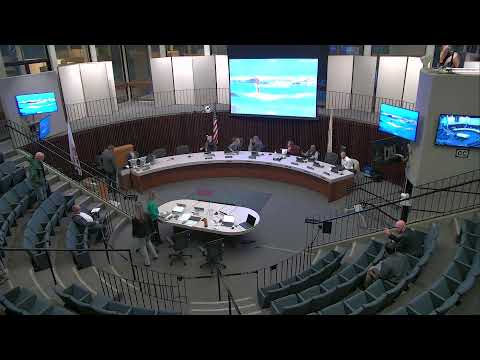
Get Full Government Meeting Transcripts, Videos, & Alerts Forever!
Get email alerts on the Land Use Gas Station topic
No spam. Unsubscribe anytime.
Santa Rosa planning panel denies conditional use permit for Elmtree Station gas project
Summary
After hours of public comment raising traffic, groundwater and public‑health concerns, the Planning Commission voted 6–0 with one recusal on April 10 to deny a conditional use permit for Elmtree Station and declined to adopt a CEQA addendum the same night.
The Santa Rosa Planning Commission on April 10 denied a conditional use permit for the proposed Elmtree Station project at 874 North Wright Road, voting 6–0 with one recusal. Earlier in the meeting the commission voted to reject staff’s proposed addendum to the 2013 mitigated negative declaration by the same margin, preventing the environmental determination needed to approve the project.
The Elmtree Station proposal called for a mixed‑use site with a gas station (six dispensers), four electric vehicle chargers, a neighborhood market (about 3,500 square feet), a smaller 432‑square‑foot building on an adjacent lot, one upstairs apartment of roughly 900 square feet, and a privately maintained public park connected to the Joe Rodota Trail. Senior Planner Connor McKay told the commission the project would be reviewed under Planned Development District 435 and that the application had been in process prior to the city’s 2022 ordinance prohibiting new gas stations; the city council had exempted projects already deemed complete from that ban.
Why it mattered: commissioners and dozens of speakers at a lengthy public hearing said the site presents public‑health, environmental and traffic risks that outweigh the project’s benefits. Opponents cited ground‑water vulnerability, the proximity of two fossil‑fuel dispensing facilities, wildfire evacuation bottlenecks on nearby single‑lane roads and conflicts with the city’s climate and circulation goals. Trackable technical items raised in public comment and staff responses included updated traffic counts, health‑risk and air‑quality studies, and the project’s wetland and stormwater mitigation.
Project history and applicant position Connor McKay and staff summarized the entitlements history: the site had prior approvals and a 2013 mitigated negative declaration; those entitlements lapsed, the applicant refiled in late 2021, and the city council’s 2022 gas‑station ordinance allowed in‑process applications to continue. The applicant’s representative, Jean Kapolczak, and members of the ownership team described on‑site design features and said the environmental addendum updated air‑quality, greenhouse‑gas and vehicle‑miles‑traveled (VMT) analyses to current thresholds and that a detailed health risk assessment found no new significant impacts.
The applicant team said several mitigation steps already had been completed: approximately half an acre of wetland mitigation credits purchased, nearly two acres of compensatory mitigation credits purchased, about one‑third acre of special plant mitigation credits purchased, a Section 401 permit reauthorized to 2029, and a signed agreement with Sonoma County Parks for the Joe Rodota Trail connection. Traffic and other technical consultants were present to answer questions.
Public concerns Dozens of residents, health professionals and local advocacy groups urged denial. The Coalition Opposing New Gas Stations’ Woody Hastings asked the commission to “deny the addendum to the mitigated negative declaration and the conditional use permit” and submitted a petition and a letter signed by local health professionals. Commenters, including physicians and retired environmental‑health specialists, warned of groundwater contamination from leaking underground storage tanks, benzene and other carcinogens, and the potential for long, costly remediation. Neighbors described observed traffic backups at the Highway 12/Fulton intersection during wildfire evacuations and said additional fueling activity there could worsen evacuation delays on single‑lane local roads.
Other witnesses, including representatives of Bikeable Santa Rosa and conservation groups, said the proposal conflicts with the city’s climate emergency goals and undermines efforts to promote walking and bicycling along the Joe Rodota Trail. Several speakers also questioned the adequacy of the addendum and called for a new traffic study and deeper CEQA review.
Commission discussion and rulings Commissioners repeatedly framed their decisions around two legal tests: (1) whether the addendum adequately addressed new information and changed circumstances since the 2013 mitigated negative declaration, and (2) whether the commission could make the required conditional‑use permit findings, including that the use would not be “injurious to the public interest, health, safety, convenience, or welfare.” After hearing public testimony and staff responses, the commission first voted on staff’s recommendation to adopt the CEQA addendum. That motion, moved by Commissioner Vicky Sisco and seconded by Commissioner Pardo, failed, with six commissioners voting no and one (Commissioner Sanders) recused.
After failing to adopt the addendum, commissioners discussed a formal denial. Staff prepared a draft resolution of denial during a brief recess. Commissioner Sisco moved to deny the conditional use permit; Vice Chair Duggan seconded. The commission adopted the denial resolution on a 6–0 vote with Commissioner Sanders recused. The resolution cited inconsistencies with applicable zoning rules (planned development PD‑435 and the city’s zoning code provisions on service stations), general plan policies identifying Highway 12 as a major entry corridor, incompatibility with pedestrian and bicycle use of the adjacent trail, groundwater and hazardous‑materials risks tied to underground storage tanks, and an inadequacy of the addendum to fully analyze new and substantial information regarding traffic, water quality, greenhouse gases and air quality.
Recusal and appeals Commissioner Sanders announced at the start of the Elmtree item that he would recuse himself from the discussion and decision because of a personal relationship with an individual representing the applicant. The Planning Commission announcement attached to the denial notes the action is final unless an appeal is filed with the city clerk’s office within 10 calendar days of the decision pursuant to Santa Rosa zoning code procedures.
What the commission explicitly did not find The commission did not approve the CEQA addendum (the vote to adopt it failed) and therefore did not adopt the environmental determination staff recommended. Because the addendum was not adopted and because the commission concluded it could not make all necessary CUP findings, commissioners denied the conditional use permit rather than approve it with conditions.
Key project specifics and clarifications - Proposed fuel dispensers: 6 pumps; four EV charging stations included in site plan. - Retail space: approximately 3,500 sq ft (Lot 1) and 432 sq ft (Lot 2). - Residential unit: one apartment of roughly 900 sq ft above the Lot 1 retail space. - Lots: applicant described a roughly 3.75‑acre retail parcel and a 0.25‑acre adjacent parcel (as presented during the applicant’s slideset). - Zoning: Planned Development District 435; staff said PD‑435 allowed service stations with a major conditional use permit under prior zoning rules in effect when the application was deemed complete. - Separation standard cited in code: minimum 500 feet between service stations referenced in zoning code section 20‑42.150 (as applied historically by staff). - Mitigation credits and permits the applicant reported purchasing/receiving: ~0.5 acre wetland mitigation; ~2 acres of compensatory mitigation; ~0.33 acre special plant mitigation credits; regional board 401 certification reauthorized through 2029. - Traffic counts: staff and the applicant contrasted 2013 adjusted “pass‑by” trip counts and updated 2024 figures; staff reported the updated adjusted trips (passerby‑adjusted) were lower than 2013 adjusted values while total daily trip estimates in updated analysis were on the order of ~2,300 trips (figures in the staff presentation and rebuttal).
Next steps The Planning Commission’s denial is effective immediately subject to appeal. The record shows staff advised the public that this action is final unless an appeal is filed within 10 calendar days with the city clerk’s office under Santa Rosa zoning code appeal rules.