Get Full Government Meeting Transcripts, Videos, & Alerts Forever!
Get email alerts on the Small Business Restaurants topic
No spam. Unsubscribe anytime.
Tacoma committee hears restaurant owners cite grease-trap delays, permitting confusion and need for capital
Summary
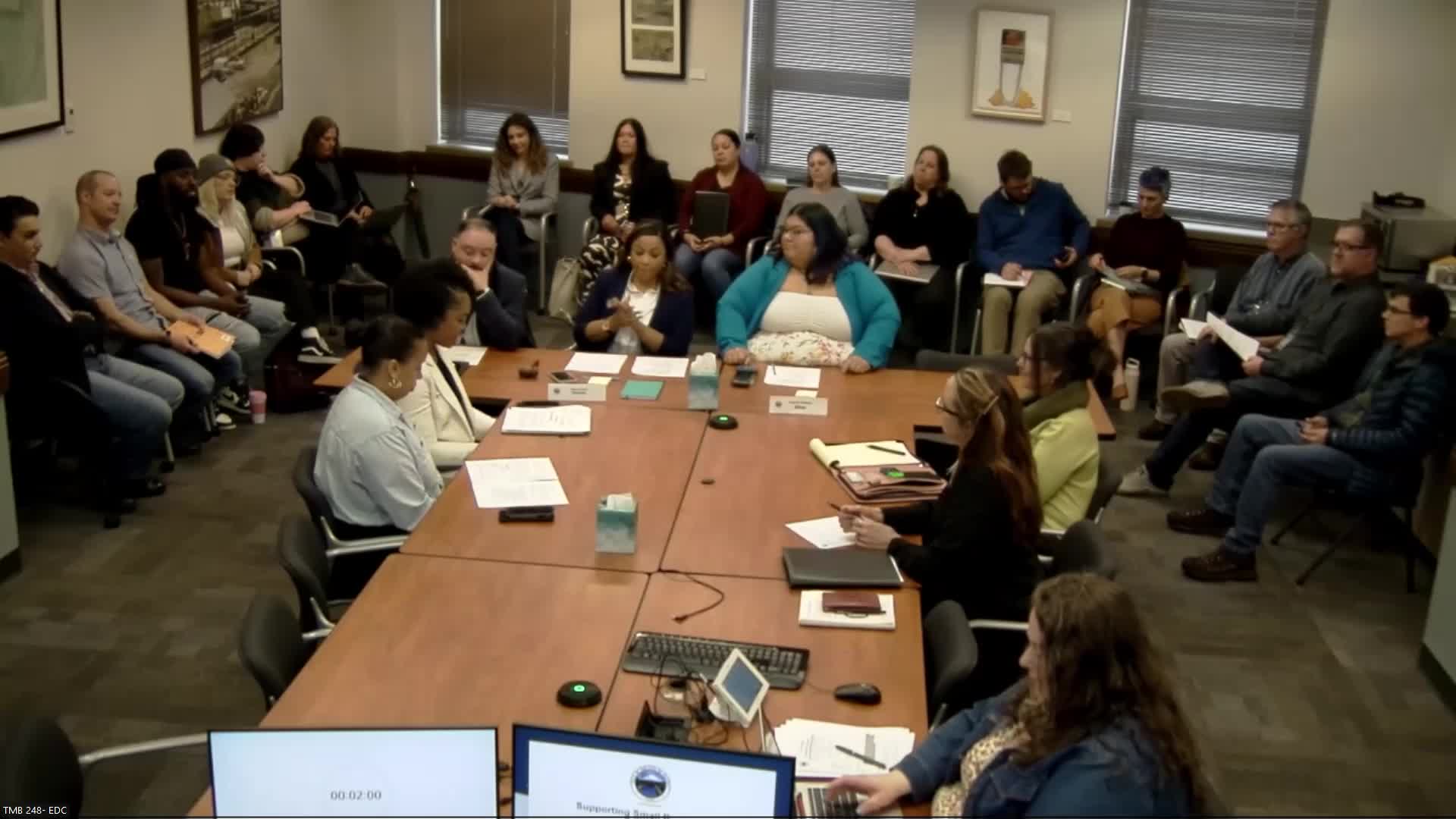
Tacoma City Council Economic Development Committee members on April 8 heard more than an hour of testimony from four local food-business owners and city staff about the practical barriers to opening and operating restaurants in Tacoma, with repeated complaints about grease-trap requirements, inspection delays, and difficulty predicting permit-related costs.
Tacoma City Council Economic Development Committee members on April 8 heard more than an hour of testimony from four local food-business owners and city staff about the practical barriers to opening and operating restaurants in Tacoma, with repeated complaints about grease-trap requirements, inspection delays, and difficulty predicting permit-related costs.
The roundtable brought together business owners who have moved from farmers markets and commissary kitchens into brick-and-mortar restaurants and founders who are still building out spaces. Philip Penagos, owner of Shaka and a multi‑venue restaurant operator in Tacoma; Jan Parker, owner of Reyna Filipina Kitchen and Jan Parker Cookery; Haley Hernandez, co‑owner of Side Piece Kitchen; and Buddy, owner of Buddy’s Chicken and Waffles, described long permitting timelines and large, often unanticipated, retrofit expenses that they say have threatened their ability to open or remain solvent.
“ I submitted everything in the summer… didn’t hear from the city until November that we didn’t get a grease trap,” Buddy said, describing a sequence of inspections and requests that delayed his permit for several months. Several speakers described similar multi‑month waits while work stalled and revenue needs mounted.
Business owners told the committee that grease-trap sizing and enforcement have become a recurring, expensive hurdle. One operator cited a local example in which a business paid about $60,000 to bring a grease-trap system into compliance; another said a nearby cafe was charged about $8,000. Jan Parker said the city awarded her Hilltop property and that the project “was granted, over 355,000,” but her contractor bids were running “near 500, 600 thousand” to complete the build‑out, forcing additional fundraising.
Several owners said the permitting website and interdepartmental handoffs create confusion about which office to contact first. Haley Hernandez described proactively seeking written preapproval before signing a lease, and said written confirmation from an inspector helped; other owners said they received inconsistent messages from different staff and that automated emails created false alarms. One operator said the fire‑department scheduling and reminders were helpful, but building‑department workflows and online permitting tools were “archaic” and hard to navigate.
Owners asked the committee for clearer, consolidated checklists and more proactive communication from the city so they can estimate costs and assemble funding. “It shouldn’t take a degree to navigate these systems,” Hernandez said, noting many small operators cannot afford to hire consultants or contractors just to complete permit applications.
City staff and committee members described existing and planned responses. Casey Woods, business and economic development manager for the City of Tacoma, and Deirdre Patterson, small business financing program manager, explained city programs that can support operators. Patterson said the city manages a revolving loan fund that has offered flexible loans since 1979 and that the department is distributing about $4.6 million in current loans and grants across several programs. Patterson also noted the city pursues external grants where available, including the Community Reinvestment Project (CRP) when funding is offered.
A staff representative noted structural limits on the city’s ability to provide grants: Washington state law and the state constitution restrict outright gifting of public funds, so most local assistance is distributed as loans or as competitive grants the city must first win from external funders. Staff said the department will continue to seek grant opportunities and use its revolving loan program for smaller, accessible capital needs.
Committee members and staff said they are working on several practical items raised by the businesses: improving interdepartmental coordination (particularly between environmental services/plumbing and permitting), clarifying code language to allow newer grease‑removal technologies where appropriate, publishing clearer checklists or an easy “first contacts” flyer for prospective restaurateurs, and exploring more affordable commercial kitchen/incubator space and visibility/promotional support. Vice Chair Diaz and other council members said the city is running a continuous‑improvement project to address many of those line items and has produced a one‑page flyer that has been distributed to property managers and business owners.
Owners urged faster action and more visible results. Several said the city has heard these complaints in news coverage and past meetings but that the same problems persist. “If you want to learn how a system is failing people, talk to the people that have failed,” Haley Hernandez said, urging the committee to include operators who closed because they could not navigate the system.
The committee closed the session with staff commitments to continue work on the permitting workflow, promote available loan programs and grants when they exist, and refine outreach so small operators know where to start. Committee members scheduled follow‑up briefings on related economic development work and equity in contracting in upcoming meetings.
Provenance: Excerpts from the committee’s April 8, 2025 Economic Development Committee roundtable and staff presentations were used throughout.