Get Full Government Meeting Transcripts, Videos, & Alerts Forever!
Get email alerts on the Torts Damage Caps topic
No spam. Unsubscribe anytime.
Maine Judiciary Committee Hears Competing Proposals to Raise Tort Claims Damage Caps; Field-trip bill draws personal testimony
Summary
Senators and representatives on the Joint Standing Committee on the Judiciary heard hours of testimony on two related bills that would raise statutory damage limits under the Maine Tort Claims Act.
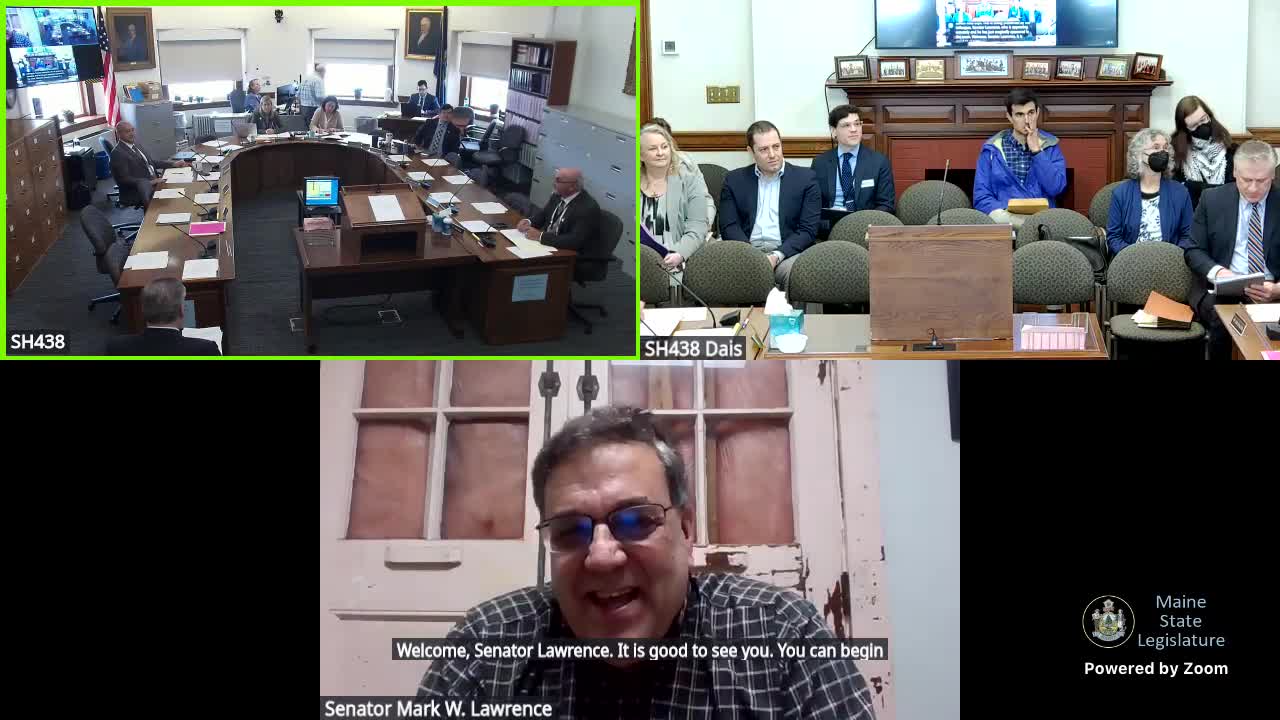
Senators and representatives on the Joint Standing Committee on the Judiciary heard hours of testimony on two related bills that would raise statutory damage limits under the Maine Tort Claims Act. Senator Mark Lawrence presented both LD 13 47, which would raise the general per-incident cap from $400,000 to $1,250,000, and LD 13 48, which would create a higher $5,000,000 cap specifically for deaths and catastrophic injuries arising from school field trips.
Why it matters: The Maine Tort Claims Act (MTCA) limits the state’s and local governments’ liability for many civil claims. Supporters of the bills say the current caps, unchanged since 1999, leave victims of catastrophic municipal negligence — including families of students harmed on field trips — without adequate compensation. Opponents say higher caps could increase school and municipal insurance premiums, strain local budgets, and reduce access to experiential education.
Senator Mark Lawrence, sponsor: “Schools must never needlessly endanger students on school field trips,” Lawrence told the committee, describing the bills as narrowly targeted attempts to allow jury trials and full compensation where municipal negligence causes serious harm. He said the current cap has not been updated since 1999 and argued the change is justified by inflation and modern damages in catastrophic cases.
A family’s account: Christopher Strecker, testifying by Zoom, described the 2021 death of his son, Michael, on a high-school hike. Strecker said his son developed exertional heat stroke and that school leaders did not call for help; he urged the committee to pass LD 13 48 so families harmed on school trips can bring civil claims. “My son’s preventable death should serve as a lesson to all schools about following basic safety standards,” Strecker said.
Trial lawyers and proponents: Michael Begos of the Maine Trial Lawyers Association urged passage of both bills. Begos said catastrophic jury awards commonly exceed the current cap, pointed to commercial liability markets that commonly underwrite $5 million to $10 million of coverage, and argued that insurance and municipal pooled risk mechanisms (including the MMA risk pool) already underwrite such exposures.
School and municipal concerns: Eileen King, deputy executive director of the Maine School Management Association, told the committee the association’s legislative committees oppose both bills. King said districts report few claims that reached the $400,000 cap and warned that raising the limit could produce substantial increases in liability insurance costs and amount to an unfunded mandate. “Increasing the cap . . . could incentivize claims that are not necessarily grounded in merit,” King said, and she cautioned that some districts might curtail field trips to limit risk.
Other affected sectors: Roger Krause of the Maine Water Utilities Association testified in opposition to LD 13 47 on behalf of public water utilities, saying a threefold increase in the cap would force utilities to buy higher insurance limits or set aside larger reserves — costs that ultimately fall to ratepayers.
Committee questions and technical issues: Committee members pressed proponents for data on the frequency of claims, effects on premiums, and whether routine bus transportation to and from school would be affected. Sponsors and witnesses said motor-vehicle exceptions in the MTCA already cover daily bus runs and that LD 13 48 is aimed at non-transportation activities during field trips (for example, experiential activities like hikes or swimming). Committee members also asked proponents to supply comparative data from other states and actuarial evidence on premium impacts; proponents committed to try to obtain that information for the work session.
Competing proposals: Committee members noted the bills would create different caps if both passed — one bill (LD 13 47) would raise the general per-incident cap to $1,250,000, while the field-trip bill (LD 13 48) would set a $5,000,000 cap for the narrow category of school field-trip catastrophes. Supporters said the higher field-trip cap reflects both the heightened risk of certain activities and the possibility that many children could be harmed in a single incident.
Next steps: The committee closed public testimony and said it will schedule a work session where staff will attempt to gather additional data about claim frequency, historical payouts, and insurance premium impacts; proponents and insurers were asked to provide briefing materials. No votes were taken during the hearing.
Ending note: Supporters framed the bills as restoring families’ access to jury trials and adequate damages after catastrophic injuries; opponents warned of higher costs, possible reductions in field-trip opportunities, and a need for more precise, narrowly drafted language.