Get Full Government Meeting Transcripts, Videos, & Alerts Forever!
Get email alerts on the Corrections Body Cameras topic
No spam. Unsubscribe anytime.
Family and advocates push Willie Washington Jr. Act to require body cameras in Rhode Island correctional facilities
Summary
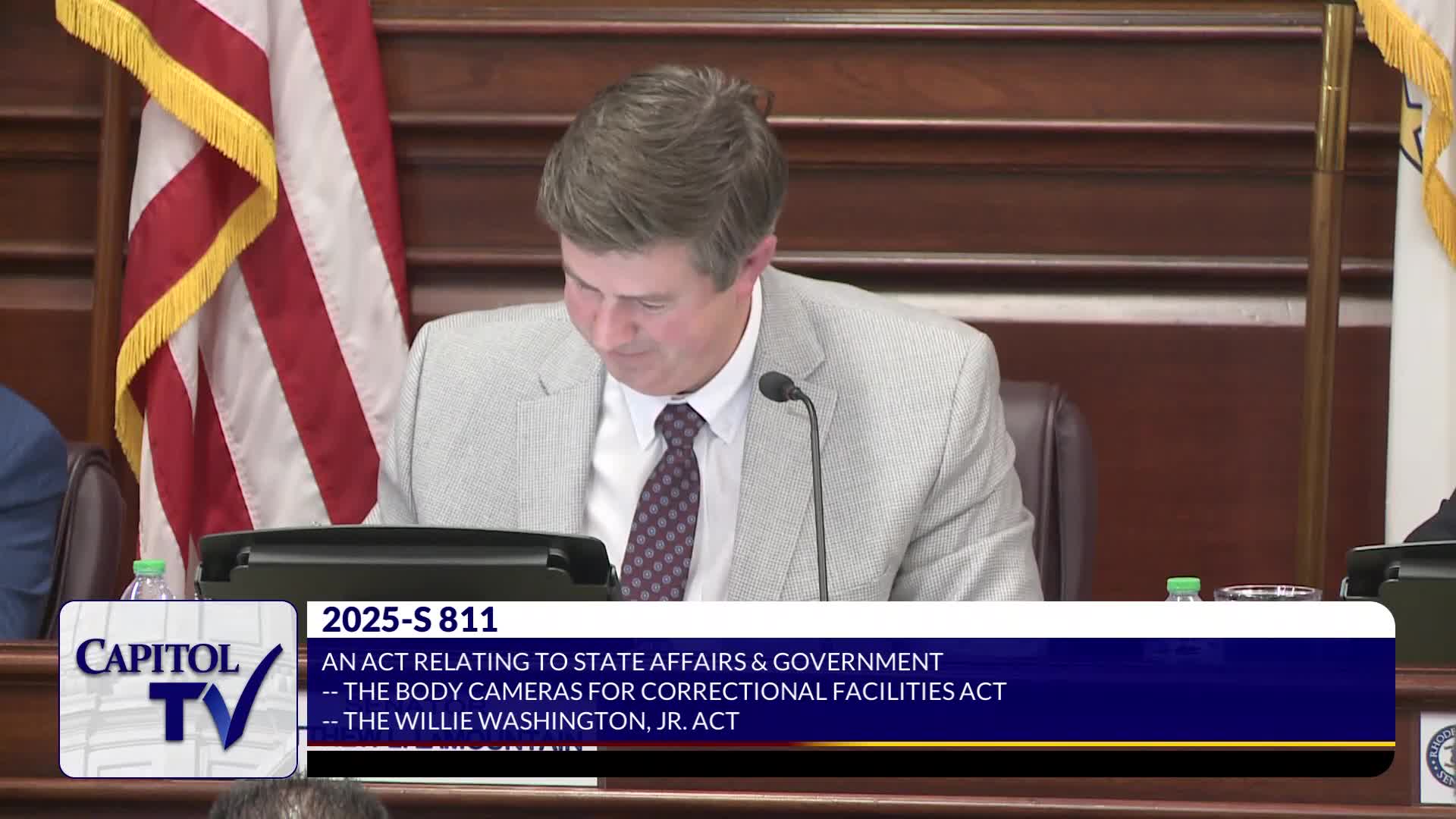
Lawmakers heard emotional testimony April 3 on the Willie Washington Junior Act (SB 811), a bill to require body‑worn cameras for correctional officers and to create an independent incident oversight committee.
Senate Judiciary took testimony April 3 on Senate Bill 811, known in testimony as the Willie Washington Junior Act, which would require body‑worn cameras for correctional officers in direct‑supervision roles, mandate retention of footage for investigations and establish an independent incident oversight committee.
Family members, advocates and formerly incarcerated witnesses testified in favor. Marissa Michener, the godmother of Willie Washington Jr., described her nephew’s 2024 death after repeated requests for medical care and urged statutory reforms to ensure independent review of medical emergencies and other incidents. "My godson...suffered for four days while repeatedly seeking medical assistance," Michener said. Advocates asked that recorded footage be kept at least 60 days and that an independent oversight body include civil-rights, legal and formerly incarcerated representatives.
Supporters also presented empirical evidence from other jurisdictions. James Lee, a Brown University student who reviewed correctional-camera research, cited a Loudoun County, Va., study that found reductions in use-of-force incidents and injuries after cameras were deployed in corrections settings. Community members and family members described instances they say would have been clarified or prevented with continuous recording.
The Department of Corrections and the correctional officers’ union raised objections. Richard Ferrucio, president of the Rhode Island Brotherhood of Correctional Officers, opposed a mandatory program, citing costs of equipment and storage, potential effects on staff privacy and the possibility that cameras could change staff-inmate interactions. DOC Chief of Staff Ryan Crowley noted that video systems exist in many areas but said the department is operating under changed policies, federal monitoring and labor negotiations and urged caution about prematurely codifying rules that are still being evaluated. The union also noted contract‑negotiation implications and cited other states’ implementation challenges.
Several witnesses addressed cost. Brown University students and community researchers compiled comparative figures showing per‑officer yearly costs in other states ranging from roughly $700 to $1,400 per officer per year (cameras plus storage), and argued that statewide implementation would represent a small fraction of the DOC budget.
After extensive testimony the committee held SB 811 for further study. The committee asked for additional technical details about costs, retention policies, the proposed oversight committee composition and the interplay with ongoing labor negotiations and federal oversight.
Ending: The committee did not advance the bill; SB 811 was held for further study pending follow-up information from DOC, union and sponsor negotiations.