Get Full Government Meeting Transcripts, Videos, & Alerts Forever!
Get email alerts on the Corrections Communications topic
No spam. Unsubscribe anytime.
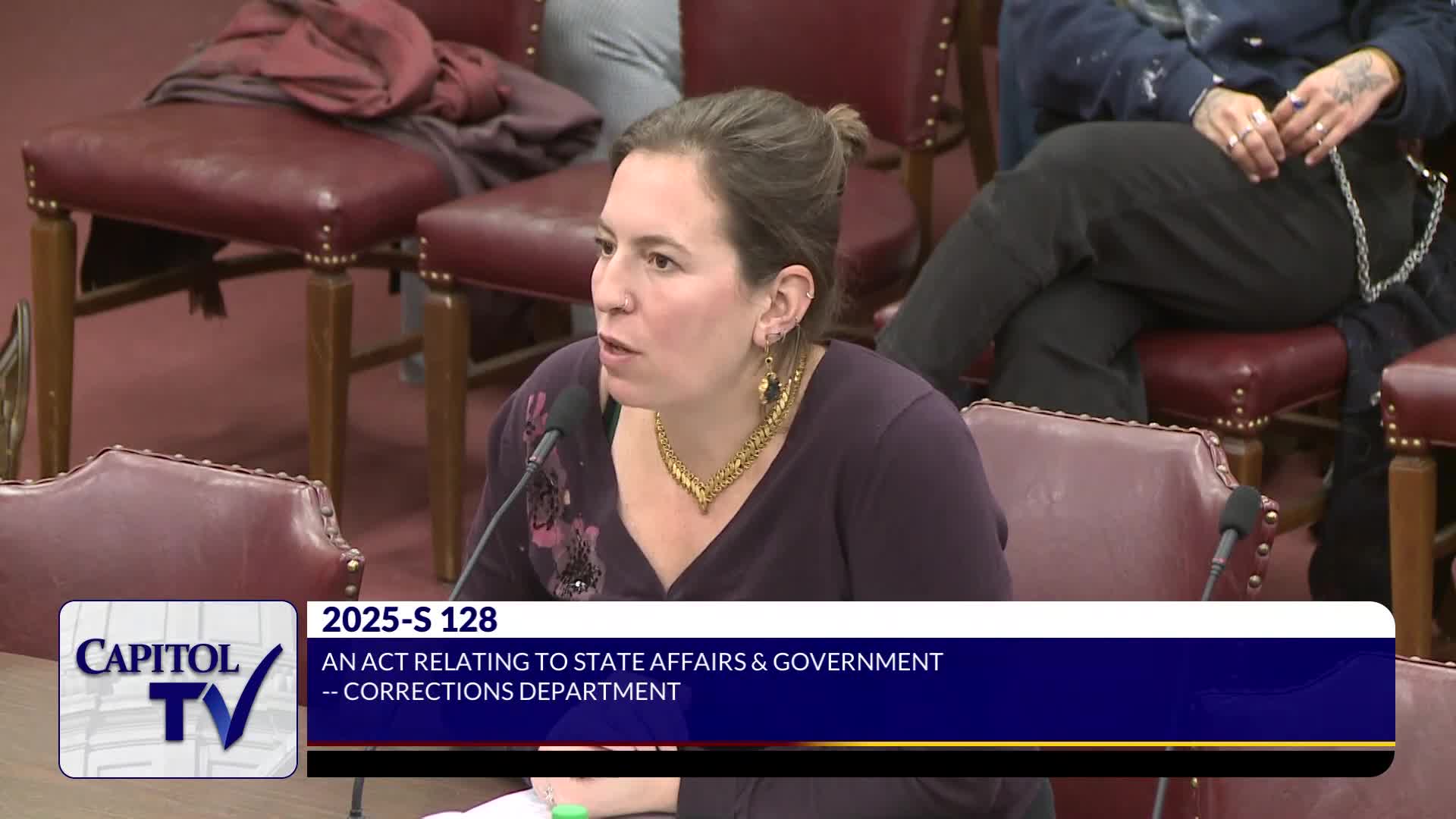
Senate committee hears broad support for bill to make prison phone calls free
Summary
Senate Judiciary heard hours of testimony supporting Senate Bill 128, which would provide free phone communications between incarcerated people and their families. Supporters said free calls reduce disciplinary incidents and help reentry; opponents raised cost and implementation questions. The committee held the bill for further study.
Senate Judiciary Committee members heard extensive testimony April 3 on Senate Bill 128, a measure sponsored by Sen. [Senator] Coleman that would provide free telephone communications between incarcerated people and their families at the Adult Correctional Institutions (ACI).
Proponents, including the ACLU of Rhode Island and national nonprofit WorthRises, told the committee that reducing or eliminating call charges would strengthen family ties, reduce violence inside facilities and lower recidivism after release. "Family support can really change how successful a person is both during their incarceration and after their incarceration," Coleman said when introducing the bill. "Providing this kind of communication at no cost lifts a really important burden off the shoulders of Rhode Island families."
The bill’s backers presented local testimony and national research. Antonia Jeffrey, director of policy and campaigns at WorthRises, told the committee her organization estimates Rhode Island families currently spend more than $1,100,000 a year on calls and that providing free calls could cost roughly $436,000 annually based on vendor rates negotiated in other jurisdictions. Stephen Parkhurst and Mario Montero of the Rhode Island Freedom Collective and a number of formerly incarcerated people described personal experiences: they said free calls allowed people to secure housing, jobs and legal help before release and, in some facilities, reduced violence and the informal control gangs exert over phone access.
Witnesses who work in mental-health and reentry services described clinical and practical benefits. Psychiatric nurse Melissa Bouchard said that when clients cannot communicate with family or treatment teams, their mental-health crises worsen and can lead to preventable emergencies. Diane Lewis and other family members spoke about the cost of staying connected: "I sacrificed my electric bill sometimes," one testified, describing daily calls to a son.
Committee members asked about costs and implementation. Supporters pointed to negotiated vendor rates and examples in other states that lowered per-minute charges to fractions of a cent when the state aggregates contract volume. Coleman and witnesses also noted Rhode Island’s existing law, passed in 2006, that prohibits differential rates for prison calls, and framed SB 128 as a next step.
Not all questions were resolved in the hearing. Senator(s) on the panel asked for fiscal analyses and documentation about how in-person visits and other details would be affected; a Department of Corrections letter about in-person visits was noted and the sponsor said the committee could follow up. With those outstanding questions, the committee voted to hold SB 128 for further study.
The committee did not adopt final language or an implementation plan; witnesses said the details of vendor negotiations, state procurement and which fees the state would absorb or subsidize would have to be resolved in follow-up work.
The testimony spanned academic research, fiscal estimates from national advocacy groups, service-provider observations and personal narratives from family members and formerly incarcerated people. Committee members requested additional materials and fiscal data before further action.
Ending: The committee took no final vote on the bill’s merits; it was held for further study so members can review additional cost analyses and implementation details submitted after the hearing.