Get Full Government Meeting Transcripts, Videos, & Alerts Forever!
Get email alerts on the Public Safety topic
No spam. Unsubscribe anytime.
Council recognizes LAPD Reserve Corps; members urge allowing paid contract work after volunteer hours
Summary
The council formally recognized the LAPD Reserve Corps for international service at the 2024 Paris Olympics and members urged policymakers to consider allowing reserve officers to take paid, contract-based security assignments after completing volunteer hours.
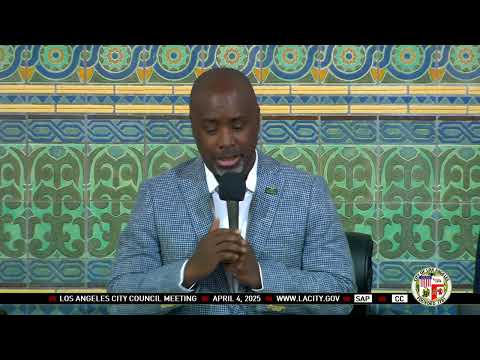
The Los Angeles City Council on April 4 recognized the LAPD Reserve Corps and heard members describe their unpaid deployment to Paris for the 2024 Olympic Games. Reserve officers and advocates asked the city to consider permitting reserve officers to accept paid contract assignments for events after they complete required volunteer hours.
Councilmember John Lee led the presentation and noted the corps’ role during emergencies and major events. Reserve Foundation president Carla Amundsen told the council that reserve officers complete the same training and standards as full-time LAPD officers and often serve beyond the minimum volunteer requirement.
Officer Bernard Khalili said 30 LAPD reserve officers served in Paris and that the LAPD team was the largest municipal law enforcement contingent outside the European Union; he said the unit served unpaid and volunteered vacation time to deploy. “For the first time in history, a municipal U.S. police agency deployed on duty and in uniform in a foreign country,” Khalili said, noting lessons brought back to help Los Angeles prepare for future major events.
Amundsen urged the council to consider allowing reserves to participate in the LAPD Coast program — a program that assigns officers to paid security and traffic control work for events such as award shows, sports and concerts — but only after reserve officers have completed their volunteer hours. She argued that a limited paid-contract option would increase recruitment and retention while expanding departmental capacity for large events.
Councilmembers thanked the reserve officers and some described the corps as a cost-effective force multiplier; no ordinance or policy change was adopted at the meeting. Councilmember Lee invited members to a May 3 recognition banquet and said the presentation would inform future discussions about reserve roles for the 2028 Olympic Games.