Get Full Government Meeting Transcripts, Videos, & Alerts Forever!
Get email alerts on the Broadband Fund topic
No spam. Unsubscribe anytime.
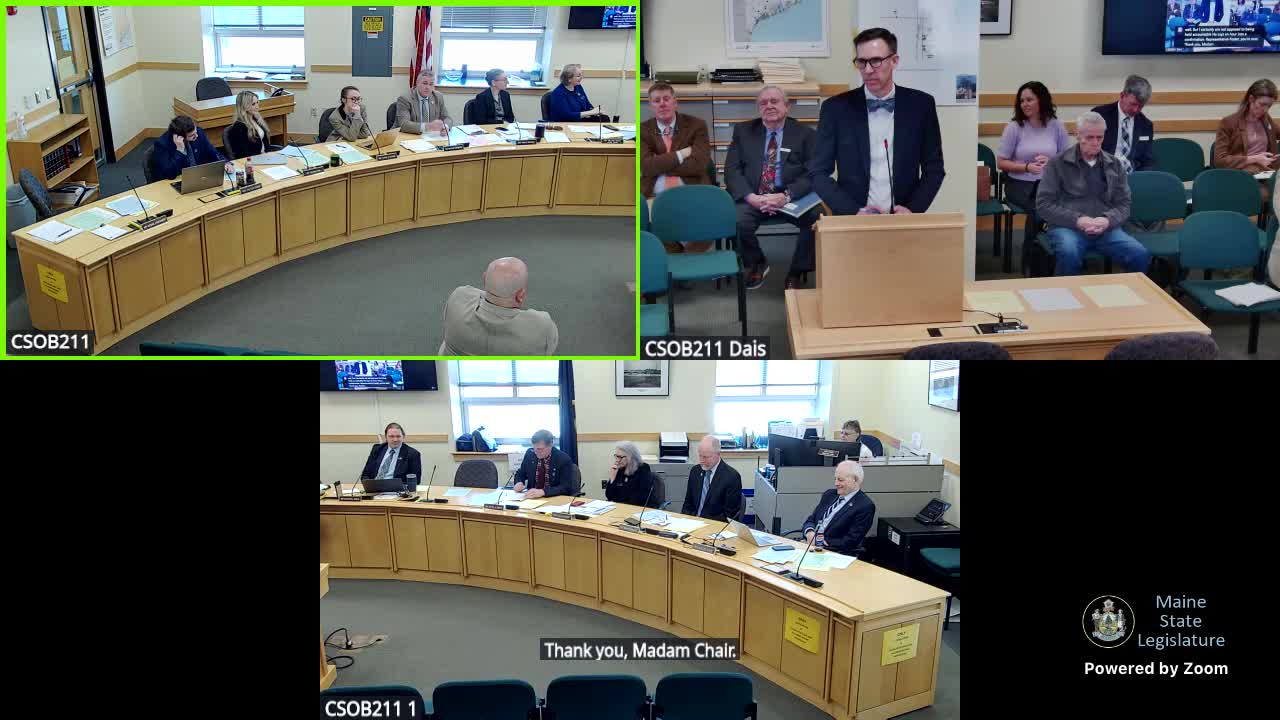
Bill to allow municipal broadband debt repayment draws mixed reaction as sponsor says local sale may moot legislation
Summary
A proposed fund to help municipalities build and sustain municipally owned gigabit networks drew mixed feedback from utilities, the Maine Connectivity Authority and broadband advocates — and the sponsor told lawmakers that a pending sale of a Downeast municipal network may remove the immediate need for the bill.
Representative Afton Mingael introduced LD 10 96, which would establish a Municipal Gigabit Broadband Network Access Fund to support municipally owned or partnered gigabit networks, including grant matching and a mechanism for municipalities to repay debt incurred to build broadband infrastructure.
During the hearing Representative Mingael told the committee that circumstances for one high-profile project — the Downeast Broadband Utility — had changed that morning, reporting the utility’s board had voted to sell and that private investors were pursuing a purchase. "The DBU... is being sold as I speak," Mingael told the committee and suggested the immediate legislative question might be moot for that entity.
Andrew Butcher, president of the Maine Connectivity Authority (MCA), testified neither for nor against the measure and described legal and funding limits. He said the MCA’s statutory mandate and available federal grant programs generally disallow paying municipal debt service with federal broadband grants; MCA’s Municipal Gigabit Fund is not capitalized and lacks a sustainable funding source at present. Butcher said the MCA would participate in any transaction that affects projects with active state or federal awards and could consider debt-repayment support if an eligible funding source is identified.
Opponents including Charter Communications, Consolidated Communications and the Maine State Chamber of Commerce cautioned that LD 10 96 could divert limited public funds to retroactive payoffs of municipal debt rather than expanding access to unserved locations. Kate Gore of Charter warned that federal broadband programs and the state’s existing ConnectMaine fund are designed to expand service to unserved locations and that the Legislature should preserve those dollars for network expansion, not to repay past borrowing.
A proponent, Joe Oliva of the Maine Broadband Coalition, said municipally owned networks can be long-lived, mission-driven providers of affordable service in areas where private investment is scant and that a targeted, well-structured fund could support communities that still lack access after federal funds are deployed.
Why it matters: The state is receiving substantial federal broadband funding to close service gaps. LD 10 96 would create a state-level mechanism enabling municipalities to access funds for public broadband projects and — as written — could be used to repay debt. That raised policy questions about prioritizing funds for new network construction versus retroactive relief for existing municipal projects.
What’s next: The sponsor said the DBU situation may remove the immediate practical need for the measure; the committee elected to close the hearing and may schedule LD 10 96 for work session at a later date if needed. The MCA and other stakeholders indicated they are willing to work with the committee on program design and potential funding sources.
Speakers quoted in this article are listed in the speakers array.