Panel advances SB 11 to restrict nonconsensual AI-generated likenesses and require provenance warnings
Loading...
Summary
A Senate Judiciary subcommittee voted unanimously to send SB 11 to Senate Public Safety; the bill would expand protections against nonconsensual AI-generated images, voice and video cloning and require provenance and warning disclosures.
A Senate Judiciary subcommittee voted to advance SB 11, the AI Abuse Protection Act, which the author said would expand legal protections against nonconsensual "deepfake" images, video and voice cloning and require provenance and consumer-warning measures for AI-generated likenesses.
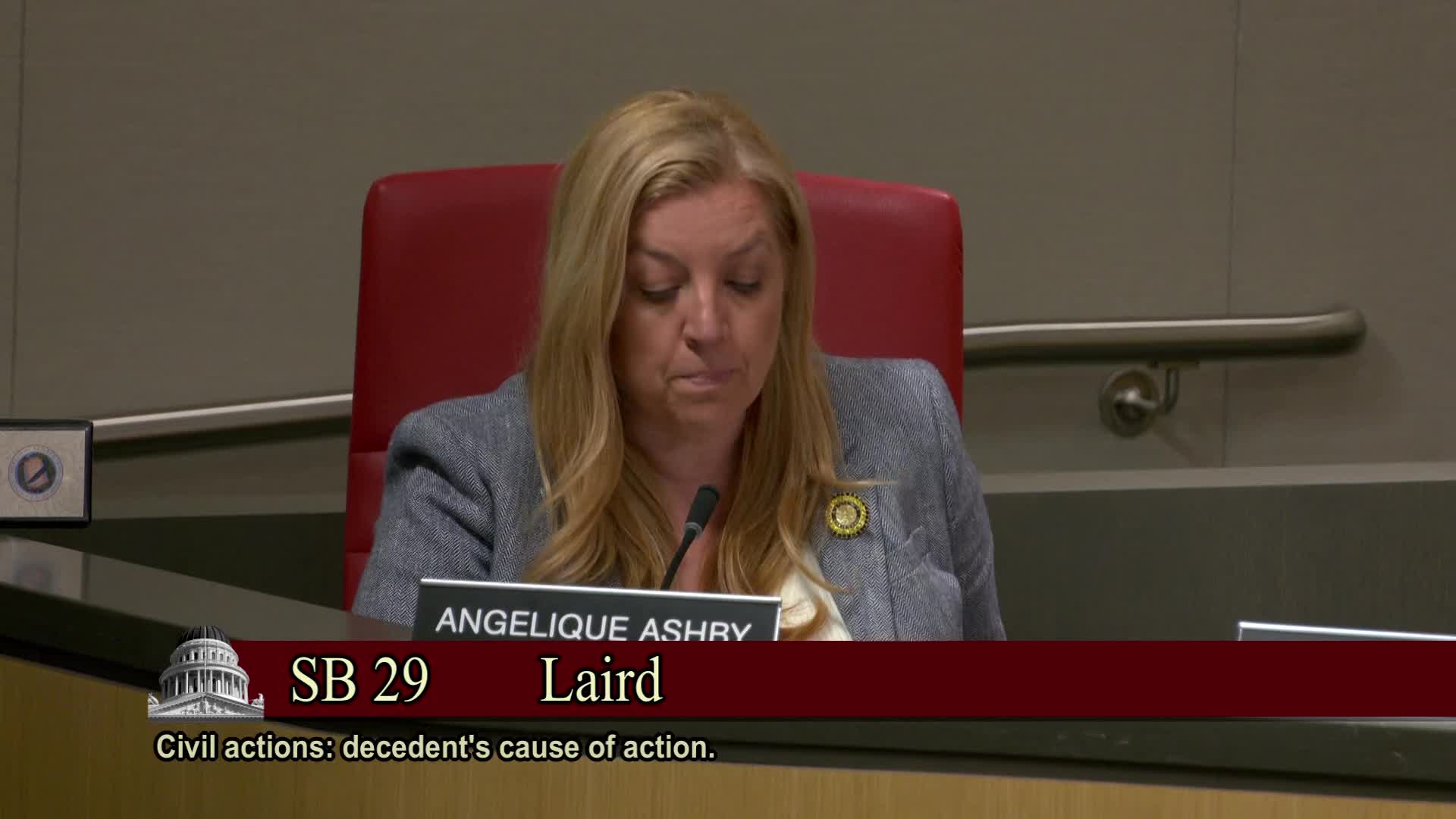
Senator Ashby, the bill's author, described the rise of generative AI as both an innovation and a source of consumer harm, saying the technology has "disproportionately impacted women and young girls" through nonconsensual sexualized images and that the bill would clarify that "likeness" includes AI-generated content. She described the measure as establishing "guardrails that protect consumers from harm."
Proponents testifying included Jay Jaisima of Transparency Coalition AI, who urged the panel to require consistent provenance information to document how a piece of content was created and transformed, and Shane Guzman of SAG-AFTRA, who said performers are often victims of voice- and image-cloning abuse. Brandon Knapp of Chamber of Progress also testified in support.
Opposition or "oppose unless amended" positions were presented by business groups including the California Chamber of Commerce and trade groups, which said they were negotiating language on consumer-warning provisions and asked for clarity on scope and enforcement. Carl London of the Recording Industry Association said RIAA and artist partners had submitted amendment requests.
Committee members recorded unanimous support on the roll call in committee for SB 11 to proceed to the Senate Public Safety Committee.
Why it matters: Supporters say the legislation would give victims clearer remedies and require provenance labeling or warnings that can help consumers and courts evaluate content authenticity. Industry groups signaled interest in technical and scope negotiations.
What's next: SB 11 was moved to Senate Public Safety, where proponents and industry groups expect to continue negotiating amendments on warning language and evidentiary provenance standards.
Votes at a glance: Committee roll call recorded the motion to pass SB 11 to Senate Public Safety as unanimous among members voting.