
Torrington council approves $5 Chamber Bucks incentive, pending HUD approval, to boost CDBG income survey response
Get AI-powered insights, summaries, and transcripts
Sign Up Free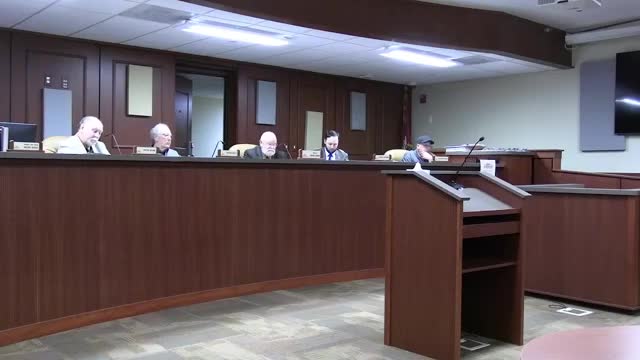
Summary
Council authorized offering a $5 Chamber Bucks incentive to residents who return CDBG income surveys if HUD approves the practice; the move aims to meet low‑income percentage (LMI) requirements and secure a $1.4 million grant for a generator project at the water plant and booster station.
Torrington councilors on April 1 authorized a contingent incentive—$5 in Chamber Bucks—to residents who complete a Housing and Urban Development (HUD) CDBG income survey, if HUD agrees that the incentive is permissible.
Clerk‑Treasurer Lynette Strecker (referred to in the meeting as Mrs. Strecker) told council that when the city applied for two Community Development Block Grants (CDBG) last fall — one for sewer lining and another to fund a new generator at the water treatment plant and a booster station at West C — the city initially qualified under the required low‑to‑moderate income (LMI) percentage. Between application and award, the city’s calculated LMI fell from 54% to 47%, below the 51% threshold HUD requires for the generator project to qualify as a citywide benefit. The sewer‑lining project was adjusted and remains eligible.
Strecker said HUD randomly selected about 250 addresses for a statistically valid survey. The city’s question is whether it may offer an incentive to increase response rates; she suggested $5 off the water bill but council discussed anonymity and administration and settled on $5 in Chamber Bucks as the preferred mechanism. Councilman (Patron) moved and Councilman Warren seconded a motion to authorize a $5 Chamber Bucks rebate to participants pending HUD approval.
Council members expressed concerns that (1) the incentive could create an obligation if the survey fails to produce qualifying results and (2) some housing complexes pay water under a single meter (which affects how incentives would be delivered). Strecker said staff would only mail or deliver the Chamber Bucks if HUD allows the incentive; the city will also consider alternative incentives (a single‑day free pool pass, for example) and outreach methods (mail, in‑person, or HUD‑approved electronic methods). She emphasized that surveys are anonymous to HUD: addresses are coded and the city would report only codes and yes/no LMI responses, not names.
Council approved the contingent incentive unanimously. Strecker said staff will proceed only if HUD confirms the incentive is allowable and will then begin outreach to meet the grant program’s timeline.