Get Full Government Meeting Transcripts, Videos, & Alerts Forever!
Get email alerts on the Mobile Food topic
No spam. Unsubscribe anytime.
Denton council weighs clearer rules for food trucks as registrations rise
Summary
Staff presented a proposal to clarify how mobile food establishments may operate as accessory uses, and council members split on whether to move forward while asking for more data and outreach to operators.
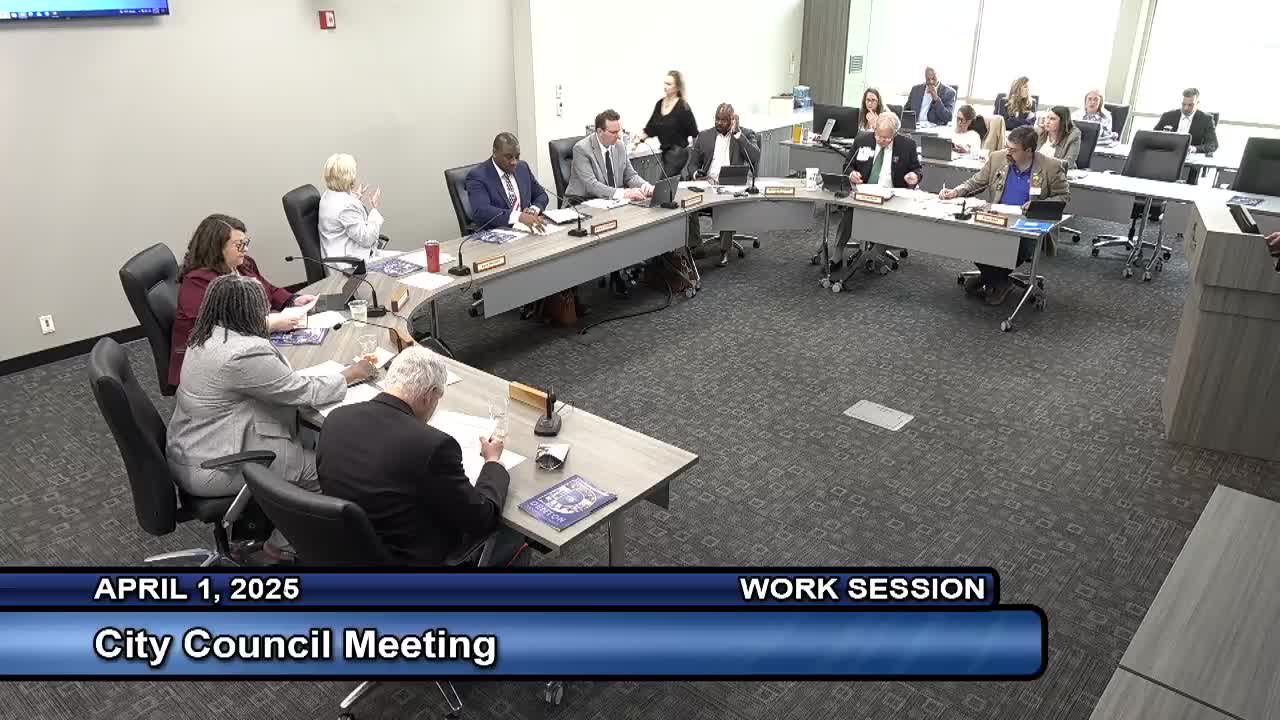
City of Denton staff briefed the City Council on April 1 about current rules and proposed clarifications for mobile food establishments amid a recent increase in food trucks around town.
The presentation, led by Scott McDonald, director of Development Services, and planner Mia Hines, explained that Denton currently registers and permits mobile food units and that staff has interpreted the Denton Development Code (DDC) to allow food trucks as accessory uses on nonresidential lots where restaurant uses are permitted. Hines told council the city has 129 registered mobile food establishments and has identified roughly 10 host spots or mobile-food-court locations as of mid-March.
The matter matters because the number and concentration of food trucks have created localized impacts—parking, noise, sanitation and access—that staff wants to manage with clearer code language. "We've had food trucks in Denton for any number of years," McDonald said, and in recent years the city has seen "a proliferation of food trucks," prompting staff to recommend defined accessory-use standards, permitting clarifications, and required operational controls.
Under the practices described by staff, mobile food permits are good for 12 months, nontransferable and must list the private locations where the truck intends to operate. Operators must provide commissary information showing where they perform required cleanouts, and maintain on-site logs of commissary visits and cleanouts for inspection. Hines said trucks "may only sell food on private property, and not on public property or within the city's right-of-way without the city's approval," and that trucks must not occupy required parking for a primary business or block fire lanes.
Health staff and special-event permitting: Kevin Cummings, the city’s chief health inspector, answered council questions about inspections and restroom requirements. He said a staff restroom agreement is required showing where truck staff will use a flush toilet with hot water ("porta-potties don't count"). Christine Taylor, assistant city manager, said food trucks that participate in city festivals or events go through the city’s special-event permitting process and pay an event fee; otherwise, operation on city property requires city approval and is not allowed outside a permitted event.
Council concerns and split views: Council members said they value mobile food businesses as entrepreneurs and community amenities but raised concerns about noise, impacts on brick-and-mortar restaurants, tax collection and concentrations of trucks at single sites. Several council members said they supported staff recommendations to codify accessory-use rules and controls (including a 50% limit on the space accessory trucks may occupy relative to a primary business). Others urged more outreach to truck owners before adopting new requirements and suggested not moving forward until the city has additional sales-tax and operator feedback. One council member asked staff to provide the amount of sales tax the city collects from food trucks; Hines said staff is tracking business IDs and will supply the number.
Enforcement: Hines and enforcement staff described active monitoring of sites with many trucks. Staff said unpermitted trucks are rare; enforcement typically contacts the operator, instructs them on permitting and stops operations until a permit is obtained. Hines said staff has seen sites with large concentrations ("there were 13 food trucks out there at one point") that prompted the proposed guardrails.
Where it goes from here: Staff asked the council for direction. Some members said they want the city to move forward with code amendments and clearer accessory-use language and enforcement practices; others asked staff to hold further outreach sessions with mobile food operators and produce revenue and enforcement data before any ordinance changes. If council directs changes, staff said they will draft code amendments and return them for formal action. If council directs not to proceed, the current permitting and special-event processes remain in place.
Ending: The issue will return to council if members ask staff to draft text or after additional outreach; staff also offered to report back on sales-tax collections, enforcement counts and the number of host spots identified across the city.
Provenance: Staff presentation began with Scott McDonald and Mia Hines explaining current practice and recommendations (topicintro). The topic finished when the council concluded discussion and moved to the next agenda item (topicfinish).