Get email alerts on the Healthcare Workforce topic
No spam. Unsubscribe anytime.
Senate bans most physician noncompete clauses, citing access concerns
Summary
Senate Bill 957 A passed after floor debate; sponsors said restricting noncompete clauses will improve access to care, especially in rural and underserved areas.
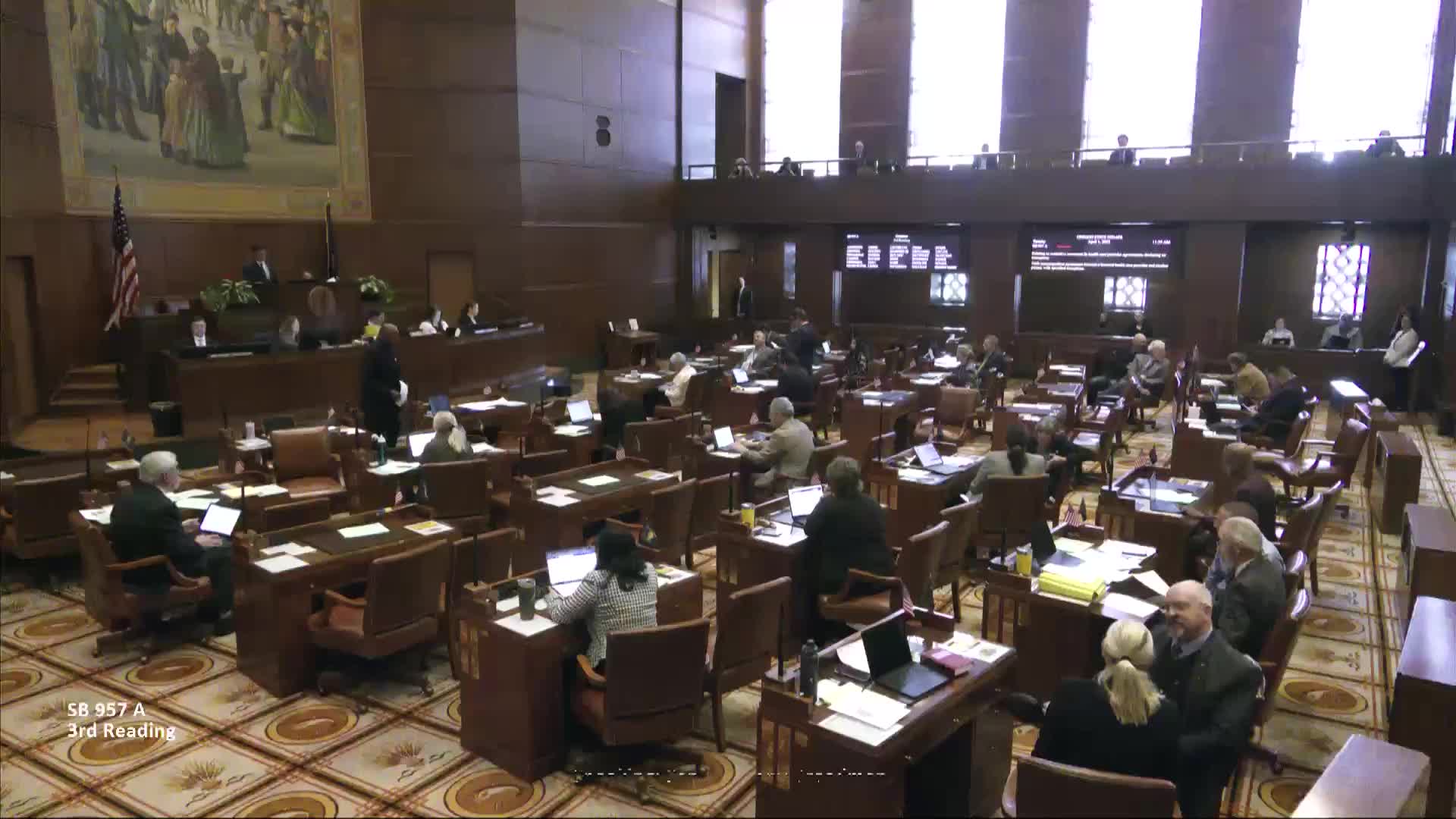
The Oregon Senate on April 1 passed Senate Bill 957 A, a bill that largely prohibits noncompetition provisions in physician contracts, a measure supporters said is intended to protect access to care and preserve continuity of patient‑provider relationships.
Senator Broadman, who presented the bill, said noncompetition agreements can force physicians to leave communities or travel long distances to avoid contractual restrictions, reducing patient access to care in rural and underserved areas. "When it comes to patient care, any restraint on a physician's ability to practice medicine can have life‑threatening consequences and make care more expensive," Broadman said.
Supporters named stakeholder organizations including the Oregon Medical Association and the Oregon chapter of the American College of Emergency Physicians as backers of the measure; speakers on the floor described the bill as targeted and balanced, preserving protections for genuine ownership interests while removing contractual barriers that keep providers from practicing where they are needed. Senator McLean and Senator Reynolds spoke in support, citing physician shortages and the importance of continuity of care.
Opposition and some no votes were recorded on the floor; after roll call the clerk announced that Senate Bill 957 A had received a constitutional majority and was declared passed. The announced tally identified 22 ayes; the roll call recorded four named senators voting no and four senators excused.
Senate Bill 957 A will restrict the use of noncompetition clauses in most physician employment contracts while maintaining narrowly defined contractual protections tied to true ownership interests.
AI generated
The text on this page is AI generated. Summaries, highlights, analysis, and video transcripts are all produced from the original source material.
AI can make mistakes, so if you spot one, and we will fix it for everyone.
Note: the source content is unaltered by us. Any content source we link to, be it a video, an audio recording, or a document, is presented exactly as its publisher released it. That publisher is usually a government body, sometimes an individual official or another organisation.