Get Full Government Meeting Transcripts, Videos, & Alerts Forever!
Get email alerts on the Municipal Budget topic
No spam. Unsubscribe anytime.
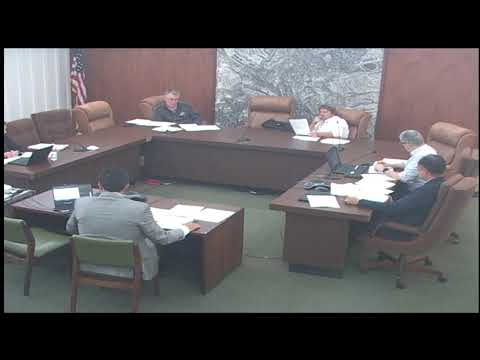
Rolling Hills Estates committee reviews budget updates, weighs refuse-subsidy cut and line-item restorations
Summary
City staff presented updated revenue projections and proposed line-item adjustments to the Rolling Hills Estates Budget Finance Committee, focusing on revised property-tax, permit and interest estimates and on whether to continue a long-standing refuse subsidy.
City staff presented updated revenue projections and proposed line-item adjustments to the Rolling Hills Estates Budget Finance Committee, focusing on revised property-tax, permit and interest estimates and on whether to continue a long-standing refuse subsidy.
The discussion mattered because the changes alter the city’s projected general-fund position for the coming fiscal year and could affect whether residents see higher refuse rates. Finance Director Robert Samario said staff had notified parcels that refuse rates “may be raising rates up to $1,400 roughly” while they awaited final county property-tax figures before making a decision.
Samario told the committee staff had revised several revenue lines since an earlier presentation and now show higher property-tax receipts (about $50,000 more) and an increase in building and permit revenue to $600,000. He also said investment interest earnings were increased by $50,000, though he cautioned those amounts remain “fluid” as staff waits for late-May tax confirmations. On that basis, staff presented a working projection that, if the refuse subsidy were eliminated entirely, would show a roughly $131,000 surplus; after the committee pared back some proposed restorations and adjustments, staff said the near-term surplus could be roughly $200,000 under current estimates.
On expenditures, staff emphasized improved accounting and line-item cleanup and proposed several targeted adjustments. Staff recommended restoring maintenance funding for “areas 1 and 2” based on additional revenues and on prior city investments in those areas. The committee split on that recommendation: several members pressed the Land Conservancy (the outside steward identified in discussion) to take over maintenance and opposed restoring the full funding immediately, while staff said a mower purchase grant request and outside funding were still pending and that not restoring funding could forgo recent city investments.
The committee also reviewed proposed reductions and reallocations in emergency-preparedness and related accounts. Staff proposed a net reduction of about $81,900 for emergency preparedness that would come from multiple lines, including a proposed $8,000 cut to the Peninsula Expo item, a $10,000 reduction labeled for an alert program, elimination of a $7,500 line for wildland resource-management inspections (work the fire department has agreed to perform at no charge), a $30,000 reduction to consulting costs for enforcement, and a net $26,000 reduction in the fuel-abatement program based on next year’s schedule.
Other notable line-item changes included: a proposed $20,000 increase in finance-department contracted services (raising that budgeted contract from $120,000 to $140,000), a 7.61% increase in the sheriff’s contracted fee and an increase in the sheriff liability allocation from 11% to 12% (which staff said would raise the general fund’s cost by about $30,000 after COPS-fund allocations), a $50,000 reduction in anticipated outside legal expenses (about $20,000 in planning and $30,000 in the city manager’s office), and a combined $70,000 reduction in building-services contract costs (county plan-check and Willdan). Staff proposed restoring the contracted code-enforcement budget to prior service levels (adding hours that would increase the contract budget by roughly $27,880 to return to an approximate 20-hour-a-week baseline after the city earlier reduced hours), and adding $35,000 to the project-management contract for ongoing capital work (the city has historically budgeted roughly $45,000 annually for project management).
Committee members debated whether to restore all proposed items or to preserve the recent conservative cuts. Several members urged keeping discretionary restorations to a minimum while the revenue picture stabilizes and recommended waiting for final tax receipts in late May before determining the refuse-subsidy change. One committee member said they preferred raising the refuse charge only partially rather than eliminating the subsidy entirely; another said they would rather restore enough revenue through a modest trash-rate increase to keep the budget structurally balanced. The group tentatively agreed to bring the finance-contract increase and other proposed adjustments to the full council for further consideration, to continue the project-management contract at the recommended level, and to defer a final decision on the refuse subsidy until after the county’s final property-tax information is available.
Next steps identified in the meeting: staff will present the finance-contracted-services question and other proposed restorations to the full council for consideration; staff will await final property-tax receipts (late May, according to the presentation) before finalizing any refuse-rate action; and the committee will revisit the package once those figures are confirmed.