Get Full Government Meeting Transcripts, Videos, & Alerts Forever!
Get email alerts on the Housing Preservation topic
No spam. Unsubscribe anytime.
Support grows for statutory affordable housing preservation program and asset management training
Summary
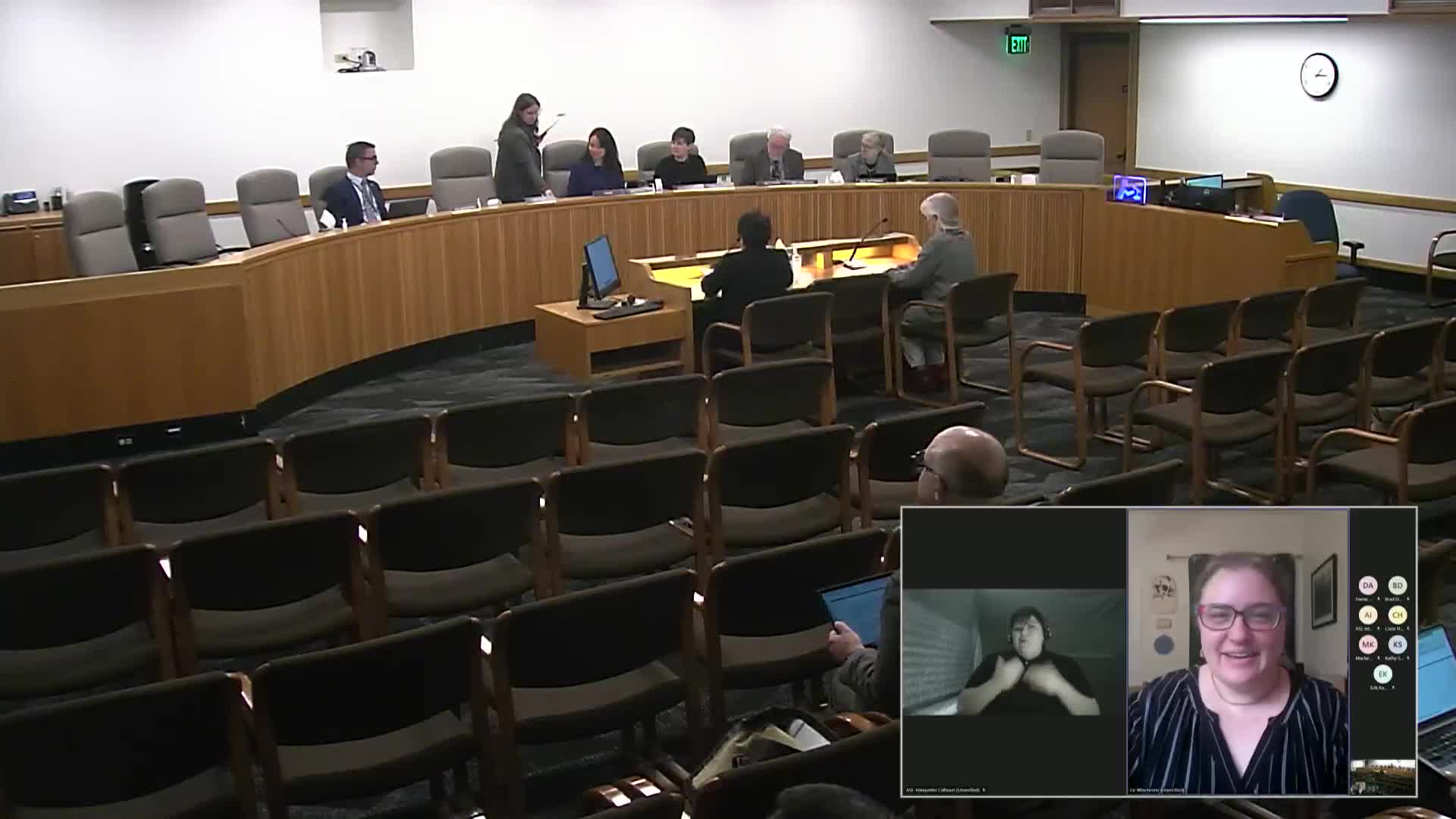
Nonprofits and housing advocates told the Senate Committee on Housing and Development that Senate Bill 51 (and its Amendment 2) would help stabilize Oregon’s affordable housing stock through a statutory preservation program, asset management training and culturally responsive property management.
Witnesses representing nonprofit housing intermediaries and community organizations urged the Senate Committee on Housing and Development on March 31 to pass Senate Bill 51, which, in testimony, would establish and fund an affordable housing preservation program and support asset management and culturally responsive property management.
Liz Winchester, senior asset manager at the Housing Development Center, told the committee Amendment 2 would fund asset management training and technical assistance through an existing program she identified as AMP (Asset Management and Portfolio Preservation Program), created in 2010, and said trained asset managers can diagnose property problems, oversee capital projects, and apply “preventative medicine” to preserve units without new public investment.
Lisa Rogers, deputy director of CASA of Oregon, said SB 51 dash 1 would establish in statute a preservation program for Oregon Housing and Community Services (OHCS) to stand up and maintain. She noted manufactured home parks are a significant component of Oregon’s affordable housing: “There are 1,382 manufactured home parks in Oregon,” Rogers said, and she described CASA’s work converting parks to resident-owned cooperatives with OHCS support.
Marie Elena Guerra, executive director of Evolved Workforce and Multifamily Housing Services, urged the committee to include culturally responsive property management in preservation strategies and said trained, community-rooted property staff help retain both staff and residents, reduce maintenance costs and support financial stability at properties.
Multiple witnesses emphasized that existing affordable properties face urgent operational stress from increased costs and restrictive rents and that training and technical assistance can prevent property failures. The committee reopened and then closed the public hearing on SB 51; no committee vote was recorded during the session.
Ending: Testimony emphasized preservation, training and culturally responsive property management as complementary tools to stabilize the portfolio of affordable housing in Oregon.