Santa Barbara Fire Department outlines prevention work, defensible-space and hoarding response
Loading...
Summary
Fire Department staff presented the Fire Prevention Bureau’s roles in building inspections, fire investigations, vegetation management, defensible-space evaluations, special-assessment-funded services and interagency responses to complex hoarding and wildfire risk.
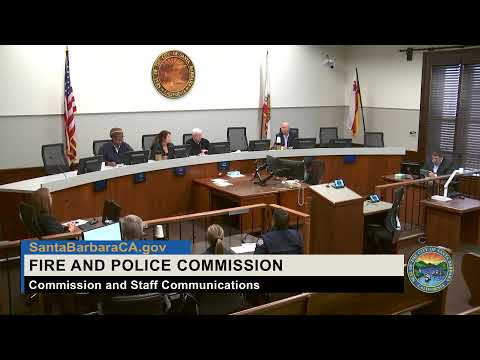
Fire Department leaders told the Police Commission and attendees that fire prevention combines building safety, inspections, vegetation management and community engagement to reduce emergencies before they occur.
Fire Chief Chris Veil introduced the Fire Prevention Bureau and described its organizational split between structural/building inspections and wildland/vegetation management. Inspectors, plan reviewers and vegetation-management staff handle new-construction plan checks, sprinkler and alarm inspections, school inspections and special-event permits; the bureau also rotates fire investigators for 24/7 response to complex incidents.
"Part of the fire department's focus is, has been, and always will be preventing the next emergency," Chief Chris Veil said. Inspector Kate Rocha outlined structural responsibilities including hydrant access, egress, signage for mixed-use buildings and inspections for high-piled storage, schools and special events. She said the bureau completed about 1,100 plan-review and construction inspections last year and that inspections can require multiple visits to verify systems such as sprinklers and alarms.
On vegetation and wildfire risk, Mike Lopez described the community wildfire protection plan, the Wildland Fire Suppression Assessment District (a special tax for parts of the Foothills), the department's chipping program and grant-funded vegetation crews supported by the Coastal Conservancy and California Department of Forestry and Fire Protection (Cal Fire). Lopez said the department conducts voluntary defensible-space evaluations and partners with the Santa Barbara Fire Safe Council.
Commissioners asked about hoarding and severe accumulation inside homes. Inspectors and the city attorney described a progressive approach: education and abatement first, then code enforcement and city-level cross-departmental teams. Staff said the worst-case legal remedy is a court-appointed receivership to clear hazards if the owner does not comply; presenters said that outcome is rare and used only after prolonged processes. "It is a very, it can be a very long and complex drawn out process to, really at the extreme, bring a person or a homeowner into a conservatorship," an assistant city attorney said, describing interagency steps including building and safety, police, mental health and code enforcement.
Staff emphasized outreach tools: a physical demonstration Fire Escape Garden, Ready-Set-Go personal action guidance, Firewise USA community designation and an online submission form for voluntary defensible-space evaluations on the city's fire-prevention website. The department said neighborhood-led Firewise USA groups can be eligible for grants and may help homeowners obtain insurance premium benefits through recognized mitigation efforts.
No votes or policy changes were taken during the presentation; the session concluded with commissioners and staff discussing outreach and additional public education.