Get Full Government Meeting Transcripts, Videos, & Alerts Forever!
Get email alerts on the Court Docket topic
No spam. Unsubscribe anytime.
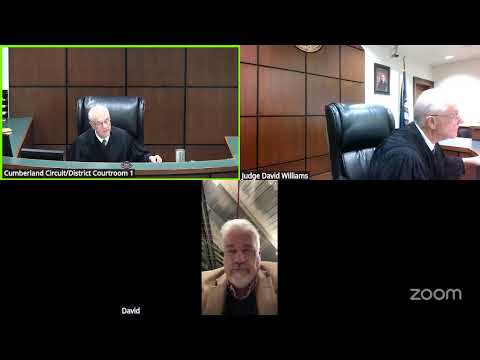
Cumberland County court hears guilty pleas, sentences and scheduling across multiple cases
Summary
At a multi-defendant session in Cumberland County Circuit Court, judges accepted multiple guilty pleas, set sentences and scheduled trials and hearings across a range of drug, burglary and probation-revocation cases.
A Cumberland County Circuit Court session that handled arraignments, pleas, sentencing and scheduling resulted Monday in multiple accepted guilty pleas, several sentencing dates and a mix of continued pretrial conferences and probation actions.
The session covered a high volume of routine criminal dockets: prosecutors presented plea agreements in a number of felony and misdemeanor cases; the court accepted several guilty pleas and ordered presentence investigations or set sentencing dates; and judges set trial and negotiation dates in other matters. The court also revoked pretrial diversion in at least one case and ordered drug-court or specialty-program enrollments in others.
Why it matters: The hearing resolved plea agreements and set punishments and supervision terms that will affect individual defendants and victims and, in some cases, ongoing probation or diversion caseloads managed by Cumberland County probation and specialty programs.
Most significant outcomes
- Jennifer Robinson — Guilty pleas accepted and presentence investigation ordered. According to the commonwealth, “Upon a plea of guilty to burglary first degree, the defendant shall receive a sentence of 10 years to serve. Upon a plea of guilty to possession of a handgun by a convicted felon, the defendant shall receive a sentence of 10 years to serve. These sentences shall run concurrently for a total of 10 years.” The court accepted the agreement and ordered a presentence investigation with sentencing set for April 24, 2025. The commonwealth also agreed to consider probation at final sentencing and to recommend placement in a dual-diagnosis long-term treatment facility as part of the plea terms.
- Wesley Smith — Guilty plea to trafficking in a controlled substance (methamphetamine). The commonwealth recommended a 7 1/2-year sentence and stated it would oppose probation; the court accepted the plea and ordered a presentence investigation with sentencing set for a later date.
- Dwan Maxey — Sentenced after plea. The court accepted a plea to possession of a controlled substance in the first degree and imposed a sentence of 5 years with 90 days to be served on home incarceration and the balance probated for five years, with supervised probation. Court costs were listed at $440; the court allowed installment payments at $60 per month.
- Amber Melton — Plea and diversion terms accepted. Melton entered pleas to first-degree possession charges; the plea called for consecutive prison exposure of six years with the commonwealth recommending pretrial diversion for five years, supervised, and a requirement of 120 additional days of home incarceration plus participation in the Cumberland County specialty program. The court accepted her plea and set conditions including enrollment in the specialty program and a payment plan for court costs.
- Revocations and diversions: The court revoked at least one pretrial diversion after the commonwealth reported new charges and violations. In one revocation matter the court ordered a presentence investigation and scheduled sentencing; in others the court continued defendants for orientation or assessment for the county specialty/drug court.
Scheduling, trials and procedural orders
- Multiple defendants had jury trials or negotiation dates set in April and May 2025. Several pretrial conferences were continued to give defense counsel time to review discovery or discuss offers with clients.
- The court repeatedly emphasized that defendants have the right to a presentence investigation and that acceptance of a plea does not bind the judge to a particular sentencing recommendation. The judge repeatedly told defendants that by pleading guilty they waive certain constitutional rights and that a presentence investigation could affect final sentencing.
Court comments and procedure
In accepting several pleas, the judge told defendants, “I’ll accept the plea,” after confirming each defendant’s understanding of the rights they were giving up and the voluntary nature of the plea. The commonwealth — represented frequently in the record by Gordon Anderson — read plea recommendations into the record in several cases, including the detailed recommendation in the Robinson matter quoted above.
What remains next
Sentencing and presentence-investigation hearings were scheduled in multiple cases, notably April 24 for Jennifer Robinson and multiple other dates for sentencing and orientation for specialty programs. Several defendants were directed to meet probation and parole officers immediately following the docket.
The docket also included numerous arraignments and continuances; where diversion, probation or drug-court enrollment was recommended, the court generally required orientation and active supervision before early release or home incarceration was allowed.
The court session was procedural in character: it resolved several plea offers and set follow-up steps rather than hearing contested trials. Additional contested matters and suppression hearings were scheduled separately when defense counsel indicated they would file motions.
Ending
Court staff and counsel were instructed to coordinate presentence reports, specialty-program orientations and scheduling for the coming weeks. Several defendants who pleaded guilty were ordered to complete mandated programs or home-incarceration periods before final sentencing decisions are entered by the judge.