Get Full Government Meeting Transcripts, Videos, & Alerts Forever!
Get email alerts on the Public Health And Safety topic
No spam. Unsubscribe anytime.
Committee hears testimony on SB 1032 to restrict sales, labeling and display of DFE-containing aerosol dusters
Summary
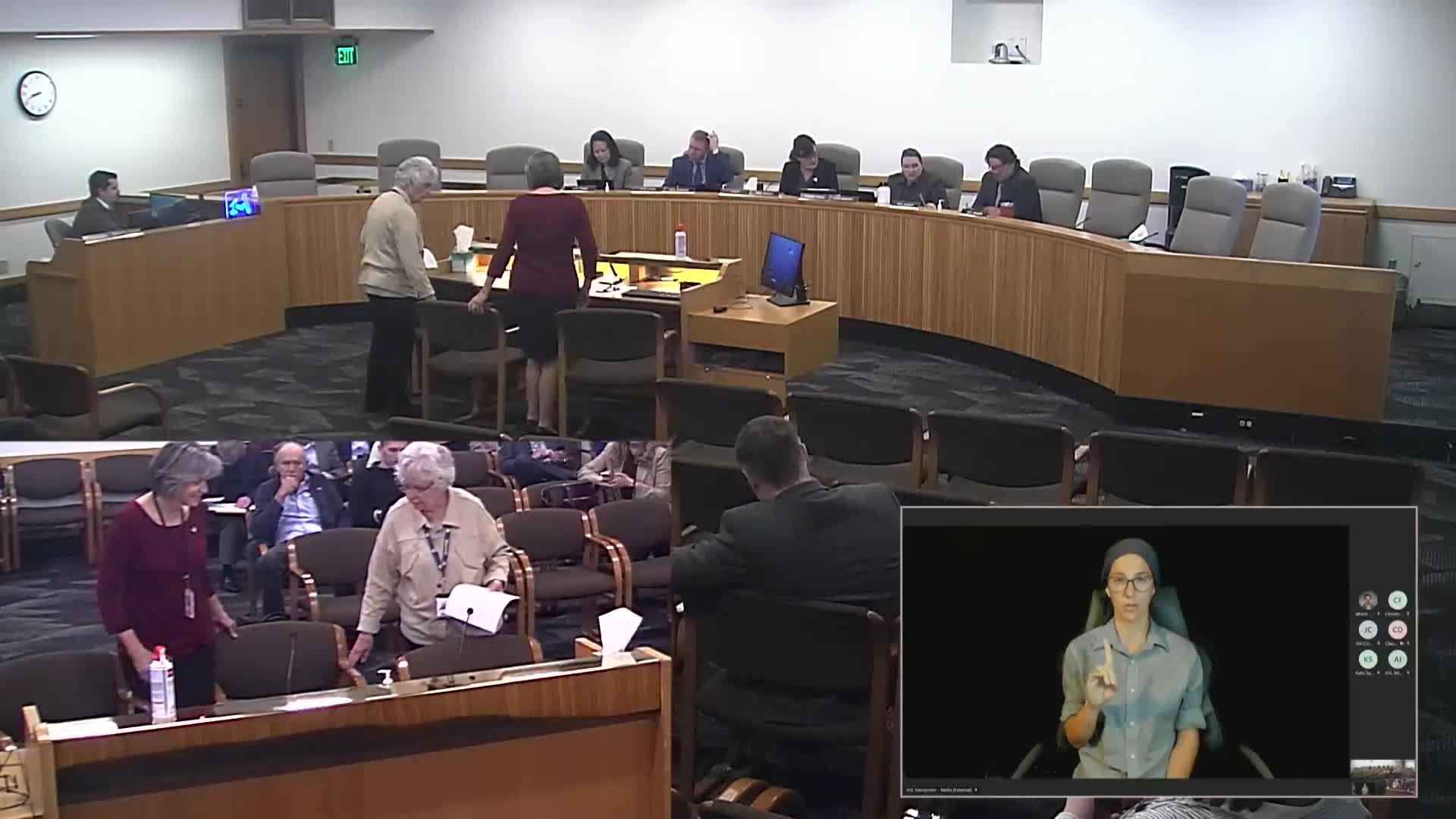
Senate Bill 1032, which would restrict the retail sale, labeling and display of DFE-containing aerosol dusters, drew testimony from sponsors, family members of victims and industry representatives on March 27.
Senate Bill 1032 drew a lengthy public hearing on March 27 in the Senate Committee on Labor and Business as lawmakers, family members of victims and industry groups debated proposed restrictions on aerosol "duster" products containing difluoroethane (DFE).
Senator Lisa Reynolds, a pediatrician and bill sponsor, told the committee the bill responds to a growing trend of recreational inhalant use known as "huffing," often documented on social platforms, and described health risks including seizures, asphyxiation and heart attacks. Reynolds said the federal Consumer Product Safety Commission and National Electronic Injury Surveillance System data show thousands of emergency-room-treated injuries and many deaths linked to inhalation of aerosol dusters.
Senator Suzanne Weber, co-sponsor and local lawmaker whose constituent lost a relative, urged passage and described a specific fatal crash that proponents said was caused by a driver who had inhaled DFE and subsequently struck and killed a young woman. Family members and advocates provided emotional testimony: Kim Brosh described losing her niece, and Claudia Dimmit described losing her son to duster inhalation; both urged legislative action to limit retail access and raise awareness.
The bill as introduced would prohibit retail sale of aerosol dusters containing DFE to anyone under age 21, require retailers to verify age before sale, require inventory be kept in a non-public location, limit sales to no more than three canisters per person per transaction and prohibit same-day pickup or delivery for purchases of those products. It would also require specified warning labels and make violations a class C misdemeanor. The bill applied to retail sales and manufacturing labeling on or after Jan. 1, 2026.
A dash-3 amendment under consideration changes the age references from 21 to 18, increases the per-transaction limit from three to four canisters, aligns labeling and includes a business-to-business carve-out; proponents indicated they planned a dash-4 amendment to set a four-can maximum and address other drafting requests from stakeholders. Oregon Business and Industry (OBI) and the Household & Commercial Products Association (HCPA) said they appreciated outreach and urged harmonization of labeling with federal and other states' rules; OBI asked for a clarification allowing retailers to verify age for delivery sales and for a business-to-business exemption so commercial purchasers can continue to procure by case.
Attorney James (representing the estate of the victim) and Ray Thomas, who testified about the incident and security-camera images, said the Home Depot where the DFE was sold displayed the product on open shelves; they said stores that keep DFE behind counters (for example, some Walmart locations) can reduce impulsive purchases that proponents contend lead to overdose and, in a few widely publicized incidents, vehicular crashes.
Committee members asked whether 18 or 21 is the appropriate sales age; several senators said they were inclined to consider whether 21 better matches other age-restricted rules (for alcohol and some inhalants), while others noted established business uses for the aerosol product and urged a business-to-business exemption. No committee vote was taken on March 27. Proponents urged the committee to adopt an amendment that would narrow retail access while allowing legitimate commercial and household uses to continue.
— Reporting from the Senate Committee on Labor and Business meeting on March 27, 2025.