Get Full Government Meeting Transcripts, Videos, & Alerts Forever!
Get email alerts on the Consumer Protection topic
No spam. Unsubscribe anytime.
Panel hears SB 1005 on allowing private ID "swipes" for age verification; retailers and lawmakers debate privacy and liability
Summary
Senate Bill 1005, which would allow private entities to swipe a person’s driver’s license or ID to verify age when selling age-restricted goods, drew testimony from retailers and lawmakers on March 27.
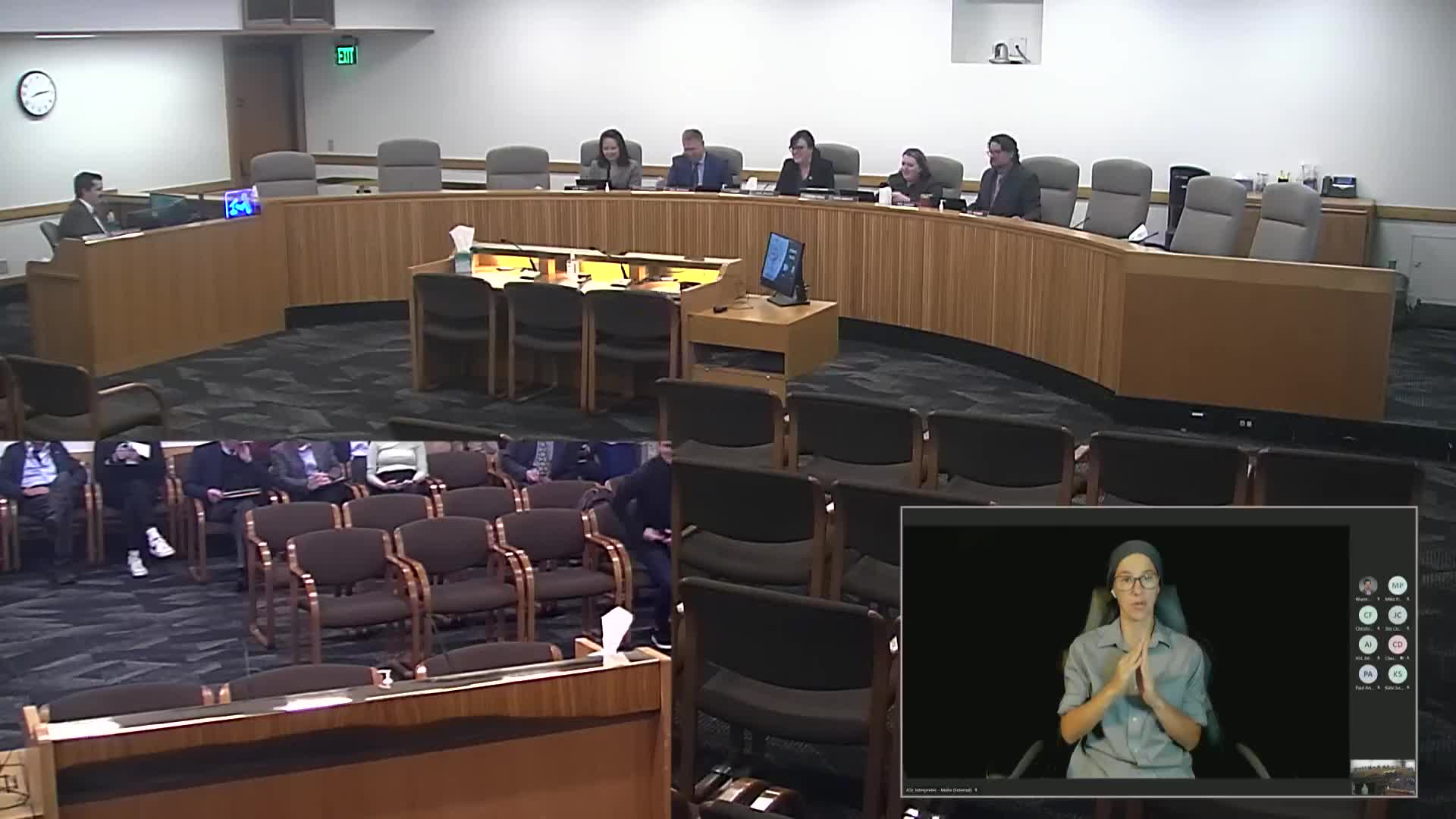
Senate Bill 1005, which would permit a private entity to swipe a customer’s driver’s license or identification card to verify age when selling age-restricted products, drew a lengthy public hearing in the Senate Committee on Labor and Business on March 27.
Representative Emily McIntyre, who appeared to introduce the measure, told the committee SB 1005 “doesn’t change any of our laws on reasonable doubt.” She said the bill would remove a civil cause of action for individuals who are carded — in short, if a person is asked for identification and the retailer verifies the card, the bill would remove a private civil suit option that currently exists in some reading of the statute. McIntyre said the change is intended to reduce litigation risk for retailers that use scanning technology to verify age and to make consistent a practice of “we swipe everybody.”
Jonathan Polonsky, CEO of Plaid Pantry, testified in support and described his company’s long-standing policy of scanning IDs to verify authenticity and age. Polonsky told the committee Plaid Pantry does not store customers’ personal information and referenced ORS 807.750 when discussing tension between a retailer’s duty to validate age and language he believes has been used in litigation.
Marshall Koba of the Associated Liquor Stores of Oregon also supported the bill, saying that clarifying the law would let clerks use technology to “add certainty when concerns about legal age arise.” Both retail witnesses described a pending class-action lawsuit they said was leveraging existing wording of state law to bring damages to retailers that scan identification.
Committee members asked multiple questions about how scanning works, what is stored, and whether a scanner connects to a state database. Committee staff and witnesses explained most point-of-sale card readers perform an immediate authenticity check (a thumbs-up/thumbs-down) using data encoded on the card, and that scanning systems in common retail use do not automatically store that data. Witnesses emphasized that storing full customer data from a card is illegal for alcohol verification, and doing so would carry civil penalties.
Several senators pressed on whether SB 1005 would force businesses to adopt scanning equipment (it would not), and whether the bill would create retroactive immunities for pending litigation (it would not; proponents said the measure operates prospectively). Committee members also noted a scheduled work session for SB 1005 on April 1.
No committee vote occurred on March 27. Advocates for the bill said it will protect retailers from litigation and make age verification more consistent; critics and some senators asked for clearer language on privacy protections and on whether scanners could be used for business-to-business or other non-retail uses.
— Reporting from the Senate Committee on Labor and Business meeting on March 27, 2025.