Get Full Government Meeting Transcripts, Videos, & Alerts Forever!
Get email alerts on the Housing And Land Bank topic
No spam. Unsubscribe anytime.
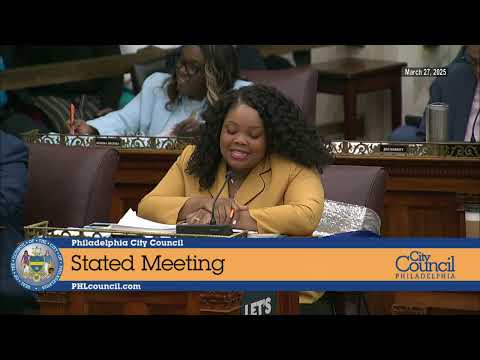
City Council adopts Land Bank disposal resolution as residents urge affordable-housing focus
Summary
Philadelphia City Council adopted a resolution authorizing the Philadelphia Land Bank to dispose of several properties as public commenters pressed for the city to prioritize affordable homes, repairs for long-term residents, and greater transparency in the Land Bank process.
Philadelphia City Council on Thursday adopted a resolution authorizing the Philadelphia Land Bank to dispose of a group of properties in the Third Councilmanic District, drawing extensive public comment about gentrification, affordable homebuilding and repairs for long-term homeowners.
The resolution, called up and moved by Councilmember Jamie Gauthier, directs the Land Bank to dispose of 708, 710, 714 and 723 North Sedgwick Street in accordance with Chapter 16-700 of the Philadelphia Code. The council adopted the measure by voice vote after public testimony on the broader questions of land use and housing affordability.
Why it matters: Public speakers and neighborhood groups told council the Land Bank process and the city’s housing strategy affect who can remain in Philadelphia neighborhoods. Several speakers urged the Land Bank to prioritize building affordable homes, repair programs for aging homeowners, and to improve transparency around review processes used by Registered Community Organizations.
Public testimony highlighted a mix of support for Land Bank-enabled development and concern about process and equity. Jeremy Blatstein, who identified himself as supporting the Turn the Key program, told council the initiative has produced homes and mortgages and said, “It’s working.” At the same time, he warned the Registered Community Organization (RCO) review process can create conflicts of interest when neighborhood leaders have personal ties to development decisions.
Residents and community organizers described pressure from rising rents, property taxes and developer-driven redevelopment. Megan Malcolmus, a member of Power Interfaith representing Hunting Park, said the housing crisis is driving displacement and urged council to partner with neighborhood groups on new housing strategies. Kaisheen Wilson, who identified herself as chairman and founder of the Hunting Park Coalition, said affordability must be central: “When we prioritize affordable living through fair wages, rent control, access to essential services, we create stability,” she said.
Other witnesses said homeowners need well-funded repair programs so families can keep century-old housing that is inexpensive to buy but often costly to maintain. Denise Anderson described spending about $30,000 on repairs to keep her home livable and told council many neighbors cannot afford similar investments.
Council action and next steps: The resolution authorizes the Land Bank to dispose of the listed Sedgwick Street parcels under Chapter 16-700 of the Philadelphia Code. The text as read at the lectern did not specify detailed implementation steps, funding sources, or precise affordability requirements for any resultant projects. Councilmembers and public commenters noted those details would be determined in subsequent Land Bank processes and project proposals.
Quotes and attributions in this story come from participants who spoke at City Hall and are listed below in the article speakers section.
Ending: Supporters of Land Bank-enabled development and advocates for tenant protections and repair programs told council they will continue to press for explicit affordability guardrails and transparent community review as individual disposal deals and projects move forward.