Get Full Government Meeting Transcripts, Videos, & Alerts Forever!
Get email alerts on the Food Security topic
No spam. Unsubscribe anytime.
WFP: 27.7 million in Democratic Republic of Congo face acute food insecurity, conflict and market closures worsen crisis
Summary
The World Food Programme said its new Integrated Food Security Phase Classification (IPC) analysis shows 27,700,000 people in the Democratic Republic of Congo are facing acute food insecurity, including 3,900,000 in IPC Phase 4.
The World Food Programme said its new Integrated Food Security Phase Classification (IPC) analysis shows 27,700,000 people in the Democratic Republic of Congo are facing acute food insecurity, including 3,900,000 in IPC Phase 4.
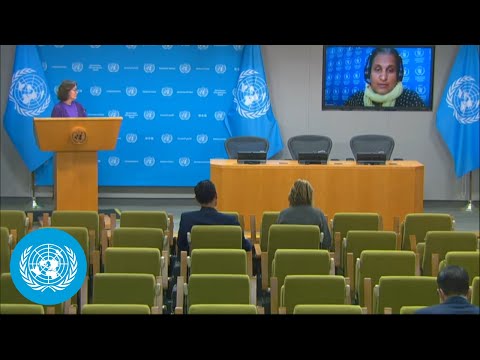
Jean Marthe Bauer, director of food security and nutrition analysis at the World Food Programme, said in a Feb. 2025 briefing that the number is “an unprecedented level. This is, the highest level on record that we've seen in the country.” He said the increase since the previous IPC stems from accelerated displacement and the economic impact of insecurity in eastern DRC.
The IPC findings are concentrated in eastern provinces. Bauer said the internally displaced population has been “quite affected,” and that the WFP analysis recorded an increase of about 2,500,000 people in need since the last IPC assessment.
Shelly Thackrell, WFP spokesperson in the Democratic Republic of the Congo, described operational setbacks that have limited humanitarian reach. “We were able to reach 600,000 people so far in 2025,” she said. Thackrell confirmed WFP reached about 1,800,000 people in December 2024 but said access has since been curtailed by security concerns, closed airports and looted warehouses.
Thackrell and Bauer identified several factors driving the crisis: ongoing conflict (including armed groups active around Goma and other towns), repeated displacement, closure of banks that has produced a liquidity crisis in local markets, and damage to livelihoods and agricultural activity. Thackrell said food and fuel prices have risen sharply, with some staple prices up by nearly 40% since December.
Those conditions have compounded public-health threats. Thackrell noted that the country is also contending with outbreaks of MPOX (more than 80,000 cases) and cholera (more than 7,000 cases), which increase the risk of malnutrition and mortality when food access is limited.
WFP officials described programmatic constraints: airport closures in Goma since January have restricted the movement of humanitarian staff and supplies; warehouses in some areas were looted; and operations resumed only gradually in parts of North and South Kivu. Bauer said the primary global driver of acute food insecurity is conflict and that contexts with agricultural potential, like the DRC, can still produce hunger when violence disrupts markets and livelihoods.
Residents quoted by WFP underscore the local impact. One woman, identified as Linda, told WFP teams she left Goma and returned to Masisi province in North Kivu: “I'm struggling to settle down because I don't have anything, and I everything I had is gone. I've got to restart. Peace is my number 1 priority.” Another returnee, identified as Sifa, said her home was burned and that she does not know where her husband is.
WFP highlighted the long-term paradox in the DRC: large tracts of fertile land and significant freshwater resources contrast with very high food need driven by insecurity, damaged infrastructure and disrupted markets. Officials said targeted support for farmers and market restoration are important, but stressed that humanitarian access and reductions in violence are prerequisites for scaling assistance.
The full IPC report and WFP statement are available online, the agency said. No formal decisions or new funding commitments were announced during the briefing.