Get Full Government Meeting Transcripts, Videos, & Alerts Forever!
Get email alerts on the Humanitarian Aid topic
No spam. Unsubscribe anytime.
UN speaker warns attacks and funding cuts are straining humanitarian aid in Ukraine
Summary
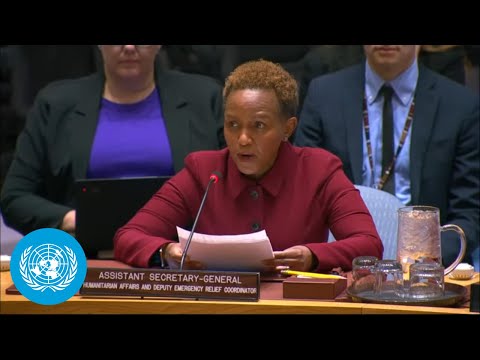
Ms. Joyce Mesuier told the council continued attacks across Ukraine, damage to energy and health infrastructure, and shortfalls in funding have reduced the capacity to deliver lifesaving assistance to millions of civilians and displaced people.
Ms. Joyce Mesuier, speaker, told the council that continued attacks across Ukraine since March have reduced the capacity of humanitarian actors to provide lifesaving aid and that donors have provided only 17% of a $2.6 billion appeal.
Mesuier said attacks since March 1 have repeatedly harmed civilians, citing strikes on March 7 that killed 21 people and a March 24 assault in Sumy that injured nearly 100 civilians, including more than 20 children. "I must remind all parties to take constant care to spare civilians and civilian objects as international humanitarian law demands," she said.
Why it matters: Mesuier gave figures showing large-scale need and displacement: nearly 13,000,000 people in Ukraine need humanitarian assistance; more than 10,000,000 have fled their homes and about 3,700,000 are internally displaced. She said infrastructure damage to energy networks continues to limit access to electricity, gas, heating and water, especially as cold weather persists.
Details cited by Mesuier include verified casualties since Feb. 24, 2022 of at least 12,881 Ukrainian civilians, including 681 children, and almost 30,500 injured. She said the World Health Organization has verified more than 2,300 attacks affecting health-care facilities and personnel since February 2022. Media reports also indicate civilian casualties and infrastructure damage in Russia's Kursk, Belgorod and Bryansk regions, she added.
Mesuier described humanitarian reach and constraints in 2025: humanitarian actors have reached about 1,700,000 people with water and sanitation, health care, food assistance and shelter items; nearly 20,000 people in frontline communities received supplies through 14 interagency convoys; and "some 660 humanitarian organizations led by local NGOs" are operating amid insecurity. She reported that seven humanitarian workers have been injured so far this year and that attacks have damaged humanitarian assets in Kharkiv, Odesa, Zaporizhzhia, Mykolaiv and Sloviansk regions.
Funding and access: Mesuier said donors have provided 17% of a $2.6 billion appeal, prompting reprioritization of the Ukraine response and warning that funding cuts will reduce services for vulnerable groups. She said funding shortfalls risk cutting gender-based-violence services that support an estimated 640,000 women and girls. Mesuier said assistance remains limited in parts of Donetsk, Kherson, Luhansk and Zaporizhzhia that are under occupation by the Russian Federation.
Calls to action: Mesuier urged the international community to press parties to comply with international humanitarian law, to protect civilians and humanitarian personnel, and to allow "swift and unimpeded delivery of humanitarian relief." She said continued financial support is essential and listed two priorities: insistence on compliance with international humanitarian law, and funding to sustain humanitarian operations.
The statement combined verified casualty and damage figures with operational updates and appeals for access and funding. The transcript does not identify the council by name; Mesuier addressed "Madam President" and members of the council during her remarks.