Get Full Government Meeting Transcripts, Videos, & Alerts Forever!
Get email alerts on the Public Inclusion Symbols topic
No spam. Unsubscribe anytime.
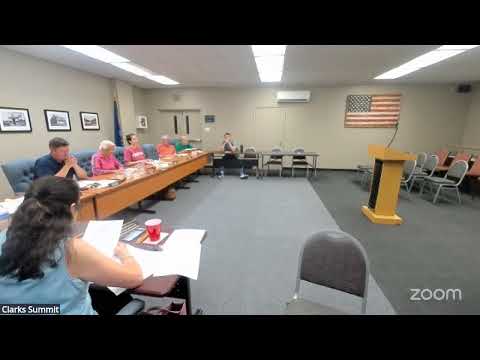
Residents ask Clarks Summit council to allow rainbow crosswalk or alternative inclusion markers
Summary
Speakers during public comment urged the Clarks Summit Borough Council to permit a rainbow crosswalk as a symbol of inclusion; council members discussed safety, cost, PennDOT guidance and alternatives including signage or LED/thermal-plastic treatments.
Residents and a neighborhood group urged the Clarks Summit Borough Council on Thursday to permit a rainbow crosswalk or another visible symbol of inclusion in the borough.
At the public-comment portion of the council’s special meeting, a representative for NEPA Neighbors United for Democracy said the group sought a rainbow crosswalk because “it’s a symbol of inclusion, not just for the LGBTQ community, but for the rest of us too,” and argued the marker would help people feel “valued” and safer in the community.
Loring Skeroll, who identified himself as a longtime resident, described concerns he has heard from families about perceived unwelcoming treatment and said a visible symbol in town would “say that you are welcome here.” Several council members thanked the speakers and said they supported the idea in principle.
Council discussion moved quickly from public comment to practical considerations. Solicitor Krolak told the council he had reviewed federal and state guidance and said a rainbow crosswalk is not strictly prohibited but is “discouraged based upon trying to keep continuity of crosswalks” under PennDOT and federal guidelines. He advised the council to consider safety, continuity and regulatory guidance before acting.
Council members and speakers raised alternatives in case painting a crosswalk proved infeasible. Suggestions included a permanent sign, a specially placed informational panel, thermal-plastic pavement treatments that provide slip resistance, or solar- or LED-powered curb or in-pavement lighting to create a rainbow effect without altering lane-marking standards.
Several council members emphasized they were seeking “do no harm” outcomes for local businesses and public safety; one councilor said they would prefer a location that would not invite boycotts of local merchants and suggested pursuing a side street or other non-business corridor if businesses objected.
Speakers and council members agreed the group should return with more specific proposals, cost estimates and preferred locations. The council said it is willing to work with the group on alternatives and suggested the petitioners continue research and follow up with the borough staff. No formal action or vote was taken at the meeting.
Closing remarks noted the borough’s interest in balancing symbolic gestures with safety, funding and PennDOT guidance, and that staff would continue to research options and legal considerations.