Get Full Government Meeting Transcripts, Videos, & Alerts Forever!
Get email alerts on the Budget Tax Levy topic
No spam. Unsubscribe anytime.
Moorhead council sets 2026 preliminary tax rate at 5.58% after heated debate over fire staffing
Summary
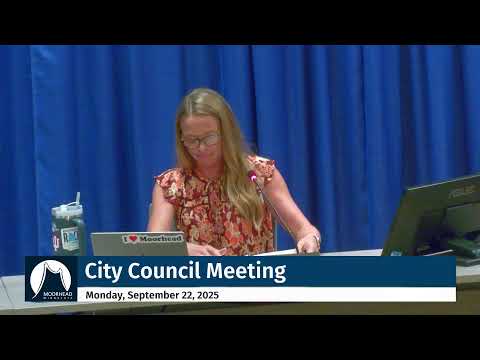
After hours of debate focused on the Morehead Fire Department's staffing needs and a possible SAFER grant, the Moorhead City Council on Sept. 22 set a preliminary 2026 tax rate ceiling of 5.58% and asked staff to continue workshopping ways to lower the final levy before the December vote.
The Moorhead City Council on Sept. 22 voted 6-2 to set a preliminary tax-rate ceiling of 5.58% for 2026 after lengthy debate centered on adding firefighters and whether to pursue federal SAFER grant funding.
The preliminary levy action allows the city to certify a maximum levy to the county by the Sept. 30 state deadline; final budget adoption is scheduled for Dec. 8. The discussion focused on three budget scenarios presented by Finance Director Jennica Flanagan that ranged from a base budget to an expanded plan that would add a training coordinator and up to seven new fire-department positions if the city applies for and receives a SAFER grant from FEMA.
Council members spent most of the evening discussing tradeoffs between fully funding new firefighters locally and applying for a federal SAFER grant that would cover 75% of wages for specified hires for a limited period. Council member Deb White said she "strongly support[s] scenario 3," the most-expansive option presented, because it matched the consensus from prior workshops; others, including Council member Lisa Borgen and Council member Chuck Hendrickson, expressed concern about the levy impact and preferred a more incremental approach.
Finance director Jennica Flanagan told the council the city's taxable market value grew about 5.04% for taxes payable in 2026 and that the three scenarios would translate to estimated monthly impacts on a median-valued home of $7.95 (scenario 1), $9.55 (scenario 2) and $10.39 (scenario 3). Flanagan said the city must certify a preliminary levy amount to Clay County by Sept. 30, and that the preliminary levy can be lowered but not increased at final adoption.
Fire Chief Dan Wallen described operational consequences of the staffing choices. He said the department's changes earlier in the year increased the percentage of time a ladder truck could be staffed from roughly 13% to 41%. He said adding three firefighters would raise that availability to about 71%, and adding six would push it to about 91%: "We brought our percentages up from 13% to 41% ... (adding three) would bring that percentage up to 71%."
Kevin Salisbury, a Morehead resident who identified himself as a member of the Morehead Fire Department and trustee of the firefighters union, urged the council to fund six new hires for 2026, calling staffing "a formula for poor public safety outcomes" and saying, "This is really a need and not a want." Andrew Bushaw, representing the Northern Plains United Labor Council and West Area Labor Council, also urged the council to back the staffing increases for both community and worker safety.
Council members debated procedural options including whether to accept grants first and then add staff if awarded, or to fully fund positions locally to avoid reliance on uncertain federal aid. Several council members emphasized that preliminary action tonight sets a ceiling for discussion; City Manager Molly said staff can continue to workshop alternatives and present adjustments before the December final levy vote.
At the end of the night Council member Ryan Nelson moved to set the tax rate at 5.58%; the motion passed on a 6-2 roll call. The council also adopted the Economic Development Authority preliminary levy item on a separate vote earlier in the meeting.
The council directed staff to continue looking for options to reduce the levy below the current ceiling, including identifying one-time funding sources or reserve uses for specific one-time startup costs tied to new firefighters and to fire-station modifications. Finance staff told the council the most significant recurring cost drivers in the budget are wages, benefits and public-safety staffing.