Get Full Government Meeting Transcripts, Videos, & Alerts Forever!
Get email alerts on the Housing Development topic
No spam. Unsubscribe anytime.
Developers outline 340-unit Bodger Meadows plan; Lompoc council directs staff to pursue annexation options and study impacts
Summary
Project team described a mixed single-family and multifamily development called Bodger Meadows; council directed staff to pursue options to secure annexation, coordinate CEQA review with the county, and return with financial and infrastructure analyses.
The Lompoc City Council heard detailed presentations on the Bodger Meadows project and voted to direct staff to pursue options that would promote annexation and coordinated environmental review.
The project team said the current proposal covers roughly half of the Bodger family property and includes about 200 single-family lots and 140 multifamily units, with 20% of units proposed as deed-restricted affordable housing. During the Aug. 19 meeting, project representatives described street frontage, open-space and park improvements, and a timeline that would place a county decision in late 2026 and a city- and county-level environmental review (an EIR) taking roughly a year.
Why it matters: Bodger Meadows would add hundreds of housing units to the Lompoc Valley and touch issues of sewer and water service, RHNA (regional housing need allocation) crediting, LAFCO annexation decisions and conversion of agricultural land. Council members voiced a shared desire to see the project developed inside the city to secure local control of services and tax revenues.
Project description and schedule The project's proposers said the application covers a portion of a larger family property and would include 200 single-family homes (various floor plans and heights), 140 apartment units in four buildings, onsite parks and pedestrian connections, and street frontage improvements on B Street and Olive Avenue. The developer's illustrative unit mix for the multifamily portion included studios, one-, two- and three‑bedroom units and a total of roughly 318 parking spaces for the multifamily portion.
Representatives said the applicant has pursued protections available under SB 330 (builder's remedy) and the Housing Accountability Act and expects the county to issue a consistency letter that would trigger environmental review; staff estimated the EIR could take about a year. If both the county and the city act favorably and CEQA is completed, LAFCO would be the final agency to act on annexation.
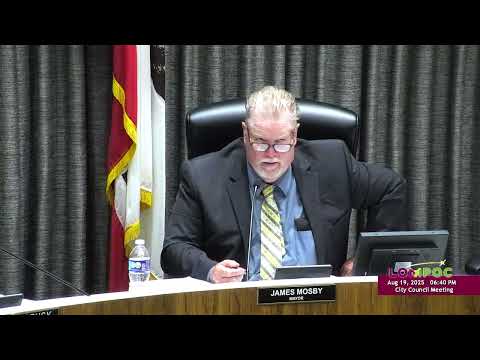
Council concerns and direction to staff Mayor James Mosby and other council members emphasized they want the project annexed into the city rather than serviced by off‑agency agreements. Council members raised recurring concerns about infrastructure costs (water, sewer, electric), public safety service capacity, who would pay for off‑site improvements, and how RHNA units would be credited between the county and the city.
After extended discussion, Mayor James Mosby moved and Council member Starbuck seconded a motion directing staff and the city attorney to return with a package of analyses and options. Council direction included: (1) evaluate creative annexation or long‑term agreements that would secure the city's interests; (2) study the feasibility and cost of annexing the sewer corridor along Bailey Avenue (the sewer line corridor that currently sits outside city limits); (3) prepare a financial/ fiscal impact analysis that compares revenues and costs if the project is annexed versus remaining in the county; (4) outline possible service agreements and the legal steps to pursue annexation or out‑of‑agency service alternatives; and (5) present a recommended path forward and estimated staff/consultant costs and timelines. The motion passed 5-0.
Next steps and city role City staff indicated the city will act as a responsible agency for CEQA review and work with the county to share environmental documents and analyses where feasible to avoid duplicative EIR work. Staff said the applicant anticipates re-submitting to the county in September, which would start the EIR process. Council asked staff to return with monthly updates during the CEQA phase and with the requested fiscal and legal analyses prior to any decision to enter an interagency service agreement.
Quotes from project representatives and staff Ginger Anderson, an attorney for the applicant, said, “We're excited about this project, and we appreciate your time tonight to learn more about it.” Contract planner Laurie Tamora summarized the city's role: the project "has been called complete for processing" with the county and the city will act as a responsible agency for environmental review.
Ending Council members expressed support for the housing but said they want the city to secure annexation or legally protective arrangements before approving final service commitments. Staff will return with the requested analyses and options for council consideration.