Get Full Government Meeting Transcripts, Videos, & Alerts Forever!
Get email alerts on the Energy Production Zones topic
No spam. Unsubscribe anytime.
Committee advances bill creating 'energy production zones' to encourage redevelopment of existing generation sites; wind and solar excluded
Summary
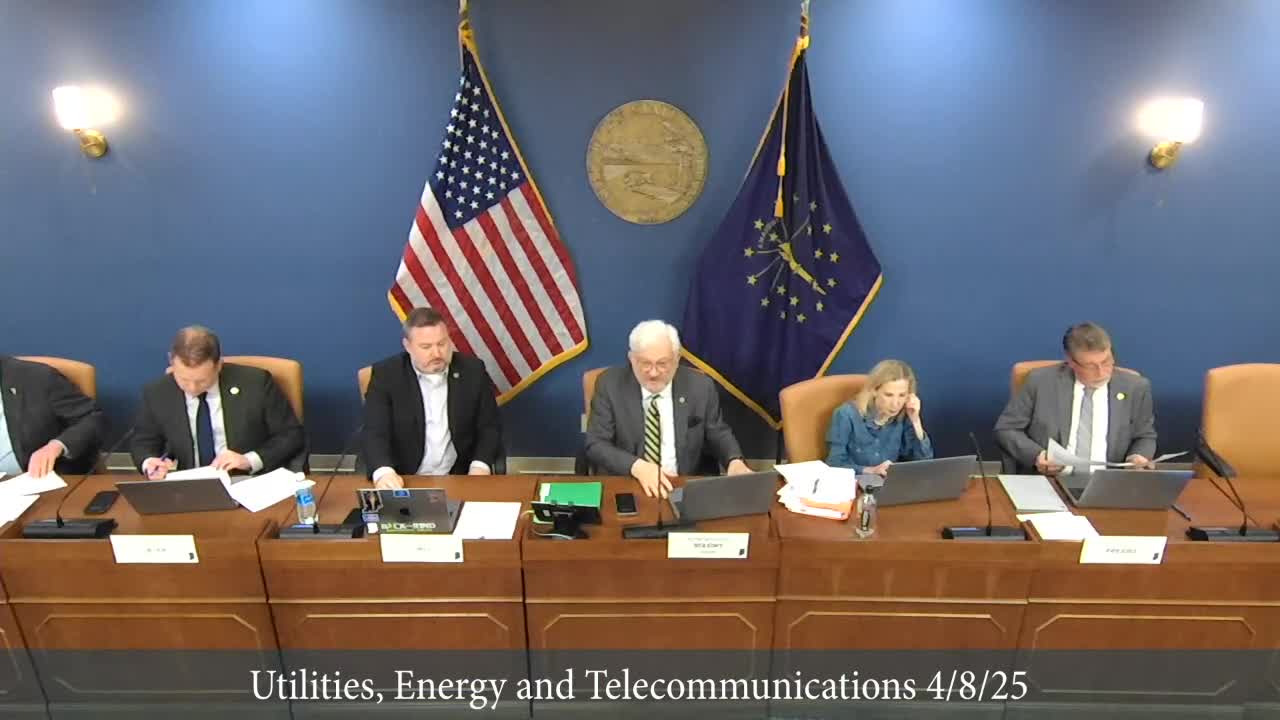
The committee advanced Senate Bill 425, which would designate ‘‘energy production zones’’ for redevelopment of former or existing generation sites of at least 80 megawatts and streamline certain local permitting for projects sited there; wind and solar were excluded from the expedited pathway in committee amendments.
Senate Bill 425, as amended, would create a mechanism to designate “energy production zones” — land parcels with existing or former generation facilities of at least 80 megawatts — and to ease certain local permitting and zoning requirements for new generation projects sited there. The bill, as amended in committee, excludes wind and solar from this expedited pathway and adds clarifications on moratoria and force‑majeure style delays.
Sponsor Senator Cook described the policy as a tool to encourage new generation to locate on sites that already have infrastructure: “a zone is a premise of land where there is an existing generation facility with a generating capacity of at least 80 megawatts regardless of whether that facility is operational,” the author said. Proponents argued such sites offer existing transmission and interconnection points, making reuse quicker and less costly.
Supporters included utilities and manufacturers who said the policy would support reliability and economic development. Danielle McGrath of the Indiana Energy Association said existing infrastructure at former generation sites “are ideal and cost effective for future investment,” and noted developers must still meet federal, state and local obligations and engage locals during planning.
Opponents and local residents expressed concern about the bill’s broader impact on local planning and zoning authority and about the exclusion of wind and solar. Jake German, representing the Indiana County Commissioners, warned the amended text changes planning and zoning permitting processes broadly and urged clarification so that local zoning standards and citing standards remain effective. Hoosier Environmental Council executive director Sam Carpenter opposed removing wind and solar and said excluding them handicaps opportunities for faster, low‑carbon generation: “The only 2 forms of energy that can come onto the grid in less than 5 years is wind and solar... By removing wind and solar from this bill we are handicapping our own opportunities for economic growth,” he said.
Multiple residents spoke about proposed industrial development near schools and communities. Stephanie Raef said opponents in Valparaiso have gathered petitions and warned the bill “hands over decision making power to corporations and state level interests while we're left to deal with the consequences.” Lori Miller, a Union Township resident, told the committee her community opposes hyperscale data centers adjacent to school campuses and asked lawmakers to scrutinize the bill’s proximity and decommissioning language.
The amendment discussed moratoria and force‑majeure exceptions, including a one‑time moratorium limit and explicit language excluding uncontrollable events (pandemics, natural disasters) from statutory deadlines. Supporters said that language was intended to provide certainty to investors after testimony that prolonged moratoria or rolling delays deter investment.
The committee passed SB425 as amended on a recorded vote that appears in the transcript as 9–4.
Votes at a glance: Senate Bill 425 (amended) — passed as amended in committee; committee roll call recorded as 9 yes, 4 no.