Get Full Government Meeting Transcripts, Videos, & Alerts Forever!
Get email alerts on the Pole Attachments topic
No spam. Unsubscribe anytime.
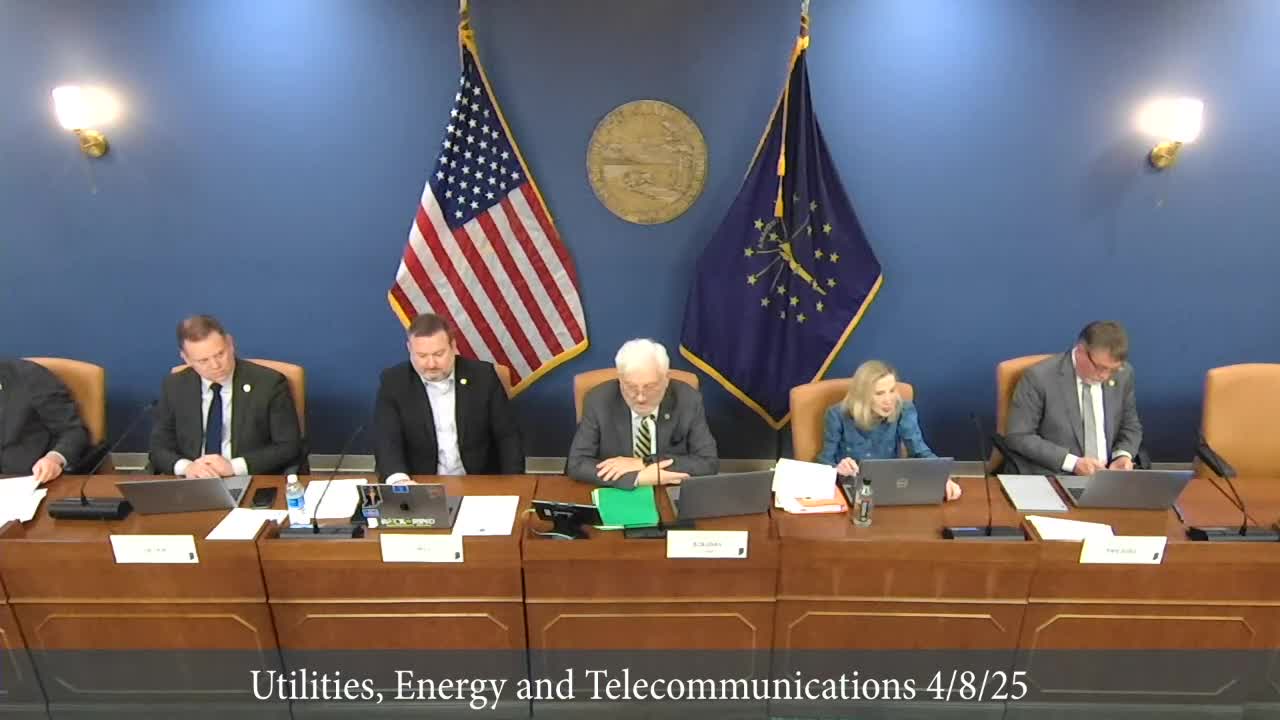
Committee advances amendment to speed pole-attachment agreements, citing FCC timelines and BEED deadlines
Summary
The Utilities, Energy and Telecommunications Committee approved an amended version of Senate Bill 502 aimed at speeding pole‑attachment negotiations and clarifying timelines for broadband projects.
The Utilities, Energy and Telecommunications Committee on an amendment to Senate Bill 502 moved a two-track framework designed to shorten delays in pole-attachment negotiations that committee members and industry witnesses said are slowing rural broadband construction.
The amendment requires the state broadband office to publish signed contracts for grants within five days, establishes a pre‑application meeting within 60 days for parties seeking pole attachments, adopts FCC-derived thresholds (including a 300-pole “business as usual” threshold and a 3,000-pole batching limit with 30‑day windows), and offers mediation with mandatory third‑party resolution if parties cannot agree.
The measure's supporters framed the change as a practical tool to help the state's BEED broadband deployment. Steven Cox, chief broadband officer for the Indiana Broadband Office, said the state is administering the BEED program and noted the scale of federal funding: “we're in the process of administering the BED program for which the state received over $868,000,000 to connect to unserved and underserved Hoosiers to reliable and robust Internet service.”
Industry witnesses described the amendment as a negotiated compromise. Matt Long of the Indiana Energy Association said the amendment pulls several FCC concepts into state law: “we have taken things from the FCC and we have said, first of all, that the state communication or, telecommunication office will publish as soon as contracts for grants are signed within 5 days they will put it on the web so everybody can find what was given.” Ryan Hadley, director of policy and government relations for the Indiana Electric Cooperatives, called the package “a fair compromise” and said cooperative members want to be part of rural broadband solutions.
Provider testimony stressed the implementation constraints that the amendment targets. Joni Hart of Comcast said permitting and make‑ready estimation delays drove repeated grant extensions on prior rounds and said her company supports a front‑loaded estimate process and conflict‑resolution requirements while reserving legal rights: “Our primary concern at this point is the timeline for make ready estimates, which was at 180 days and appreciate the reduction to, 120 days.” Hart also described make‑ready costs and workforce limits that have complicated deployment.
The amendment sets two options for parties: work together to draft and sign a contract with mutually agreed timelines and an internal conflict‑resolution process, or proceed under the amendment’s default timelines and accountability points, with mediation and, if necessary, mandatory third‑party resolution. Committee members emphasized the goal of keeping disputes out of court to avoid project delays.
Committee members moved the amendment and the bill as amended passed on a roll call recorded in committee as 15–0.
Votes at a glance: Senate Bill 502 (amendment 5) — passed as amended; committee roll call recorded in the transcript as 15 yes, 0 no.