Get Full Government Meeting Transcripts, Videos, & Alerts Forever!
Get email alerts on the Specialized Programs Chancelight topic
No spam. Unsubscribe anytime.
Board questions high per‑student costs, outcomes and in‑district training for ChanceLight contract
Summary
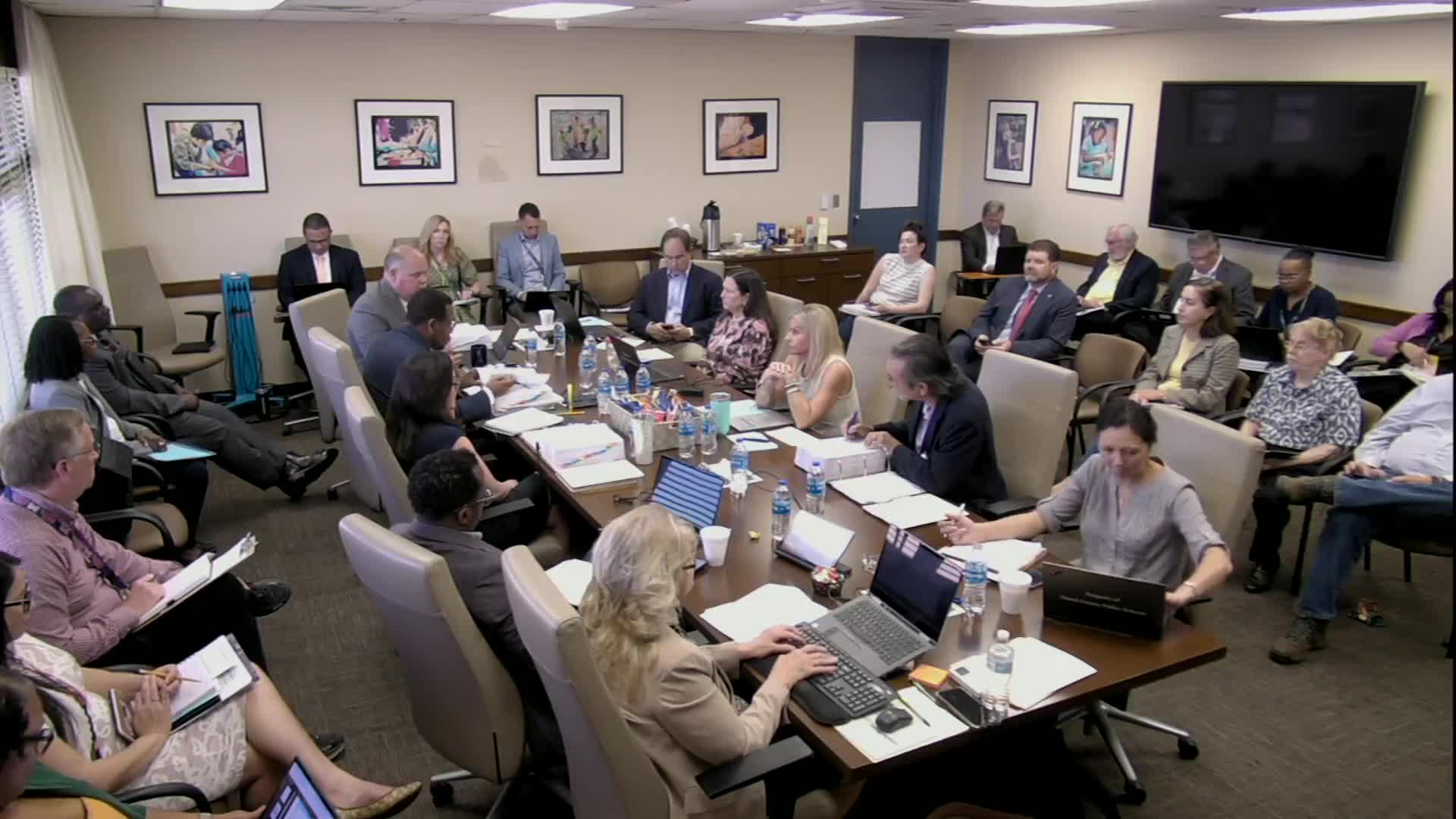
Duval County School Board members at a May 2025 workshop scrutinized a contract renewal with ChanceLight that supports specialized units for students with high behavioral and instructional needs and that staff said can cost tens of thousands of dollars per student depending on placement.
Duval County School Board members at the May workshop scrutinized a contract renewal with ChanceLight (noted in the agenda as part of a Spectrum Center/partner arrangement) that supports specialized units for students with high behavioral and instructional needs, and which staff said can cost tens of thousands of dollars per student depending on the placement.
A board member asked about per-student costs, noting the contract referenced “up to $50,000 per student” and a more typical figure near $27,000. “We’re looking at, you know, college tuition type amounts of funding these students,” the member said. Staff described state funding mechanics that increase per-student allocations for higher-need categories (2.53, 2.54, 2.55 funder levels) and said some placements can generate state revenue “in the $30,000 range” after weighting.
District staff and ChanceLight supporters framed the work as a focused intervention. “The students that are attending this particular campus… have the most significant levels of behavior challenges,” a district presenter said, and added that the site had produced measurable gains, including double-digit numbers of students being “mainstreamed or fully mainstreamed” back into general education. Miss Valentine, described by staff as part of program oversight, said the program’s goal is not long-term placement: “We want to get them in, teach them the coping skills, self regulation, skills needed so that they can transition out back into a general ed setting with less supports.”
Board questions focused on three issues: per-student cost comparisons with other districts and similar in-house units; evidence that professional development from the contractor is being transferred to district staff and other schools; and transportation costs tied to placements outside a student’s neighborhood school. Staff said professional development has been provided and that other middle-site programs have increased inclusion trials and exits to general education over the past three years.
Funding clarity: staff reiterated the district’s obligation not to “supplant” federal IDEA funds with state-generated general funds. One staff member summarized: district resources generated by the FEFP must first be used for the students who created them; federal IDEA funds can be used to cover excess costs beyond that allocation. Board members asked staff for a clear breakout of how much the district is spending from general funds per student and how much federal IDEA money covers; staff reported an approximate average general-fund cost per student of about $10,317 for the sample cited and about $16,400 including IDEA on average for a specific cohort.
Decision status: the discussion was a workshop review; staff offered to bring comparisons to other districts, a per-student breakout, and more evidence on program outcomes and professional development transfer but no final vote was recorded in the provided excerpt.
Ending: Board members stressed a desire to increase district capacity to deliver specialized services in-house while using external partners as laboratories for practice and for staff development.