Get Full Government Meeting Transcripts, Videos, & Alerts Forever!
Get email alerts on the Family Shelter Policy topic
No spam. Unsubscribe anytime.
San Francisco supervisors press HSH on 90‑day family shelter rule after packed public hearing
Summary
San Francisco supervisors and the Department of Homelessness and Supportive Housing (HSH) spent more than two hours April 17 debating a reinstated 90‑day length‑of‑stay policy for family shelters amid intense public comment from families and service providers.
San Francisco supervisors and the Department of Homelessness and Supportive Housing (HSH) spent more than two hours April 17 debating a reinstated 90‑day length‑of‑stay policy for family shelters amid intense public comment from families and service providers.
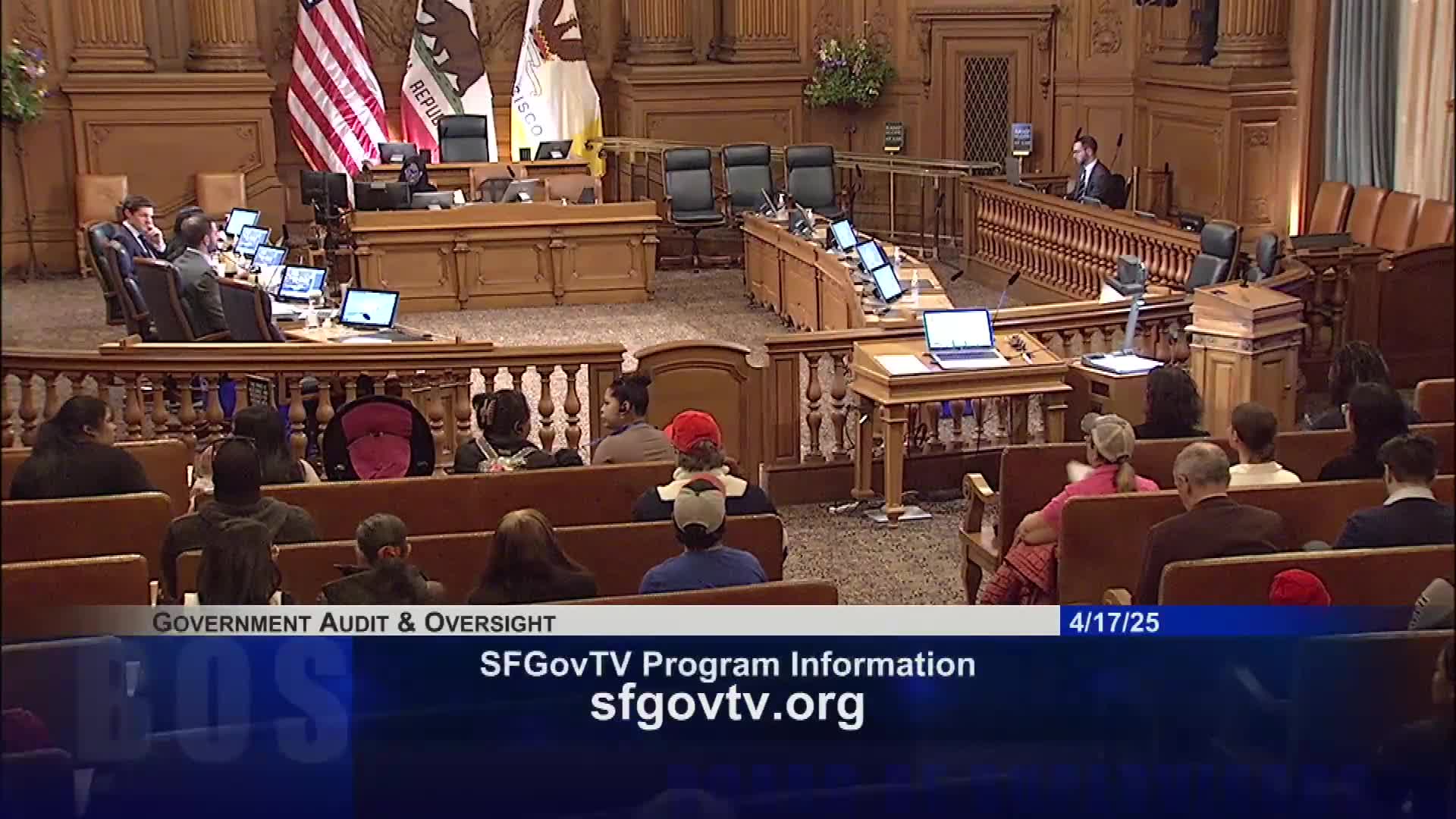
"Item number 1 is a resolution urging the mayor to rescind or drastically reform the family shelter length of stay policy," Supervisor Jackie Fielder, chair of the Government Audit and Oversight Committee, said as the hearing opened. The committee later voted to continue consideration of the resolution to the call of the chair after extended public comment and questioning.
The hearing focused on departmental reforms HSH implemented in December 2024. Emily Cohen, deputy director for communications and legislative affairs at HSH, told the committee the policy is intended to increase movement through shelters while protecting families who are engaged with case management. "There is a length of stay policy, there is also a very clear and generous extension process, and if families are engaged with their case management services, they will be extended," Cohen said.
Cohen and Maryann Sanders, chief deputy director of programs for HSH, outlined the department's rationale and data. They described HSH's inventory for families as roughly 315 beds in traditional family shelters across eight sites, 50 transitional housing units at three sites, about 871 units of site‑based supportive housing, roughly 500 scattered‑site vouchers (covering more than 1,500 beds), and 364 rapid‑rehousing vouchers. Cohen said the department's Safer Families initiative — a roughly $50,000,000 budget package passed last cycle — adds hotel vouchers, shallow subsidies and additional rapid‑rehousing vouchers intended to expand exits from shelter.
HSH officials described how the extension process works: shelter providers may approve up to three 30‑day extensions when families are meeting regularly with case managers and making progress on a family success plan. "Beyond that, HSH must authorize the extension request, but there is no limit to the number of extensions that can be authorized by the department in collaboration with the provider," Cohen said.
HSH presented preliminary program data it said show early positive movement after the reforms: a 39% decrease in the family shelter waiting list, a 72% increase in family referrals to housing resources, and an increase in exits to long‑term stable housing from about 21% to 25%. Cohen said HSH had recorded three families formally exited under the length‑of‑stay pathway; two of those households found long‑term housing before their exit dates, and one was immediately admitted to emergency congregate shelter the same night.
Supervisors pressed HSH on operational details. "Is the following true: that no family that is engaging in the process will be asked to leave a shelter?" Supervisor Sherrill asked. Marion Sanders (chief deputy) and Cohen answered yes, and explained that case managers and providers are responsible for documenting engagement and requesting extensions; families may also directly request extensions from their case managers.
The committee heard extensive public comment: more than 60 speakers — many families currently in shelters or hotels, advocates, school staff and medical professionals — urged rescinding the 90‑day limit, citing fear, anxiety and inconsistent application of the extension process. Dozens of public commenters recounted receiving notices indicating they might need to leave shelter and said they had difficulty getting consistent help from case managers. "All we need is the opportunity for permanent housing," said Maria Sabala, who spoke with her daughter. Several pediatric and social‑work specialists also testified about the mental‑health and developmental risks for children living under recurring eviction notices.
Committee action: After questions and public testimony, the committee voted on a motion to continue the resolution to the call of the chair. The recorded vote was 2 in favor, 1 opposed: Vice Chair Sauter and Supervisor Sherrill voted to continue; Chair Jackie Fielder voted no. Separately, the committee forwarded agenda items 2–4, three city settlement ordinances, to the full Board of Supervisors with a positive recommendation (committee recorded 3 ayes).
HSH has said it will continue monitoring implementation data, provide additional training and technical assistance to providers, and produce written materials and scripts for case managers and families. Supervisors and public commenters urged that HSH improve communications, ensure consistent case‑management practice across providers (including language access), and accelerate the deployment of subsidies and vouchers that advocates say are needed to move families into permanent housing.
The committee referred the resolution and the public record to further consideration; HSH officials said they will return with additional information. The hearing underscored a central tension: HSH argues the policy plus new investments improves flow into housing and protects families who engage with services, while many families and providers say notices, uneven implementation and thinly resourced case‑management capacity are producing fear and inconsistent outcomes.