Get Full Government Meeting Transcripts, Videos, & Alerts Forever!
Get email alerts on the Municipal Budget topic
No spam. Unsubscribe anytime.
Gardiner officials present FY26 budget overview showing proposed municipal increase of 40¢; county and school figures add to larger taxpayer impact
Summary
Gardiner — Finance Director Denise Brown and city staff presented an overview of the proposed FY26 municipal budget at the April 16 Gardiner City Council meeting, saying the municipal portion of the proposed budget would raise the city’s mill rate by 40¢ if the current proposal is adopted.
Gardiner — Finance Director Denise Brown and city staff presented an overview of the proposed FY26 municipal budget at the April 16 Gardiner City Council meeting, saying the municipal portion of the proposed budget would raise the city’s mill rate by 40¢ if the current proposal is adopted.
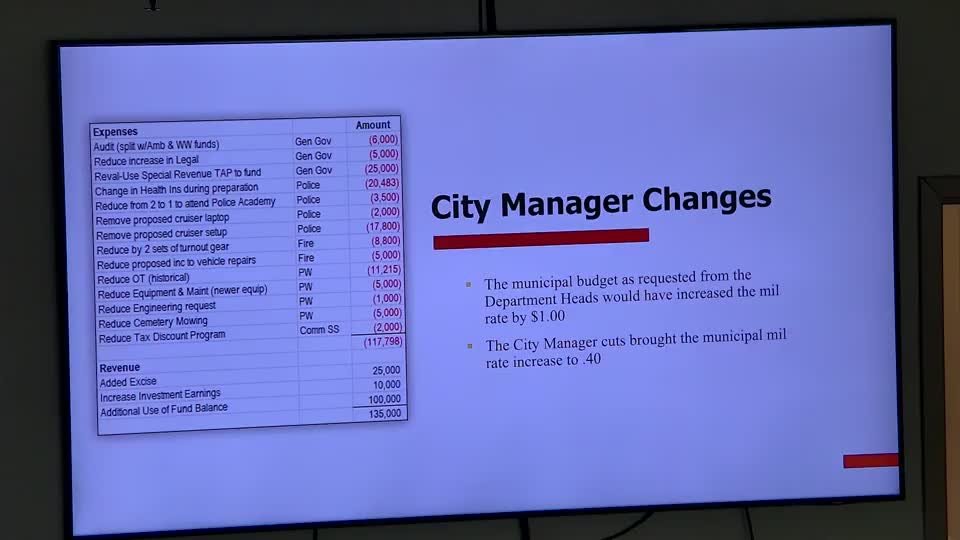
Brown told councilors that the municipal budget request — after a set of cuts and revenue adjustments proposed by staff and the budget committee — would reduce an initial request that equaled a full‑dollar increase down to a 40¢ increase for the municipal share. She said council direction and further department‑level review in May would determine the final numbers.
Why it matters
Brown framed the municipal portion alongside preliminary county and school figures presented in the same meeting: county figures under review would add about 30¢ to the mill rate, and Gardiner’s share of the school budget would add about 60¢, producing a combined projected increase of roughly $1.30 per $1,000 of assessed value (about $130 per $100,000 of assessed value) based on numbers available at the meeting. Brown cautioned the county and school totals were not yet final and could change.
Details from the presentation
- Largest drivers: Brown said wages and benefits account for about 50–56% of the municipal budget and make up approximately 40% of the year’s municipal increase. She described contractual wage increases and higher benefit costs as major drivers.
- Public works and capital: Public Works made up a significant portion of the municipal increase because the city moved two buildings‑and‑grounds positions into that department and because of proposed increases for salt, paving and engineering. The proposed paving allocation included $100,000 for roads, with $50,000 earmarked toward the Arcade parking‑lot project and a list of targeted streets identified by staff.
- Fund balance and use of reserves: Brown said the FY26 proposal included adding $100,000 of use of fund balance to reduce the tax‑rate impact. She noted the city’s unassigned fund balance at the end of FY24 was a little over $3 million, around 26.5% of budget; auditors recommend 16.6–25%.
- Ambulance and wastewater: Brown reported the ambulance budget was up about $229,000 (approximately 11%), largely for wages and benefits tied to a multi‑year plan to return to a prior cost split among partner communities. Wastewater initially requested a larger increase, but after cuts by the budget committee the wastewater budget would require an approximate 4% rate increase, which Brown said would add about $5.72 to the base sewer fee and about $0.51 per 100 cubic feet above the minimum.
- Revenue adjustments: The proposal included modest revenue increases, including a $75,000 increase in excise tax proceeds and an anticipated increase in solar receipts; staff proposed an additional $100,000 in fund balance use to reduce tax‑rate impact.
Next steps and public engagement
Brown said department heads will present detailed departmental budgets at May council meetings, giving councilors and residents an opportunity to ask questions and request adjustments. The council and budget committee have scheduled department‑level reviews through May; the council will consider first and second reads on a final budget in June, and municipal budgets must meet statutory notice and timing requirements before coming into effect.