Get Full Government Meeting Transcripts, Videos, & Alerts Forever!
Get email alerts on the Economic Development topic
No spam. Unsubscribe anytime.
City planner outlines options for food‑truck rules; council asks staff to prepare a pilot program
Summary
New city planner Miguel England presented regulatory options for food trucks; council directed staff to draft a pilot permitting approach emphasizing designated locations, hours, circulation and signage rules rather than free‑for‑all street vending.
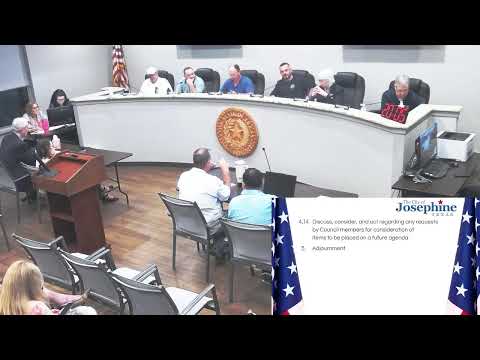
City Planner Miguel England briefed the council April 14 about increasing interest in food trucks, seasonal vendors and mobile food sales. England said the city currently treats mobile food vendors under the existing “food store” use category (takeout only) and that some cities confine food trucks to designated lots, allow co‑location with existing businesses, or adopt truck‑park models.
Councilmembers said they do not want food trucks scattered through residential subdivisions and asked staff to bring back a pilot program that would limit locations, specify hours of operation and noise limits, and require site and circulation standards, permitting and sales‑tax reporting. Several councilmembers indicated they would prefer designated, well‑designed locations or private developer proposals for a food‑truck park rather than allowing trucks at arbitrary commercial lots.
England said he would research pilot program options, sales‑tax allocation issues, and relevant draft ordinance language and return to the council with a proposal.
Why it matters: Food‑truck rules determine where vendors may operate, how the city collects sales tax and how nearby residents and brick‑and‑mortar businesses are affected.