Get Full Government Meeting Transcripts, Videos, & Alerts Forever!
Get email alerts on the Subdivision Regulations topic
No spam. Unsubscribe anytime.
Commission votes to remove common-open-space requirement for many single-family subdivisions; residents press maintenance concerns
Summary
Richmond Planning and Zoning Commission approved amendments to subdivision regulations that eliminate mandatory separate tracts for green space and detention for single-family and R-2 developments; residents said shifting maintenance to homeowners could create long-term erosion and access problems.
The Richmond Planning and Zoning Commission approved changes to the city’s subdivision rules that remove mandatory separate tracts for green/open space and detention areas in single-family and R-2 subdivisions, and allow detention facilities and related maintenance to be incorporated into homeowner lots or shared arrangements.
Planning staff described the proposal as targeted edits to the Recreation and Landscape Manual (sections 2.2 and 2.3) and to chapter 7 of the Storm Manual. Staff said striking the highlighted language would eliminate the requirement that green space and large detention areas be placed on separate, stand-alone tracts; instead the areas could be part of individual lots or shared across adjoining lots. Staff emphasized that the change would not alter HOA rules but would change how maintenance responsibility is assigned and monitored.
During a lengthy public comment period residents raised concerns about the practical consequences of the change. An Arbor Ridge resident, Erica (7044 Arbor Ridge Drive), described repeated erosion and sediment moving into her backyard during recent grading and storms and asked who would be responsible long term if detention ponds and open space reverted to homeowner lots. A neighborhood spokesperson summarized a quick social-media poll and said most respondents would be less likely to buy a house with that encumbrance; commenters urged either a developer-funded maintenance fund, a recorded maintenance agreement, or a public mechanism to ensure long-term care.
Staff answered questions about development sequencing and inspections. Planning staff said developers remain responsible for construction and stabilization work through final plat and completion inspections; developers must post letters of credit where required and the city will not issue a final plat until stabilization, seeding and required utilities are in place. Staff explained that once lots are sold, the recorded final plat and deed notes will identify lot-level responsibilities and that any current code enforcement is applied to the recorded owner on file.
The public raised other concerns: whether disclosure requirements would inform buyers that a lot includes part of a detention area; whether the change would reduce recreational amenities for families; whether small HOAs would be able or willing to assume responsibility; and whether the city’s stormwater program and a planned stormwater fee would be sufficient to protect downstream properties. Staff noted the city is tracking a stormwater fee and that finance and tourism staff are coordinating enforcement for short-term rental taxes (discussed elsewhere in the meeting).
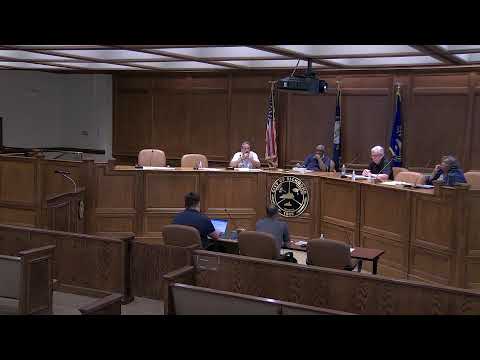
After public comment the commission voted to approve the proposed regulation changes and to forward the matter to the City Commission for final consideration. Recorded votes at the planning meeting were unanimous: Commissioners Short, Miller, Miles and Estelle voted yes. Staff said R-3 recreational requirements would remain in effect and that the amendments apply only to single-family and R-2 subdivisions as drafted.
The commission’s approval advances the ordinance change to the City Commission; if adopted, the change will shift how future subdivisions are platted and how maintenance responsibility for green space and detention areas is recorded and enforced.