Get Full Government Meeting Transcripts, Videos, & Alerts Forever!
Get email alerts on the Earned Wage Access topic
No spam. Unsubscribe anytime.
Senate committee hears testimony on HB 1125 to regulate earned-wage access
Summary
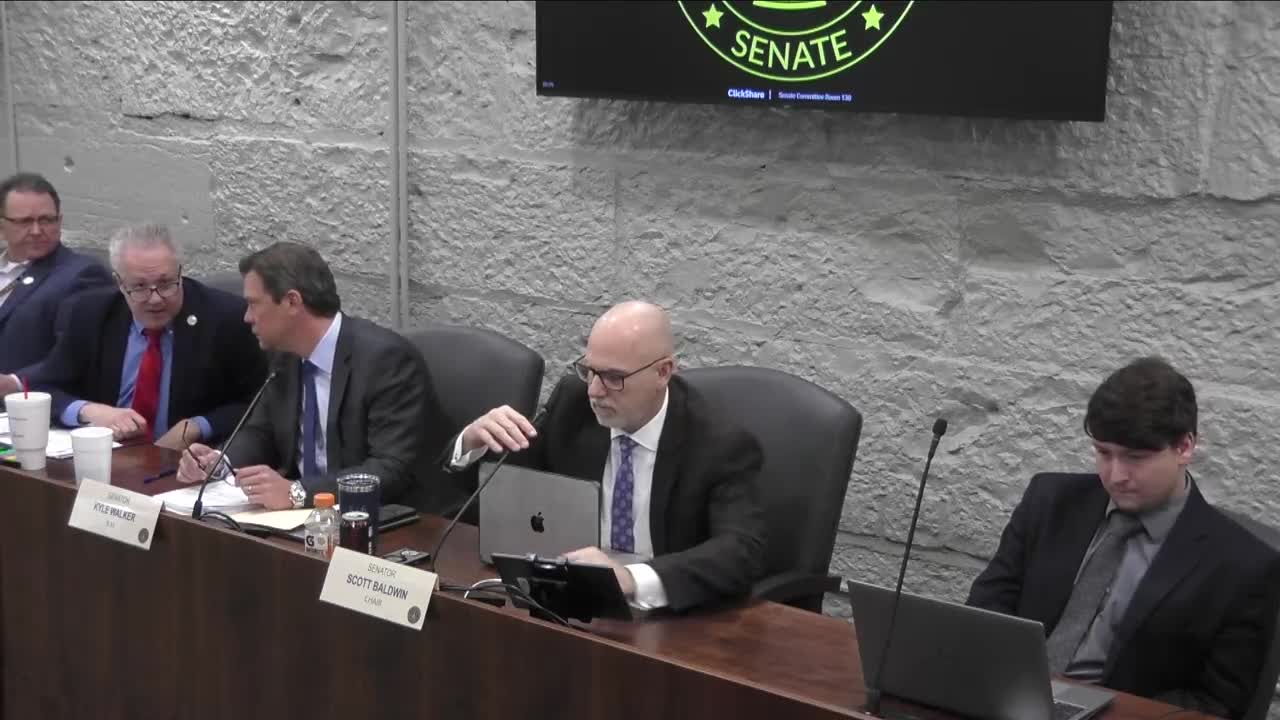
The Indiana Senate Committee on Insurance and Financial Institutions heard testimony on House Bill 1125 on a proposal to regulate earned-wage access services, which let workers access pay they've already earned before payday; committee sponsor Senator Kyle Walker presented the bill and said a vote is expected next week.
The Indiana Senate Committee on Insurance and Financial Institutions heard testimony on House Bill 1125 on a proposal to regulate earned-wage access services, a set of products that let workers access wages they have already earned before payday. Senator Kyle Walker, sponsor of the bill, presented the measure and the committee took testimony; the committee did not vote and Senator Walker said a vote is expected next week.
The bill would create the Earned Wage Access Act and place administration and licensing with the Indiana Department of Financial Institutions (DFI). Under the draft language, providers must clearly disclose any fees, offer at least one no-cost option to access earned wages, refrain from charging interest or late fees, and be nonrecourse—that is, they may not sue consumers, report unpaid balances to credit bureaus, or hire collection agencies. Senator Kyle Walker said the bill "requires they can do so for no fee and no interest," and described other consumer protections in the draft, including limits on app tracking and defaulting to zero-cost options.
Supporters from industry said the bill would bring clarity and guardrails. Andrew Welch, government relations manager at DailyPay, said EWA "is the only option that you can access your own earned money without going into debt for free" and described DailyPay's model of an optional instant transfer fee ($3.49 cited in testimony) alongside a free 1–3 business day ACH option. Lana Lawson, an Earnin attorney and user of the product, told the committee she used the service during a period of financial hardship and described the product as allowing users to access funds that are already theirs: "once you earn money, those funds are legally yours," she said. Industry witnesses emphasized nonrecourse features, no interest or late fees, and optional tips and expedited fees as voluntary revenue models.
Opponents and consumer advocates urged tighter controls on fees, transparency, and relationships between EWA providers and payday lenders. Erin Macy of the Indiana Community Action Poverty Institute, speaking for the coalition Hoosiers for Responsible Lending, said several different business models fit the EWA label and raised concerns that app-based direct-to-consumer offerings can resemble short-term credit. Macy said, "This is almost double what a payday lender would charge for a $50 advance" when describing an app she tested that requested $12 for a $50 advance for seven days, and argued that because EWA is placed outside Indiana's lending laws in the bill, providers could charge rates higher than payday lenders. Macy also raised flags about tipping, noting it is "the first time I've ever seen tipping in the context of a financial service" and that tipping revenue could become sizeable: "In one state's analysis, apps generated $17,000,000 in tips in one year."
Other concerns from advocates included: the absence of statutory rate caps or fee limits in the draft, potential for affiliate arrangements that would let payday lenders cross-sell higher-cost loans to EWA users, limits on number of debit attempts to a consumer's bank account, and whether DFI reporting would be public. Andrew Bradley of Prosperity Indiana urged required public reporting of aggregate transaction data to track repeat use and total fees paid; Macy said studies show many users take dozens of advances per year.
Industry witnesses proposed alternative guardrails. DailyPay, Earnin, and the American Fintech Council representatives said the bill's current approach—licensure, required free options, bans on interest and collection, and privacy protections—best preserves consumer access while deterring bad actors. Ben Larocco of Earnin told the committee his company's average customer "total all in fees, tips, everything, pays us about $60 a year total," and said many EWA users would not be well served by credit cards or other credit products because of low credit scores.
Committee members and witnesses discussed specific policy options for refinement: prohibiting or limiting common ownership between EWA providers and payday lenders, restrictions on referrals from EWA products to loan products, definition and enforceability of a "reasonable" no-cost option, required public reporting of aggregate transaction data, limits on repeated debit attempts, and opt-in rules and limits on app push notifications and location-data use. Senator Kidora urged more work on measures to prevent affiliate cross-referrals and tighter controls on fees; Senator Walker and others said they plan to continue negotiations and consider amendments before a planned vote next week.
No formal vote or amendment occurred during the hearing. The committee took testimony from six registered witnesses and multiple industry and advocacy representatives and indicated further drafting and discussion would occur prior to a vote.
The committee's next steps include additional meetings to reconcile concerns about fee limits, affiliate/referral restrictions, and public reporting; Senator Walker said the committee would vote on the bill at a later date.