Get Full Government Meeting Transcripts, Videos, & Alerts Forever!
Get email alerts on the Land Use Zoning topic
No spam. Unsubscribe anytime.
Residents, organizers urge limits on West Main student towers and call for neighborhood overlay
Summary
Residents and affordable-housing advocates told the Charlottesville Planning Commission that large by‑right student housing projects along West Main Street and adjacent corridors would overshadow historically Black neighborhoods and asked the commission to restore discretionary review and create a core neighborhood overlay from Fourth to Tenth.
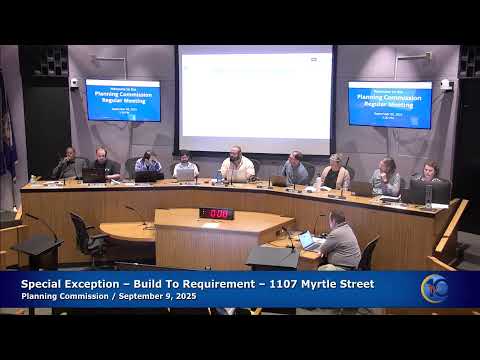
Residents and neighborhood advocates urged the Charlottesville Planning Commission on Sept. 9 to restrict large by‑right student housing projects on West Main Street and to restore discretionary review that would give impacted neighborhoods more say.
Speakers described proposals for tall student housing buildings on West Main Street and nearby hillsides and said the projects would overshadow adjacent, historically Black neighborhoods such as West Haven and Fifeville. Several called for a “core neighborhood overlay” from Fourth to Tenth streets and asked the commission to reintroduce special‑use permit review for developments adjacent to these neighborhoods.
The crowd’s testimony centered on two recent pre‑applications noted earlier in commission reports: a proposed building at 835–847 West Main Street described in a pre‑application as large student housing, and a separate proposal that residents said could reach seven stories above Fifeville. Residents said both are being advanced as by‑right projects under current zoning.
“Not only would this ginormous concrete building overshadow and loom over the West Haven community, it would enclose West Haven residents and restrict access to West Main Street,” said Wendy, a community organizer with the Public Housing Association of Residents. “The fact that these gigantic buildings of such density are allowed to be built by right in these historically Black neighborhood corridors is a blatant error in Charlottesville zoning code.”
Joy Johnson, speaking as a West Haven resident, said the developer waited until neighborhood residents reached consensus on a redevelopment framework before advancing a design that includes what she said would be a 12‑story tower backing up to West Haven. “We don’t want you to come and tell us what you’re gonna do, but you should come and participate with us,” Johnson said.
Sofia Marrero, a community organizer with the Public Housing Association of Residents, asked the commission to give “priority of land use” to people most negatively impacted and to allow more than one public comment opportunity for large by‑right developments next to historically Black neighborhoods.
Latricia Gals, executive director of FAR, told the commission that residents “are not anti‑development” but that developers are being given “maximum certainty” while residents receive “minimum certainty.” Gals asked the commission to use existing planning tools, including overlay districts, to protect neighborhood character and to promote “neighborhood‑friendly development.”
Paul Reeder, who lives in Oak Lawn, said some property owners discovered their parcels had been rezoned in ways they did not expect and said affected residents are preparing applications to downzone parcels to prevent seven‑story development on small lots.
Speakers emphasized urgency. The commission’s staff earlier in the meeting described a zoning code revision process that includes Tier 1, Tier 2 and Tier 3 changes and a planned community listening session at the regular meeting in October. Several commenters urged the commission to move quickly so zoning changes would take effect before by‑right developments advance further.
The public comment period on these matters took place during the commission’s “matters presented by the public” segment and involved multiple in‑person speakers and one virtual slot that remained unused.
The commission did not take any formal vote on the zoning issues during the Sept. 9 meeting. Staff told commissioners they will resume the code amendment process now that a separate zoning case currently in litigation is stayed and that listening sessions and subsequent work sessions are being scheduled.
Residents said they will continue to press the commission and city council for immediate zoning protections and for reinstatement of discretionary review in corridors adjacent to historically Black neighborhoods.